



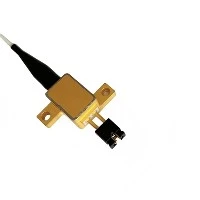
Laser Module is an optical component with integrated laser transmitter, and its core functions include accurate distance measurement (such as laser radar), target indication (such as laser pen), optical communication (such as fiber optic transmission) and environmental sensing (such as obstacle detection). Visible laser (wavelength 400-700nm) can be directly observed by human eyes and is suitable for demonstration or calibration; while infrared laser (wavelength above 700nm) is invisible but has strong penetration and is mostly used for security, night vision or covert communication. There are significant differences between the two in terms of safety and applicable scenarios.

Characteristics of visible laser modules
1. Technical characteristics
Wavelength range: The wavelength range of visible laser modules is usually between 405 nanometers (blue-violet light) and 650 nanometers (red light). This wavelength range covers the spectrum that the human eye can directly observe, from violet to red.
Typical power: The power of these modules can vary according to application requirements, from low power (Class II/IIIa, <5mW), suitable for consumer electronics and educational products, to high power (industrial grade), used in application scenarios that require higher intensity light sources.
2. Advantages
Intuitive and visible: Because the light it emits is in the spectrum range that the human eye is sensitive to, it is very suitable for calibration and debugging work, such as laser pointers and teaching demonstrations.
Various colors: Different wavelengths correspond to different colors, so this type of module can be used in a variety of occasions, such as laser shows in entertainment activities or display technologies such as holographic projection.
Low cost: With the development and maturity of related technologies and the expansion of production scale, there is currently a relatively complete supply chain system support in the market, which reduces the overall manufacturing cost.
3. Limitations
Safety issues: Although safe in most cases, some high-intensity beams may cause damage to the eyes if not properly controlled, especially the risk of retinal damage. Therefore, relevant safety standards must be strictly followed during design and use.
Environmental interference: Under strong light conditions, such as direct sunlight, the effect of visible lasers will be greatly reduced because natural light sources are much brighter than the weak artificial lasers.

Characteristics of infrared laser modules
1. Technical characteristics
Wavelength range: usually between 700nm and 1600nm, common wavelengths are 808nm, 905nm, 1550nm, etc. Lasers of these wavelengths belong to the infrared band and are invisible to the human eye.
Typical power: mostly medium and high power, and must comply with the human eye safety standard IEC 60825 to ensure safety in different application scenarios.
2. Advantages
Good concealment: Since the infrared laser it emits is invisible to the human eye, it is suitable for security monitoring (such as night vision equipment), military fields (such as laser guidance) and other scenes with high concealment requirements.
Strong anti-interference: The linear propagation characteristics of infrared lasers make them less affected by ambient light and suitable for outdoor long-distance applications, such as laser radars and other equipment using infrared laser modules for distance measurement and target detection.
Relatively safe for the human eye: Infrared lasers of specific wavelengths such as 1550nm are absorbed by the cornea, reducing retinal risks, and to a certain extent ensuring personal safety during use.
3. Limitations
Complex debugging: Because infrared lasers are invisible, auxiliary tools such as infrared sensors or imaging devices are needed for calibration and debugging during the debugging process, which increases the difficulty and cost of debugging.
High cost: The production of infrared laser modules involves special materials (such as InGaAs detectors) and packaging requirements, resulting in relatively high manufacturing costs.
|
|
|


Key comparison dimensions
1. Visibility to the human eye
Visible laser: can be directly observed by the human eye, suitable for applications that require instant feedback (such as laser pointers, teaching demonstrations).
Infrared laser: invisible, requires the assistance of infrared sensors or imaging equipment for detection (such as night vision devices, thermal imagers).
2. Safety
Visible laser:
Low power (<5mW) is relatively safe, but high power may cause glare or retinal damage.
Must comply with laser safety level standards (such as IEC 60825 Class II/IIIa).
Infrared laser: Invisibility brings potential risks (users may misjudge whether the laser is turned on). Some wavelengths (such as 1550nm) are safer because the energy is mainly absorbed by the cornea rather than the retina.
3. Application scenarios
Visible laser:
Education (laser pen, experimental demonstration), entertainment (laser show, holographic projection).
Medical (skin treatment, ophthalmic surgery).
Infrared laser: Industrial sensing (LiDAR, automated detection), security (monitoring, infrared warning). Communications (fiber optic transmission, military laser communications).
4. Environmental adaptability
Visible light: susceptible to interference from strong light (such as reduced visibility in sunlight).
Infrared light: Stronger penetration in harsh environments such as fog and dust (such as 1550nm laser radar for autonomous driving). Not affected by ambient light, suitable for outdoor long-distance ranging.
Comparison of typical application scenarios of visible laser and infrared laser modules
1. Consumer electronics
Visible laser:
✅ Laser projectors (such as micro-projectors, AR/VR devices)
✅ Entertainment equipment (laser keyboards, interactive games)
✅ Optical indication (demonstration pens, smart home interactions)
Infrared laser:
✅ Biometrics (iPhone Face ID, fingerprint under the screen)
✅ Distance sensing (autofocus of smart phones, obstacle avoidance of sweeping robots)
✅ Night vision fill light (security cameras, driving recorders)
2. Industrial and scientific research
Visible laser:
✅ Precision machining (laser engraving, metal cutting)
✅ 3D printing (light-curing SLA technology)
✅ Optical inspection (semiconductor wafer inspection)
Infrared laser:
✅ Spectral analysis (material composition detection)
✅ Thermal imaging (fault diagnosis of industrial equipment)
✅ LiDAR (autonomous driving, terrain mapping)
3. Military and security
Visible laser:
✅ Tactical indication (laser aiming assistance)
✅ Signal transmission (short-distance communication)
Infrared laser:
✅ Night combat (night vision goggles, infrared sights)
✅ Laser warning (perimeter security, drone countermeasures)
✅ Guided weapons (laser-guided missiles/bombs)
Selection Suggestions
1. Situations where visible laser modules are preferred
✅ Intuitive visualization is required
Such as teaching laser pens, demonstration equipment, interactive exhibitions
Laser calibration, optical experiment debugging
✅ Low-cost applications
Consumer electronic products (laser toys, simple rangefinders)
Entertainment scenes (laser lights, stage light shows)
✅ Human-computer interaction needs
Optical tracking of VR/AR devices
Laser projection display (such as holographic advertisements)
2. Situations where infrared laser modules are preferred
✅ Concealment is required
Security monitoring (infrared night vision, laser warning)
Military use (laser guidance, covert communication)
✅ Anti-interference environment
Outdoor LiDAR (autonomous driving, drone obstacle avoidance)
Industrial sensing (detection in smoke and dust environments)
✅ Long distance or high security requirements
1550nm LiDAR (eye-safe, suitable for automotive applications)
Fiber optic communication (high-speed data transmission)
✅ Special wavelength requirements
Thermal imaging, spectral analysis (scientific research and industrial testing)
Biometrics (such as 3D structured light face recognition)
As the core components of modern optoelectronic technology, visible lasers and infrared lasers play a key role in different fields with their respective characteristics. Visible lasers are an ideal choice for civil fields such as education, entertainment, and medical treatment due to their intuitive visualization and low cost; while infrared lasers have an irreplaceable position in professional scenarios such as industrial sensing, autonomous driving, and military security due to their strong concealment and excellent anti-interference capabilities.
With technological advances, the two types of laser modules are constantly breaking through their own limitations - visible lasers are developing towards higher brightness and color purity, while infrared lasers are achieving low costs through technologies such as VCSEL arrays. In the future, we may see the emergence of more multi-spectral fusion systems, such as combining the intuitiveness of visible lasers with the detection capabilities of infrared lasers, so as to achieve more powerful functions in fields such as augmented reality and intelligent driving.
When choosing a laser module, it is necessary to comprehensively consider core factors such as human eye safety, environmental adaptability, and cost-effectiveness. Whether it is a consumer-level application that pursues intuitive interaction or a professional field that requires concealment and precision, the reasonable selection of laser types will directly affect the performance and reliability of the system. The continuous innovation of laser technology will surely bring more possibilities to human life and industrial development.
Contact information:
If you have any ideas, feel free to talk to us. No matter where our customers are and what our requirements are, we will follow our goal to provide our customers with high quality, low prices, and the best service.
 Email:info@loshield.com
 Tel:0086-18092277517
 Fax: 86-29-81323155
 Wechat:0086-18092277517


