



When working with advanced welding technologies, selecting the right hand protection is essential for safety and performance. Although both laser welding and argon arc (TIG) welding involve joining metals, they operate on fundamentally different principles-and pose distinct hazards to the hands. As a result, protective gloves designed for each process differ significantly in function, material properties, and safety requirements.
This article explains the key differences between laser welding protective gloves and argon arc welding protective gloves, helping professionals choose the appropriate PPE based on verified safety standards and operational needs.
1. Nature of Hazards
The primary reason for the difference in glove design lies in the type of hazard each welding method presents.
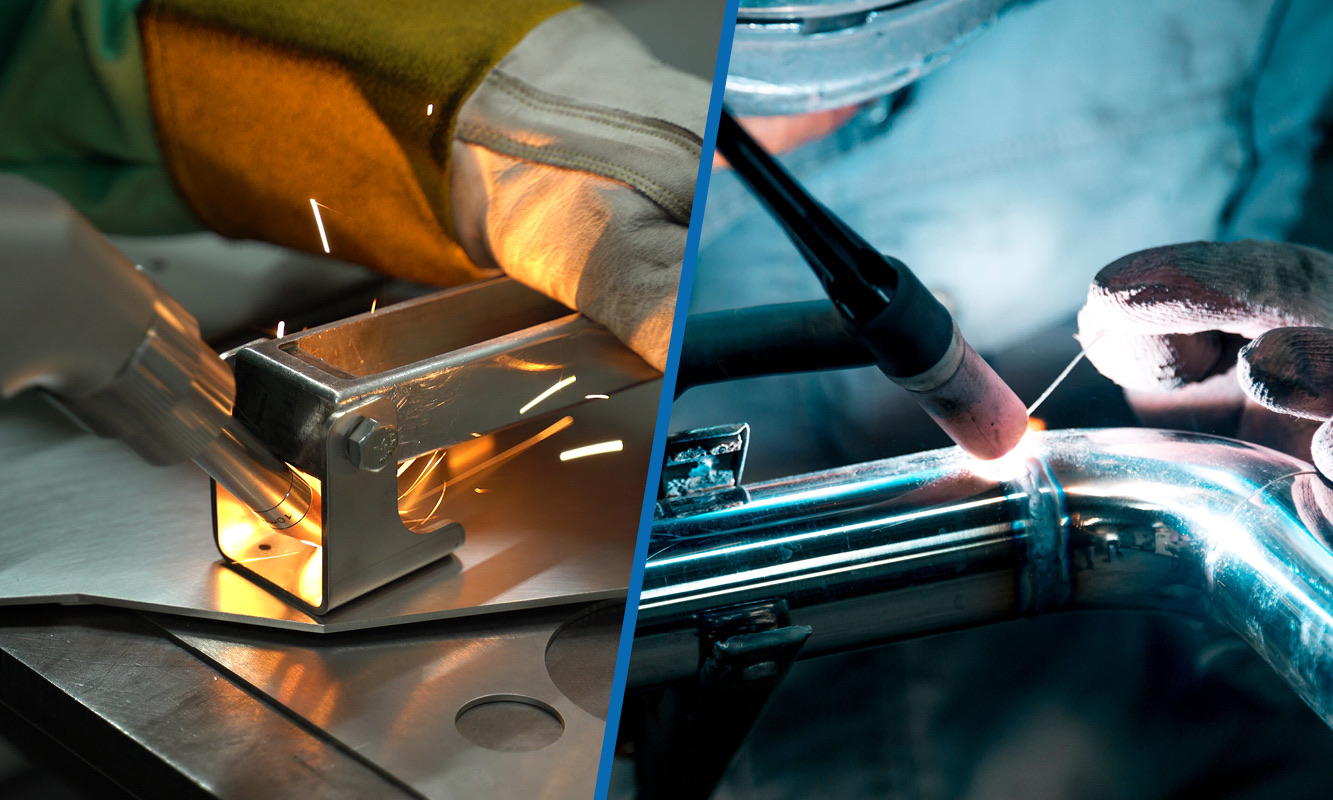
Laser welding uses a highly focused beam of coherent light-typically in the near-infrared range (e.g., 1070 nm)-to melt and fuse materials. The main risks to hands include:
Direct or reflected laser radiation, which can cause instant thermal injury even without physical contact.
Low levels of spatter or heat, depending on power settings.
Potential exposure to scattered optical energy during alignment or open-beam operations.
Argon arc (TIG) welding relies on an electric arc between a non-consumable tungsten electrode and the workpiece, shielded by inert argon gas. Hand hazards include:
Intense heat from the arc and molten metal.
Spatter and hot particles.
Contact with hot surfaces or electrodes.
Minor UV exposure (though eye/face protection handles most of this risk).
Because the dominant threats differ-optical radiation vs. thermal exposure-the protective strategies for gloves are not interchangeable.

2. Material Requirements
Laser Welding Protective Gloves
These gloves are engineered to attenuate specific wavelengths of laser light. Their effectiveness is measured by Optical Density (OD) at the relevant laser wavelength.
Constructed from specialized fabrics that either reflect or absorb laser energy.
Often feature multi-layer composites designed to prevent beam penetration.
Typically lightweight and flexible, allowing precise control during setup or operation near sensitive optics.
May include extended cuffs to protect the wrist from incidental reflections.
Importantly, standard industrial or leather gloves offer no meaningful protection against laser radiation and may even increase injury risk by absorbing energy.
Argon Arc Welding Protective Gloves
Designed primarily for thermal resistance and manual dexterity, these gloves prioritize comfort during fine-detail work.
Made from soft, heat-resistant leathers such as goatskin or cowhide split.
Optimized for tactile sensitivity, enabling welders to handle small filler rods and manipulate the torch accurately.
Provide moderate protection against brief contact with hot metal and minor spatter.
Not intended to block optical radiation; their role is strictly thermal and mechanical.
These gloves follow general welding PPE guidelines but do not address laser-specific risks.

3. Safety Standards and Certification
Protective gloves for each application must meet different regulatory benchmarks:
Laser welding gloves are evaluated under laser safety standards such as EN 207 (Europe) or referenced in ANSI Z136.1 (U.S.). These specify:
Required Optical Density for given laser parameters (wavelength, power, pulse duration).
Resistance to burn-through under direct or diffuse exposure.
Clear labeling of protected wavelength ranges.
Argon arc welding gloves fall under welding-specific PPE standards, such as EN 12477, which defines two types:
Type A: For high-heat processes like MIG or stick welding.
Type B: Specifically for TIG welding-emphasizing dexterity over heavy insulation.
Gloves certified under one standard do not satisfy the requirements of the other. Using TIG gloves in a laser environment, for example, provides zero laser protection and violates laser safety protocols.
4. Design and Functional Priorities
| Feature | Laser Welding Gloves | Argon Arc (TIG) Welding Gloves |
|---|---|---|
| Primary Function | Block laser radiation | Resist heat and enable precision |
| Dexterity Level | Moderate to high (for control panels/optics) | Very high (for rod feeding/torch handling) |
| Thickness | Thin to medium, with functional layering | Thin, soft leather for feel |
| Cuff Coverage | Often extended for forearm protection | Typically short to mid-length |
| Color/Appearance | Light or reflective finishes to reduce absorption | Natural leather tones |
The design reflects the core task: laser gloves protect against invisible radiant energy, while TIG gloves support manual skill under heat stress.
5. Can the Gloves Be Interchanged?
No. Substituting one for the other compromises safety:
Using argon arc gloves during laser welding leaves hands vulnerable to unseen laser exposure, which can cause deep tissue burns before pain is felt.
Using laser gloves for TIG welding may result in inadequate heat resistance, leading to discomfort or injury from hot materials.
Each glove type addresses a unique hazard profile. Cross-use is not supported by safety guidelines and increases the risk of occupational injury.
Conclusion: Match the Glove to the Process
Choosing the correct protective gloves isn't about preference-it's about matching PPE to the specific physical hazards of the task.
For laser welding, select gloves certified for the laser's wavelength and power, with verified Optical Density ratings.
For argon arc (TIG) welding, use gloves that meet welding PPE standards and offer the dexterity needed for precision work.
Always conduct a hazard assessment before beginning any welding operation, and ensure all personal protective equipment aligns with recognized safety standards. When used correctly, the right gloves provide essential defense-keeping hands safe, functional, and ready for the demands of modern metalworking.
Remember: In high-energy environments, the wrong glove isn't just ineffective-it can be dangerous. Always use process-specific protection.