



Comparison of Semiconductor Lasers and Fiber Lasers
1. Principle Comparison:
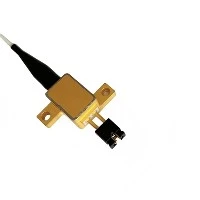
Semiconductor lasers generate laser light through the electron-hole recombination process formed by PN junctions or fluorescent materials. The fiber laser uses rare earth elements such as neodymium (Nd) doped in the center of the fiber. When the current passes through the pump fiber, these rare earth ions are excited to generate laser light.

2. Output Power Comparison:
Semiconductor lasers usually output power below a few kilowatts, while fiber lasers can output higher power, usually up to tens of kilowatts.
3. Emission Wavelength Comparison:
Semiconductor lasers mainly emit near-infrared light, with a typical wavelength in the range of 800-980nm, while the wavelength of fiber lasers can be modulated in the range of 1060nm, 1300nm, 1550nm, etc. according to the types of doping elements.

4. Stability Comparison:
The output power and wavelength of semiconductor lasers are easily affected by temperature, and fiber lasers are more stable in this respect.
5. Cost Comparison:
Semiconductor lasers are generally less expensive, while fiber lasers are more expensive. But if you need to output high-power, high-quality laser light, fiber lasers may be more economical because their higher efficiency can reduce operating costs.
6. Feature Comparison
Semiconductor lasers are easily integrated with other semiconductor devices. It has the characteristics of direct electrical modulation; easy to realize optoelectronic integration with various optoelectronic devices; small size, light weight; low driving power and current; high efficiency, long working life; compatible with semiconductor manufacturing technology; mass production, etc. wait.

The main characteristics of fiber lasers are their small size and flexibility. The laser output has many spectral lines, good monochromaticity and wide tuning range. And its performance has nothing to do with the light polarization direction, and the coupling loss between the device and the optical fiber is small. High conversion efficiency and low laser threshold. The geometry of the fiber has very low volume and surface area, plus the laser and pump can be fully coupled in the single-mode state, and so on.

7. Application Comparison:
Semiconductor lasers are widely used in laser ranging, laser radar, laser communication, laser simulation weapons, laser warning, laser guidance and tracking, ignition and detonation, automatic control, and detection instruments.
Fiber lasers are mainly used in laser optical fiber communication, laser space long-distance communication, industrial shipbuilding, automobile manufacturing, laser engraving, laser marking, laser cutting, printing roll making, metal and non-metal drilling, cutting and welding (brazing, quenching, cladding and Deep welding), military defense security, medical equipment, large-scale infrastructure, as a pump source for other lasers, etc.
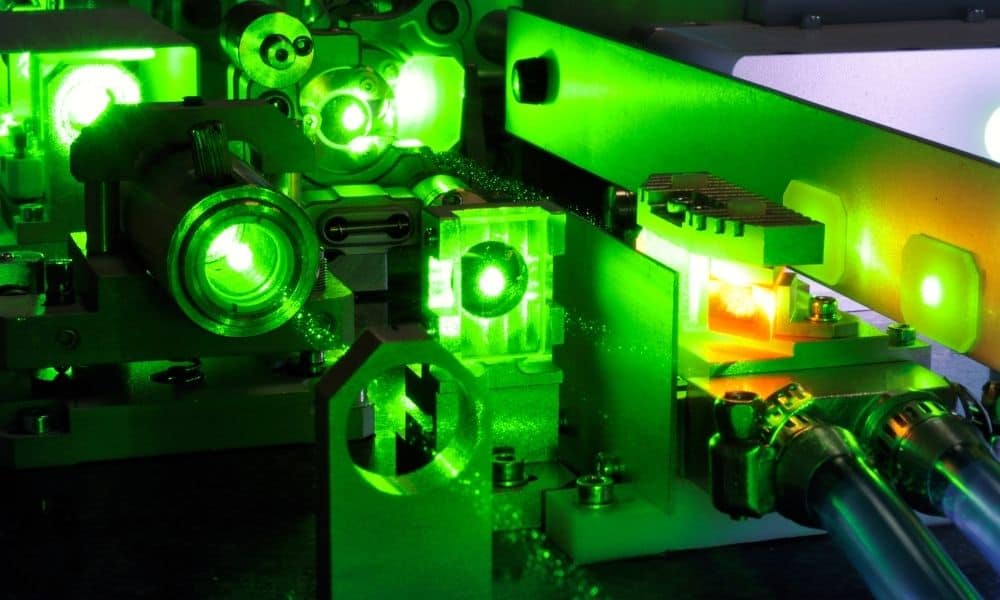
The above is the difference between semiconductor lasers and fiber lasers. Like traditional solid-state and gas lasers, fiber lasers are also composed of three basic elements: pump source, gain medium, and resonant cavity. The pump source generally adopts a high-power semiconductor laser, and the gain medium is a rare-earth-doped fiber or an ordinary nonlinear fiber. The resonator can be composed of various linear resonators such as optical feedback elements such as fiber gratings, and various ring resonators can also be formed by couplers. resonant cavity. The pump light is coupled into the gain fiber through an appropriate optical system, and the gain fiber forms population inversion or nonlinear gain after absorbing the pump light and generates spontaneous emission. The generated spontaneously emitted light undergoes the stimulated amplification and the mode selection of the resonant cavity, and finally forms a stable laser output.
Contact information:
If you have any ideas, feel free to talk to us. No matter where our customers are and what our requirements are, we will follow our goal to provide our customers with high quality, low prices, and the best service.
 Email:info@loshield.com
 Tel:0086-18092277517
 Fax: 86-29-81323155
 Wechat:0086-18092277517


