


The advent of laser technology has revolutionized numerous industries, from medical to manufacturing and beyond. However, with the benefits come significant risks, particularly in the form of potential eye injuries from laser radiation. Fiber laser glasses have become an essential piece of personal protective equipment (PPE) for individuals working in these environments. This article delves into the science behind how fiber laser glasses protect against specific wavelengths, focusing on infrared (IR) and ultraviolet (UV) laser radiation.
Understanding Laser Radiation and Eye Protection
Before examining the protection offered by fiber laser glasses, it is crucial to grasp the nature of laser radiation and its potential effects on the eye. Lasers emit photons, or particles of light, at specific wavelengths that can be visible, IR, or UV. Each type of radiation has unique characteristics and can cause different types of damage to the eye's delicate structures.

Infrared (IR) Radiation and Its Effects
IR radiation lies beyond the visible spectrum and is characterized by longer wavelengths than visible light. It is often associated with heat, as many IR lasers generate a significant amount of thermal energy. When IR radiation is absorbed by the eye, it can lead to thermal injuries, such as burns to the cornea and lens. Prolonged exposure can result in cataracts or even permanent vision loss.
Ultraviolet (UV) Radiation and Its Effects
Ultraviolet radiation has shorter wavelengths than visible light and is invisible to the naked eye. UV radiation can cause both immediate and cumulative damage to the eye. Acute exposure may lead to photokeratitis, commonly known as "welder's flash," which causes pain, redness, and temporary vision loss. Long-term exposure can contribute to the development of cataracts and other eye diseases.
Fiber Laser Glasses: A Comprehensive Analysis
Now that we have established the basic understanding of IR and UV radiation, let us explore how fiber laser glasses provide targeted protection against these specific wavelengths.
Material Composition and Functionalities
Fiber laser glasses are constructed using specialized materials that offer superior protection against laser wavelengths. The lenses are typically made from high-quality optical-grade materials such as polycarbonate or glass, which are then coated with thin films designed to reflect or absorb specific wavelengths of light. These coatings play a crucial role in blocking both IR and UV laser emissions, ensuring that users are fully protected.
Wavelength Range and Optical Density
One of the critical factors determining the effectiveness of fiber laser glasses is their ability to block a broad range of wavelengths. Fiber laser glasses are available with varying optical density (OD) ratings to cater to different laser operations, ensuring that users have the necessary protection regardless of whether they are working with IR or UV lasers.

Filter Technology and Wavelength Selectivity
To provide effective protection against IR and UV radiation, fiber laser glasses utilize advanced filter technologies. These filters are designed to selectively block or transmit specific wavelengths of light. For IR radiation, glasses may incorporate materials like zinc selenide or gallium arsenide, which have high refractive indices and can effectively block IR wavelengths. For UV protection, glasses may use special coatings that absorb UV light, preventing it from reaching the eyes.
Ergonomic Design and User Comfort
Apart from their protective capabilities, fiber laser glasses also emphasize user comfort. They are typically designed with lightweight frames and adjustable features such as nose pads and temple tips to accommodate various face shapes and sizes. The lenses are often treated with anti-reflective coatings to reduce glare and improve visual clarity during laser operations.
Compliance with Standards and Regulations
Fiber laser glasses adhere to international safety standards such as ANSI Z136.1 in the United States and EN 207/208 in Europe. These standards set stringent requirements for eye protection equipment, including minimum OD ratings and wavelength coverage. By complying with these regulations, manufacturers ensure that their products meet the highest safety benchmarks for both pulsed and CW laser operations.
Applications and Real-World Scenarios
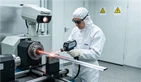
Fiber laser glasses have found widespread application in industries such as manufacturing, research, medical, and military sectors. In manufacturing settings, where laser cutting, welding, and engraving are common, workers may encounter both pulsed and CW lasers. Researchers working with high-powered lasers for experiments also require reliable eye protection. In the medical field, where lasers are used for surgeries and treatments, the glasses protect both patients and medical professionals. The military uses fiber laser glasses in various capacities, from target designation to rangefinding.
Maintenance and Care Recommendations
To maintain the performance and integrity of fiber laser glasses, it is essential to follow proper care guidelines. Lenses should be cleaned regularly with microfiber cloths or suitable cleaning solutions to prevent scratches and maintain optical clarity. Avoid exposing the glasses to extreme temperatures or chemicals that could damage the lens coatings. Proper storage in provided cases or pouches ensures that the glasses remain protected when not in use.
Conclusion
In conclusion, fiber laser glasses represent a significant advancement in eye protection for those working with lasers. Their ability to selectively block specific wavelengths, such as IR and UV radiation, combined with high OD ratings and compliance with safety standards, makes them indispensable pieces of PPE in laser-intensive environments. By prioritizing user comfort and offering versatile protection, fiber laser glasses ensure that safety does not compromise efficiency or practicality. Whether in manufacturing, research, medical, or military applications, these glasses serve as a testament to the advancements in laser safety and the commitment to protecting those who work with lasers every day.