



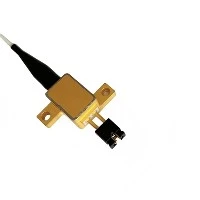
Fiber-coupled laser diodes are core optoelectronic components widely used in medical treatment, optical communication and industrial precision processing. Nonetheless, conventional single-wavelength devices suffer from fixed spectral properties and single functional modes, which cannot meet the demands of modern high-precision, multi-scenario optoelectronic applications. The combined 650 nm, 980 nm and 1470 nm laser scheme forms a complementary spectral system with graded tissue penetration and thermal effects, enabling integrated positioning, detection, cutting and repair functions and effectively breaking the performance limitations of single-wavelength devices.
2. Basic Principles and Device Characteristics
2.1 Working Mechanism of Fiber-Coupled Laser Diodes
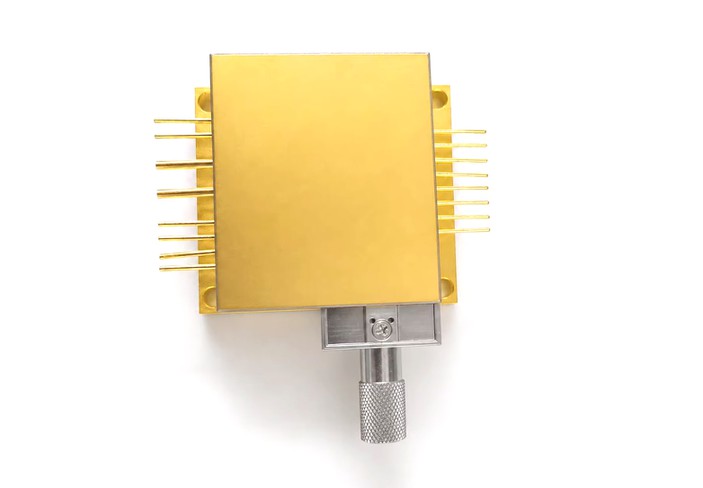
Fiber-coupled laser diodes integrate laser chips with fiber transmission structures, realizing high-efficiency photoelectric conversion and constrained laser transmission via precise optical coupling. Compared with discrete lasers, they feature high beam purity, low divergence, uniform spots and excellent anti-interference capability. The integrated structure ensures stable laser output in complex environments, supporting high-precision optical operation and multi-wavelength collaborative integration.
2.2 Characteristic Analysis of Three Single Wavelengths
2.2.1 650 nm fiber-coupled laser diode
The 650 nm visible red laser possesses high visual recognizability, low tissue penetration and favorable biocompatibility with low power consumption and negligible thermal damage. It is primarily used for optical positioning, trajectory indication, low-light phototherapy and fiber fault detection. With a compact and stable structure, it serves as the visual guidance unit of the multi-wavelength system for portable optoelectronic devices.
2.2.2 980 nm fiber-coupled laser diode
The 980 nm near-infrared laser exhibits dual absorption by hemoglobin and water molecules, with moderate penetration depth and controllable thermal diffusion. It delivers excellent hemostasis, coagulation and micro-cutting performance. Featuring high photoelectric conversion efficiency and low collateral thermal damage, it is a core light source for vascular minimally invasive repair, inflammatory physiotherapy and subcutaneous tissue reconstruction.
2.2.3 1470 nm fiber-coupled laser diode
Regarded as the golden wavelength for precise minimally invasive treatment, 1470 nm laser has an ultra-high water absorption peak in biological tissues, providing powerful tissue ablation and vaporization capabilities. Its extremely narrow thermal diffusion range enables accurate deep tissue cutting and stripping without damaging surrounding normal tissues, making it the core functional unit for high-precision minimally invasive surgery, fat dissolution and tissue shaping.
2.3 Complementarity of Triple Wavelengths
The three wavelengths form a gradient functional system without functional overlap. The 650 nm laser realizes visual positioning to solve the invisibility problem of infrared lasers; 980 nm laser performs medium-depth tissue coagulation and hemostasis with mild thermal effects; 1470 nm laser completes high-precision deep tissue ablation. Their differentiated penetration depth, thermal damage range and functional orientation establish a closed-loop working capability of "positioning-hemostasis-precise operation-repair".
3. Collaborative Technical Principle of Multi-Wavelength System
3.1 Multi-Wavelength Fiber Coupling Technology
The triple-wavelength system adopts high-precision beam combining and wavelength division multiplexing technology to achieve single-fiber coaxial output of three bands. Optimized optical path and coupling parameters suppress inter-band beam crosstalk and interference, ensuring synchronous, stable and independent output of each wavelength. The integrated fiber structure simplifies equipment composition, improves beam uniformity, and meets miniaturization and integration requirements of terminal devices.
3.2 Multi-Wavelength Collaborative Mechanism
The system operates in a hierarchical collaborative mode with clear functional division. The 650 nm visible laser provides real-time trajectory guidance to avoid operational deviation. The 980 nm laser undertakes intraoperative hemostasis and postoperative anti-inflammatory repair. The 1470 nm laser acts as the core execution unit for high-precision ablation and shaping. The dynamic collaboration of the three wavelengths effectively compensates for the single-function defect of conventional single-wavelength equipment.
3.3 Core Performance Indicators
The optimized triple-wavelength system supports continuous and adjustable power output for each wavelength, with spot uniformity over 95% and wavelength error controlled within ±5 nm. It maintains stable long-term operation with low thermal drift and fast response, fully satisfying the high-precision and high-reliability requirements of medical minimally invasive treatment, industrial detection and precision processing scenarios.
4. Core Application Scenarios
4.1 High-End Medical Minimally Invasive Treatment
4.1.1 Vascular surgery treatment
Combining 650 nm visual positioning, 980 nm vascular coagulation and 1470 nm venous ablation, the system is widely used in minimally invasive treatment of varicose veins and telangiectasia. It achieves accurate lesion localization, intraoperative hemostasis and precise vascular ablation, with minimal trauma, less bleeding and faster recovery compared with traditional surgical stripping.
4.1.2 Medical aesthetic shaping and skin repair
In medical aesthetics, 1470 nm laser dissolves subcutaneous fat and tightens soft tissues for anti-aging shaping; 980 nm laser repairs microvascular damage and eliminates subcutaneous inflammation; 650 nm low-light laser activates cell metabolism to assist postoperative skin repair. The triple-wavelength combination realizes integrated shaping, anti-inflammation and rehabilitation functions.
4.1.3 Stomatological and otolaryngological treatment
With low thermal damage and precise cutting characteristics, the system is applicable to minimally invasive operations such as gingival repair and tonsil ablation. Compared with traditional surgical tools, it causes less tissue damage and postoperative swelling, significantly shortening patients' recovery cycle.
4.1.4 Rehabilitation photobiomodulation
The 650 nm laser improves human microcirculation and activates cell vitality, while 980 nm laser penetrates superficial soft tissues to relieve inflammation and pain. Their synergistic effect is suitable for non-invasive rehabilitation treatment of osteoarthritis and soft tissue strain.
4.2 Optical Communication and Industrial Detection
4.2.1 Optical communication auxiliary application
The 980 nm laser serves as a high-efficiency pump source for erbium-doped fiber amplifiers for optical signal amplification; 1470 nm laser supports broadband signal transmission and bandwidth expansion; 650 nm visible light is used for fiber routing and fault detection, realizing integrated communication amplification and line maintenance functions.
4.2.2 Industrial precision detection
Based on differentiated material penetration and scattering characteristics, the triple-wavelength system conducts multi-dimensional detection for material composition, dimensional accuracy and surface defects. It eliminates single-wavelength detection blind zones, improving the accuracy and stability of industrial online quality inspection.
4.3 Precision Industry and Intelligent Equipment
4.3.1 Precision laser processing
In micro-processing, 1470 nm laser completes high-precision micro-cutting and ablation; 980 nm laser assists material curing and shaping; 650 nm laser provides real-time processing track positioning. The collaboration meets ultra-precision processing demands for micro-devices and flexible materials with low damage.
4.3.2 Intelligent positioning and monitoring
The system is applied to laser ranging, scanning and security monitoring. The 650 nm light provides visual indication, while 980 nm and 1470 nm infrared lasers realize long-distance target detection. It exhibits strong anti-interference and environmental adaptability for civil intelligent sensing equipment.
The 650 nm+980 nm+1470 nm triple-wavelength system forms a highly complementary spectral functional system. Its hierarchical collaborative mechanism realizes integrated visual positioning, hemostasis repair and precise ablation, effectively solving the functional singleness of single-wavelength devices. With the progress of optoelectronic integration and intelligent control technology, triple-wavelength fiber-coupled laser diodes will achieve higher integration and intelligence. They will be further applied in smart healthcare, ultra-precision processing and next-generation optical communication. Continuous technical iteration will promote the large-scale industrialization of multi-wavelength collaborative optoelectronic devices.
Contact information:
If you have any ideas, feel free to talk to us. No matter where our customers are and what our requirements are, we will follow our goal to provide our customers with high quality, low prices, and the best service.
 Email:info@loshield.com; laser@loshield.com
 Tel:0086-18092277517; 0086-17392801246
 Fax: 86-29-81323155
 Wechat:0086-18092277517; 0086-17392801246


