



Aluminum foil may partially reflect or scatter low-power laser light under ideal conditions, but it is not effective or safe for reliably blocking most lasers. Its thin, reflective surface can deflect some visible or near-infrared beams, yet it fails catastrophically against moderate-to-high-power lasers due to aluminum's low melting point (660°C). For instance, lasers above 1 watt can melt or vaporize foil in seconds, creating fire hazards or toxic fumes. This article provides a factual overview of laser light, explains why household foil is inadequate for protection, and outlines scientifically validated alternatives for absorbing or filtering lasers. Always prioritize certified safety products to prevent eye injuries or accidents.

What Is Laser Light?
Laser light (from "Light Amplification by Stimulated Emission of Radiation") is a focused, coherent beam of electromagnetic radiation with a single wavelength and direction. Unlike ordinary light, lasers emit photons in phase, resulting in high intensity and precision. Key characteristics include:
Monochromaticity: Lasers produce light of a specific wavelength, ranging from ultraviolet (UV) to infrared (IR), with minimal spread.
Coherence: Waves are synchronized, allowing beams to travel long distances without significant divergence.
Directionality: Lasers can be concentrated into a narrow beam, enabling applications like cutting or targeting.
Common laser wavelengths and their applications include:
Visible light lasers (400–700 nm): Often used in pointers (e.g., 650 nm for red lasers) or entertainment. These are low-power but can cause eye damage.
Infrared lasers (700 nm–1 mm): Include common industrial types like CO₂ lasers (10.6 μm for cutting metal) or Nd:YAG lasers (1064 nm for medical procedures). These are higher-power and pose burn risks.
Ultraviolet lasers (100–400 nm): Applied in manufacturing (e.g., 355 nm for micro-machining) or scientific research. They can damage materials and biological tissues quickly.
Lasers are ubiquitous in daily life and industry, such as in barcode scanners, surgery, material processing, and communications. However, their intensity demands proper safety measures, as even low-power beams can cause permanent eye injury upon direct or reflected exposure.
Products to Absorb or Filter Laser Light
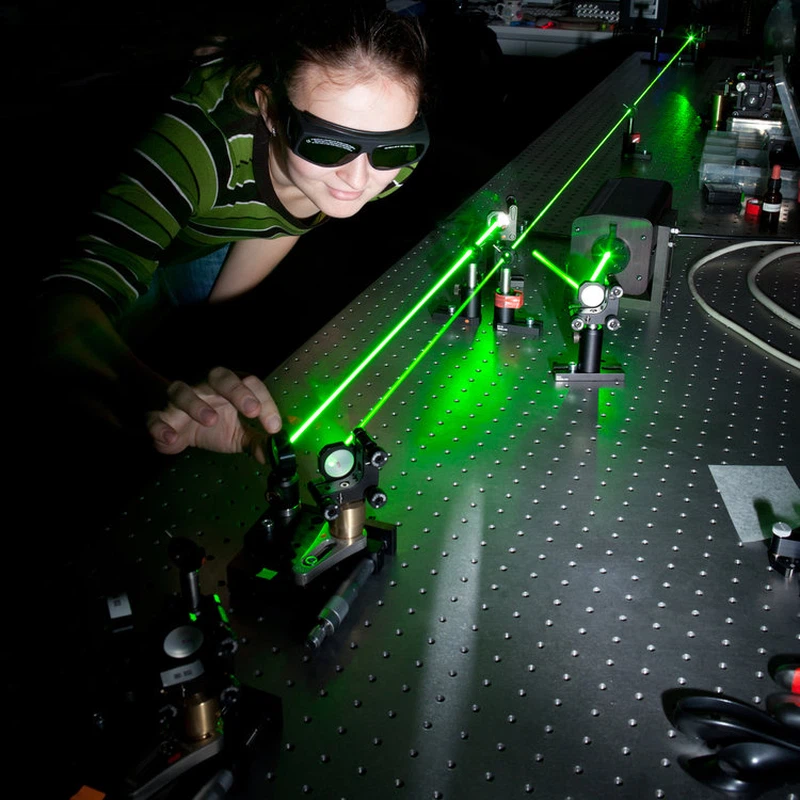
For reliable protection, specialized products absorb, reflect, or scatter laser energy based on wavelength and power. Household items like aluminum foil are insufficient due to poor thermal resistance and inconsistency (e.g., wrinkles reduce reflectivity by 20–40%). Instead, use engineered materials and devices certified to international standards (e.g., ANSI Z136 or IEC 60825):
Absorptive materials: Designed to convert light into harmless heat. Examples include anodized aluminum plates or carbon composites for high-power IR lasers, which dissipate energy efficiently. Ceramic beam dumps are ideal for labs, absorbing up to 10 kW by leveraging high melting points and thermal mass.
Reflective filters: Use dielectric coatings or polished metals to deflect beams. For instance, gold or silver mirrors can reflect >95% of specific wavelengths (e.g., IR lasers), but they require precise calibration to avoid accidental reflections.
Scattering barriers: Incorporate diffusive surfaces or particles (e.g., in safety curtains) to disperse energy. Aerosol-based systems can also scatter light in industrial settings, reducing beam focus.
Always match the product to the laser's specifications. For example, UV lasers need materials with high absorption in that range, while visible lasers require filters that block specific wavelengths without compromising visibility.
Laser Protection Products Available
When selecting protection, focus on wavelength-specific, certified options to ensure safety. Key products include:
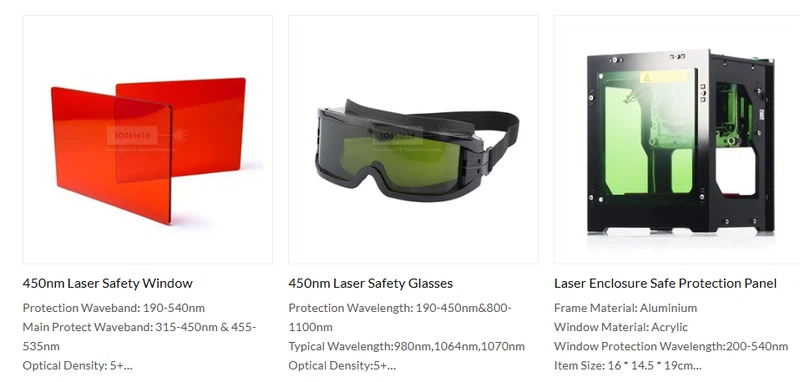
Laser safety eyewear: Glasses or goggles with optical filters that block specific wavelengths (e.g., OD4+ rating for visible lasers). These are essential for operators in labs or medical settings.
Enclosures and barriers: Fixed shields or curtains made from reinforced polymers or metal composites that absorb or scatter beams. For example, interlocked laser rooms prevent exposure during high-power operations.
Beam control devices: Include beam dumps or attenuators that safely capture and dissipate energy, often used in research with variable-power lasers.
Personal protective equipment (PPE): Such as gloves or face shields for incidental exposure, combined with area controls like warning signs.
These products are rated for optical density (OD), which indicates how much they reduce laser intensity. For instance, OD 3 blocks 99.9% of light, suitable for many applications. Consult safety guidelines to choose protection based on your laser's maximum power and wavelength.
Conclusion
In summary, aluminum foil is not a reliable solution for blocking laser light-it offers only partial, unpredictable results and can fail dangerously with higher-power beams. For effective protection, use scientifically validated products tailored to the laser's wavelength and intensity, such as certified eyewear, absorptive barriers, or beam control systems. Always adhere to safety standards to mitigate risks of burns, eye injuries, or fires. Remember: laser safety depends on proper equipment, not improvised materials. If working with lasers, prioritize professional assessments and training to ensure a safe environment.