



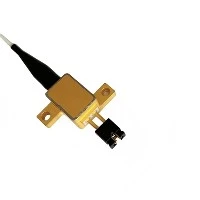
The advancement of technology has brought laser devices into our daily lives and industrial applications. Lasers, known for their precision and high energy concentration, pose safety concerns if not used properly. This is particularly true for Class 3 laser devices, which fall between low-power and high-power lasers. While they are unlikely to cause eye injury under normal operating conditions, they can still be hazardous if the beam is focused or observed through optical aids. Therefore, understanding the practical applications of these devices and implementing appropriate safety measures is crucial.

Applications of Class 3 Laser Devices
One typical application of Class 3 lasers is in educational settings, where teachers use laser pointers with an output power of 5mW, classified as Class 3R. These devices are safe at normal presentation distances but can cause retinal damage if directed into someone's eyes, especially with the use of magnifying lenses.

Another example is the laser barcode scanners commonly found in supermarkets, which usually belong to Class 3B due to their higher power and potential risks. A barcode scanner with an output power of around 50mW can scan items from a distance, but if it malfunctions and directs the laser uncontrollably, it could result in serious eye injuries to employees or customers.
Safety Measures for Class 3 Laser Devices
To mitigate these risks, here are some specific safety measures recommended for Class 3 laser devices:
Laser Safety Goggles: For teachers using laser pointers, wearing protective goggles that meet at least the ANSI Z136.1 standard can effectively prevent laser-induced eye injuries.

Beam Limiters: Installing proper beam limiters on laser scanners ensures that even in case of malfunction, the beam does not exceed the safe range.
Warning Signs: Placing prominent warning signs in laser work areas, such as "Caution: Laser Radiation," reminds individuals to be aware of safety.
Professional Training: Conducting professional laser safety training for employees operating barcode scanners, teaching them the correct procedures and emergency strategies.
Specific Applications of Laser Shields
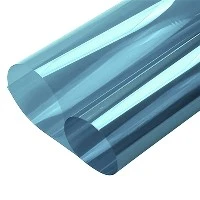
When setting up laser shields, parameters such as position, size, and material should be chosen based on the specific laser device and work environment. For instance, in a chemical laboratory using a Class 3B spectrometer, it might be necessary to install a laser shield with high reflectivity and durability. The size of the shield should cover all potential emission sources of the equipment, and its position should be close to the device to minimize the risk of reflected and scattered light. Additionally, the material of the shield should withstand prolonged exposure to ultraviolet and infrared spectrums.

By implementing these comprehensive measures, we can ensure that even when using potentially dangerous Class 3 laser devices, we can significantly reduce the occurrence of safety incidents.