




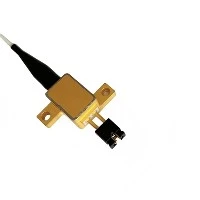
With the advancement of science and technology, lasers have been widely used in industrial, medical, scientific research and other fields. However, the high intensity and monochromatic nature of lasers also bring safety risks, especially threats to the eyes. If the 1000mW 450nm laser pointer is used improperly, it may cause retinal damage, corneal burns and other problems. Therefore, it is crucial to understand and implement effective laser protection measures.
How the laser pointer works?

A laser pointer is a device that generates a laser beam, usually consisting of an activated gain medium (solid, gas, or semiconductor) and an optical resonant cavity. The gain medium is excited by an external energy source, such as a battery, causing the electrons of the atoms or molecules within it to reach higher energy levels. When these electrons return to their ground state, they emit photons corresponding to their energy level differences.
Mirrors within the optical cavity reflect the generated photons back into the gain medium, further exciting other electrons. During this process, photons reflect back and forth, stimulating more electrons to produce stimulated emission, thereby forming light in a consistent direction and specific wavelength-that is, laser light. Eventually, part of the beam escapes through the partially transmitting mirror, forming the laser beam we see.
Laser pointer applications
1000mW 450nm laser pointer is mainly used in the following aspects:
1. Demonstration and education: Teachers and speakers often use laser pointers to direct the audience's attention.
2. Data storage and reading: CD and DVD players use low-power lasers to read data.
3. Scientific research and experiments: In scientific experiments, laser pointers can be used for positioning, measurement and marking.
4. Entertainment: Laser pointers are often used for lighting effects and entertainment purposes.
5. Pointer and positioning: used as a high-precision pointer in meetings and lectures.
The dangers of long-term exposure to laser pointers
Long-term or high-intensity laser exposure can cause the following harm to the eyes:

1. Retinal damage: Laser in the blue light band (such as 450nm) can penetrate the lens and cornea of the eye and reach the retina directly. There are a large number of photoreceptor cells in the retina. Prolonged exposure to high-energy laser light may cause damage to the photoreceptor cells and even permanent vision loss.
2. Photochemical effect: Laser can trigger chemical reactions, change cell structure, and cause long-term cumulative damage.
3. Thermal effect: Laser energy can be absorbed by intraocular tissues and converted into heat energy, causing burns.
4. Mechanical effects: The radiation pressure of the laser may cause physical damage to the internal tissues of the eye.
Eye protection measures
To protect your eyes from laser pointer hazards, the following protective measures need to be taken:
1. Wear laser protective glasses: These glasses have special filters that can block or attenuate laser light of specific wavelengths to prevent them from reaching the eyes. The choice of protective eyewear should be based on the wavelength, power and mode of operation of the laser.

2. Use safety screens or barriers: Place barriers in the path of the laser to reduce scattered and reflected laser light reaching the eyes.
3. Control the environment in which the laser is used: Make sure there is sufficient lighting in the area where the laser is used, and avoid using the laser pointer in a dark environment, because dark-adapted eyes are more sensitive to light.
4. Limit direct viewing of lasers: The laser beam should never be viewed directly, even with a low-power laser pointer.
5. Education and training: Provide training on laser safety to ensure that all operators understand the potential dangers of lasers and the necessary protective measures.
6. Comply with safety regulations: Follow international and domestic laser safety standards, such as ANSI Z136.1 or EN 207/208, etc.
By implementing these precautions, the risk of eye damage from laser pointers can be significantly reduced. It is important that no matter what type of laser is being used, safe operating procedures should be strictly followed to ensure the safety of operators and bystanders.