




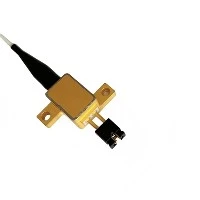
In the realm of modern industry, medicine, and scientific research, the 300W green laser diode stands out as a powerful tool with unparalleled performance. However, its potential hazards to human eyes cannot be overlooked. Ensuring the safety of operators requires a deep understanding of the characteristics and working principles of green lasers, along with the implementation of effective protective measures. This news provides a comprehensive analysis of the 300W green laser diode, integrating data tables and comparative charts to supplement the discussion.
Working Principles
Green laser diodes operate on the fundamental principle of lasers: the recombination of electrons and holes in a P-N junction results in the emission of photons. These photons are then amplified within a resonant cavity to produce a continuous laser output. Gallium nitride (GaN) materials are key in manufacturing green laser diodes, capable of emitting green light with a wavelength of around 532 nanometers, which is visible and bright to the human eye.

Applications
With a power output of 300W, green laser diodes have a wide range of applications, including:
1. Industrial Processing: Used for cutting, welding, and marking various materials.
2. Medical Field: Applied in ophthalmic surgeries and skin treatments.
3. Scientific Research: Studied for their optical properties and nonlinear optical effects.
Material Composition
Green laser diodes are typically made from gallium nitride semiconductors, often alloyed with other elements like indium or aluminum to adjust the bandgap for emission at specific wavelengths.
Pros and Cons
Advantages:
1. High power (300W) and excellent beam quality.
2. Efficient electro-optical conversion.
3. Suitable for high-precision operations.
Disadvantages:
1. Comparatively high cost.
2. Requires effective thermal management solutions.
3. Manufacturing process complexity.
Ocular Safety
The potential harm to human eyes from green laser diodes includes:
1. Retinal damage: High-energy light can destroy retinal cells.
2. Cataracts: Long-term exposure may accelerate lens degeneration.
3. Eye fatigue: Prolonged exposure can cause discomfort.
Protective measures must be taken to safeguard eyesight, such as:
1. Wearing protective goggles.
2. Setting up barriers.
3. Adhering to operational procedures.
4. Controlling the environment.

Data Tables and Comparative Charts Integrated into the Narrative
To visualize the characteristics and potential impact on human eyes, we present key data tables and comparative charts below.
Table 1: Characteristics of Green Laser Diodes
| Characteristic | Description |
|---|---|
| Power | 300W |
| Wavelength | 532nm |
| Efficiency | High (specific values depend on equipment) |
| Beam Quality | High (small focused spot size, low divergence) |
| Thermal Management | Requires effective cooling |
Table 2: Comparison Between Green Laser Diodes and Traditional Lasers
| Parameter | Green Laser Diodes | Traditional Lasers |
|---|---|---|
| Power | Up to 300W | Typically lower |
| Wavelength | Fixed at 532nm | Variable |
| Application Range | Specific high-precision tasks | Broader |
| Cost | Higher | Lower |
| Manufacturing Complexity | High | Low |
| Ocular Hazards | High, requiring strict precautions | Vary depending on power and wavelength |
Table 3: Effectiveness of Safety Measures
| Safety Measure | Effectiveness Description |
|---|---|
| Protective Goggles | Significantly reduce the risk of eye damage |
| Barriers | Effectively prevent non-operators from being exposed to laser beams |
| Operational Procedures | Ensure all manipulations adhere to safety standards |
| Environmental Control | Limit the spread of laser beams, reducing accidental exposure |
Conclusion
The 300W green laser diode is a powerful technological tool offering unprecedented capabilities across multiple fields. However, its potent functionality comes with stringent safety requirements. Understanding its working principles, applications, and potential hazards, as well as implementing appropriate safety measures, is crucial to ensure the safety and health of personnel. Through the integration of data tables and comparative charts within this narrative, we aim to provide a clearer understanding of the performance characteristics and safety protocols of green laser diodes, ensuring that their advantages can be harnessed safely and effectively. As technology advances and safety awareness increases, we look forward to green laser diodes playing an even larger role in the future while maintaining the highest standards of safety.