



The terms "laser" and "LED" are often used interchangeably, leading to confusion about whether lasers are made from LEDs. To clarify this misconception, we will delve into the definitions, classifications, material properties, applications, and important considerations of both lasers and LEDs.
What is a Laser?
A laser (an acronym for Light Amplification by Stimulated Emission of Radiation) is a device that emits light of a single wavelength in a highly collimated beam. It operates by stimulating the emission of photons through a process called stimulated emission, where an excited state atom is induced to emit a photon with the same phase and direction as an incident photon.

What is an LED?
An LED (Light Emitting Diode) is a semiconductor light source that emits incoherent light when an electric current passes through it. LEDs operate on the principle of electroluminescence, where electrons and holes recombine in the semiconductor material to release energy in the form of light.

Classifications
Lasers:
Solid-state lasers: Use crystals, glasses, or other solid materials as the active medium.
Gas lasers: Operate using gases such as helium-neon or carbon dioxide as the active medium.
Dye lasers: Use organic dyes dissolved in a solvent as the active medium.
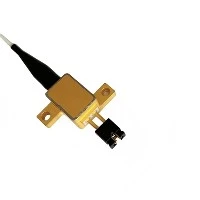
Semiconductor lasers: Also known as laser diodes, they use semiconductor materials like gallium arsenide.
LEDs:
Infrared LEDs: Emit infrared light, commonly used in remote controls.
Visible LEDs: Emit light in the visible spectrum, used in displays, traffic lights, etc.
Ultraviolet LEDs: Emit ultraviolet light, used in sterilization and curing processes.

Material Attributes
Lasers:
Monochromaticity: Emit a single wavelength of light.
Coherence: The emitted light waves are in phase, allowing for interference and diffraction effects.
Directional: Emit in a narrow beam with low divergence.
LEDs:
Incoherent: Emit light that is not coherent, meaning the light waves are not in phase with each other.
Low power: Typically emit lower power than lasers, but this varies depending on the application.
Broad spectral range: Emit light over a range of wavelengths rather than a single wavelength.
Applications
Lasers:
Medical procedures: Surgery, therapy, and diagnostics.
Industry: Cutting, welding, and measuring.
Communication: Fiber optic transmission and data storage.
Research: Physics experiments and astronomy.
LEDs:
Illumination: Household and commercial lighting.
Signage: Outdoor and indoor sign displays.
Electronics: Display screens in devices like mobile phones and TVs.
Specialty applications: Phototherapy, indicator lights, and ornamental lighting.
Considerations
Lasers can be hazardous if not used properly, requiring safety measures such as goggles and controlled environments.
LEDs have a longer lifespan and are more energy-efficient compared to traditional lighting solutions.
Both lasers and LEDs can be affected by heat, requiring appropriate cooling methods for optimal performance.
The choice between lasers and LEDs for specific applications depends on the requirements for light coherence, power, and wavelength.
Conclusion
Lasers and LEDs are different types of light sources with distinct characteristics. While both are semiconductor devices, lasers are not made from LEDs. Lasers produce coherent and monochromatic light through stimulated emission, whereas LEDs emit incoherent light through electroluminescence. Each has its own set of material properties, applications, and considerations. It is essential to understand these differences to select the appropriate technology for a given task.