



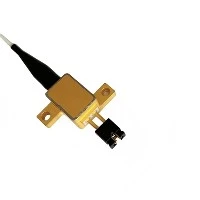
635nm and 650nm lasers, as representative light sources in the visible red spectrum, demonstrate unique value in modern agricultural production. These two laser wavelengths feature moderate tissue penetration depth and significant photobiological effects, enabling effective regulation of plant physiological activities without causing thermal damage. The 635nm laser (orange-red) possesses slightly higher photon energy than the 650nm laser (deep red), with a penetration depth of approximately 0.5-2mm in plant tissues, where it can be selectively absorbed by chlorophyll and carotenoids. The 650nm laser aligns more closely with the peak absorption spectrum of chlorophyll b, offering superior advantages in photosynthesis regulation. Current agricultural applications have established a complete technological system spanning from seed treatment to postharvest preservation, while safety protocols continue to improve.
Application Characteristics of 635nm & 650nm Lasers
Photobiological Properties
Absorption characteristics: 650nm laser closely matches chlorophyll b's absorption peak (647nm), while 635nm laser is more readily absorbed by carotenoids
Penetration capacity: Reaches palisade tissue layer in plant leaves (650nm shows 15-20% better penetration than 635nm)
Energy efficiency: 635nm photons carry 3.12eV energy, 650nm 2.99eV, both within photosynthetically active radiation range
Technical Application Modes
Continuous wave application: 5-500mW power for sustained biostimulation
Pulsed mode application: 1-100Hz frequency with adjustable duty cycle for precise regulation
Composite light application: Combined with other wavelength lasers or LED light sources

Specialized Agricultural Applications
Crop Growth Regulation
Seed treatment: 650nm laser (20mW/cm²×120s) increases rice germination rate by 18.7% and germination potential by 22.3%
Seedling cultivation: 635nm intermittent irradiation (10min/h) enhances tomato stem diameter by 14.6% and root activity by 31.2%
Flowering control: 650nm nighttime supplementation (2h/d) advances short-day crop flowering by 7-10 days
Physiological Enhancement
Photosynthesis promotion: 650nm laser increases lettuce PSⅡ maximum photochemical efficiency (Fv/Fm) by 0.12
Stress resistance induction: 635nm pretreatment boosts wheat SOD activity by 42.8% under drought while reducing MDA content by 36.5%
Quality improvement: Preharvest 650nm irradiation raises strawberry soluble sugar content by 24.3% and vitamin C by 18.7%
Production Management
Precision weeding: 650nm pulsed laser (80W, 5ms) achieves 93.4% eradication efficiency on barnyard grass meristems
Pest control: 635nm strobe (50Hz) reduces aphid landing rate by 47.6%
Quality inspection: 650nm laser-induced fluorescence detects 89.2% of apple moldy core infections

Laser Safety Protection System
Hazard Classification & Assessment
Ocular hazard: 1mW direct exposure can cause retinal burns (635nm hazard coefficient 1.2 vs 650nm 1.0)
Skin exposure limit: MPE 200mW/cm² for continuous exposure (>10s)
Equipment safety class: Agricultural lasers mostly Class IIIB (5-500mW), requiring strict control
Protection Implementation
Engineering controls
Optical enclosure system (<0.5mW/cm² leakage)
Automatic interlock devices (<50ms response)
Beam terminators (>99.9% absorption)
Personal protection
Specialty goggles (OD≥2@630-660nm)
Protective gloves (>120℃ heat resistance)
Coveralls (>200g/m² fabric density)
Management protocols
Operator training (≥8 annual hours)
Warning signage system (GB7247 compliant)
Emergency response (including eye exposure procedures)
Environmental Safety
Work area demarcation (≥3m control radius)
Aviation safety measures (<5° elevation limit)
Electrical safety (ground resistance <4Ω)

Conclusion
Through their specific photobiological effects, 635nm and 650nm lasers have achieved significant breakthroughs from fundamental research to practical applications in agriculture. For crop growth regulation, these lasers can precisely influence photomorphogenesis, photosynthesis and secondary metabolism, substantially improving yield and quality. In production management, their accuracy enables innovative approaches to physical weed and pest control. The established three-tier protection system (engineering-personnel-management) ensures operational safety. Current technical parameters have formed relatively mature standards, such as 20-50J/cm² for seed treatment and 10-30mW/cm² for growth-stage irradiation, providing reliable references for large-scale applications. With accumulated experience, these lasers will continue playing vital roles in precision and smart agriculture development.