


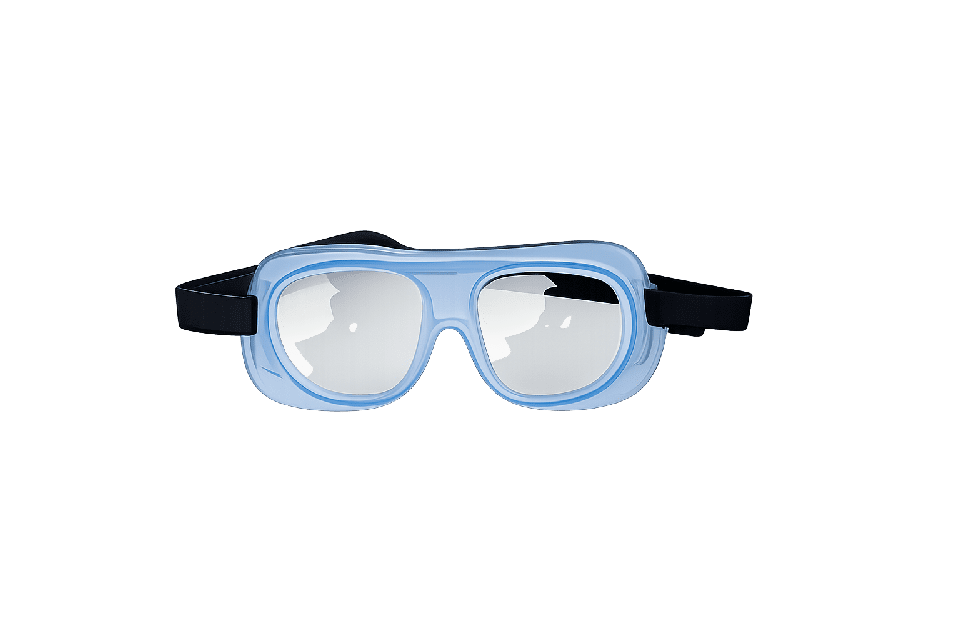
Sports Radiation Glasses Designed for Active Medical Procedures
In dynamic clinical scenarios with ongoing medical operations, medical staff often need to move, rotate, bend down and adjust viewing angles flexibly around patients and imaging devices. This puts forward higher requirements for radiation protective eyewear, which must stay firmly in place at all times without shifting or slipping.
Featuring a 0.5mmPb lead equivalent protection grade, these sports radiation glasses adopt a snug wraparound frame structure paired with an adjustable fixing strap. The overall fitting design perfectly meets the protection needs of medical practitioners working in mobile X-ray operating environments, delivering reliable and stable wearing performance throughout complex procedures.
Different from ordinary lead glasses that only focus on frontal radiation shielding, this sports-optimized structural design prioritizes anti-shift stability during body and head movements. It also realizes comprehensive peripheral radiation protection, solving the protection loopholes of traditional flat-frame radiation eyewear in dynamic working scenarios.
Excellent Anti-Shift Performance for Frequent Clinical Movements
During fluoroscopy examination, C-arm imaging scanning and various image-guided minimally invasive procedures, clinical staff need to adjust their positions frequently to cooperate with surgical operations and equipment debugging. Common daily movements in the operating room include:
- Turning the head to observe imaging display screens
- Bending over to examine and treat patients
- Walking and adjusting positions around the operating table
- Moving and calibrating medical imaging equipment
- Switching observation and operation angles flexibly
- Shuttling between multiple operating workstations
Most conventional radiation glasses have a loose fitting design. They are prone to sliding and offsetting during frequent movements, requiring repeated manual adjustment, which affects operational efficiency and leaves hidden dangers for radiation protection. As professional secure-fit radiation glasses, this product adopts a close-fitting facial structure, which can always keep the protective lenses stably aligned with the eyes during daily clinical operations, ensuring continuous and effective radiation shielding.
Wraparound Structure for Omnidirectional Peripheral Radiation Protection
Traditional flat-front radiation lenses can only provide limited frontal protection, and the open gaps on both sides of the frame easily allow scattered rays to invade. These wraparound radiation glasses extend the protective range to the temporal and eye side areas through an integrated curved frame design, eliminating the dead angle of side protection.
This structural advantage is extremely critical for medical staff who frequently change head postures and face multi-angle scattered X-rays. The optimized frame geometry brings multiple practical protection advantages for clinical work:
- Fits closely with the facial contour to reduce gaps
- Minimizes side exposed areas to block scattered rays
- Expands peripheral radiation coverage range
- Guarantees stable lens position without deflection
- Maintains firm fitting state during strenuous movement
It is worth noting that the actual radiation shielding effect is comprehensively determined by the 0.5mmPb lead equivalent specification and the overall manufacturing process of the front and side protective parts of the glasses.
Adjustable Elastic Head Strap for Enhanced Fixation
Equipped with a freely adjustable elastic head strap, these eyewear further enhances the overall fixing ability, completely solving the problem of easy slipping of traditional radiation glasses that only rely on temple support. As practical radiation glasses with a head strap, they are specially optimized for surgical scenarios requiring frequent bending, turning and equipment adjustment.
The head strap can effectively limit the offset and sliding of the frame during movement, maintain a stable and consistent fitting state for a long time, and avoid frequent interruption of work caused by adjusting glasses. Compared with conventional full-frame radiation glasses designed for static fixed use, this strapped sports structure is more adaptable to high-frequency mobile clinical operations.
Wide Application in Fluoroscopy and C-Arm Operating Scenarios
These professional sports lead glasses are tailor-made for dynamic clinical work scenarios with high requirements for wearing stability and fitting tightness, and are widely applicable to various mobile X-ray operation environments:
- Interventional radiology diagnosis and treatment operations
- Various fluoroscopy-guided minimally invasive procedures
- Cardiac catheterization laboratory routine work
- Orthopedic C-arm machine imaging and surgery
- General operating rooms equipped with mobile X-ray equipment
- Other surgical scenarios requiring frequent staff movement and X-ray protection
Before purchasing, medical institutions and staff need to reasonably select protective eyewear according to the lead equivalent standard, side protection range, frame fitting degree and hospital-specific radiation protection management specifications required by different procedures.
Sports Design Focuses on Practical Stability Rather Than Appearance
The "sports" positioning of this product is not limited to the streamlined and fashionable frame appearance. More importantly, the sports-style structural design achieves a tighter facial fit, full-angle wraparound protection and stronger anti-slip fixation compared with traditional ordinary optical frame radiation glasses.
For clinical workers who pursue stable protection in high-intensity dynamic operations, these sports-style X-ray protective eyewear is a highly practical protective solution.
In terms of product selection, users with myopia can choose OTG over-glasses models, and those pursuing ultra-light wearing experience can opt for lead acrylic radiation glasses. In contrast, this sports-style lead glass model is the best choice for working scenarios that take tight fitting, wraparound protection and movement stability as the core protection requirements.

Why Peripheral Coverage Matters in Scatter Radiation Protection
Scatter radiation does not always approach the wearer from directly in front. During fluoroscopy, C-arm imaging, interventional procedures, and other X-ray workflows, scattered radiation can reach the eye area from oblique and lateral directions as the operator changes position around the patient and equipment.
For this reason, peripheral radiation protection is an important consideration when selecting protective eyewear for active clinical environments.
A close-fitting pair of wraparound radiation glasses can extend protective coverage around the sides of the eye area and reduce the open gaps typically found in flatter, front-oriented eyewear designs.
Scatter Can Reach the Eyes From the Side
The direction of scatter changes with procedure geometry, operator position, patient orientation, and X-ray equipment placement.
A clinician may move between:
- the procedure table
- imaging monitors
- the C-arm
- instrument trays
- control equipment
- different sides of the patient
As the head turns, the eye area may no longer remain directly behind the frontal lens surface.
This is why lateral scatter protection and side coverage become relevant in addition to the shielding performance of the front lens.
Wraparound Geometry Extends Coverage Beyond the Front
Traditional radiation glasses primarily place shielding in front of the eyes.
By contrast, wraparound radiation protective eyewear follows the contour of the face more closely and can extend protective structures toward the temple and peripheral eye area.
This geometry can help:
- reduce open side gaps
- maintain coverage during head rotation
- position protective material closer to the eye area
- support more consistent shielding geometry
- improve coverage during changing viewing angles
The actual level of protection still depends on the Pb equivalency and construction of the front and side components.
Peripheral Coverage Is Especially Important During Active Procedures
During active medical procedures, users rarely remain in one fixed position.
Head movement, bending, monitor viewing, and equipment repositioning can all change the relationship between the eyewear and the scatter field.
For this reason, sports radiation glasses with wraparound coverage are particularly relevant for workflows such as:
- interventional radiology
- fluoroscopy-guided procedures
- cath lab procedures
- orthopedic C-arm imaging
- operating rooms using mobile X-ray systems
In these environments, a closer-fitting frame can help maintain more consistent eye coverage as the wearer moves.
Side Coverage and Front Lens Pb Should Be Evaluated Separately
A 0.5mmPb sports lead glasses specification should not automatically be interpreted as meaning that every part of the eyewear provides 0.5mmPb shielding.
For accurate product selection, buyers should confirm:
- front lens Pb equivalency
- side shield or peripheral Pb equivalency
- side protection material
- extent of lateral coverage
- test conditions
- frame geometry
This is particularly important when comparing side coverage radiation eyewear from different manufacturers.
Better Coverage Depends on Fit as Well as Frame Shape
Wraparound geometry alone does not guarantee effective peripheral coverage.
The eyewear also needs to sit correctly relative to the face.
A frame that is too wide, unstable, or positioned too far from the eyes can create larger gaps around the temple area.
For this reason, close-fitting radiation glasses should be evaluated together with:
- frame width
- temple geometry
- nose bridge fit
- retention strap adjustment
- overall frame stability
A secure fit helps maintain the intended position of the front and side protective components during normal clinical movement.
Peripheral Coverage Complements, Rather Than Replaces, Other Radiation Protection
Wraparound eyewear is one part of a broader radiation protection strategy.
Protective glasses should be used together with appropriate shielding practices, operator positioning, equipment settings, and facility radiation safety procedures.
For users working in active X-ray environments, the main advantage of wraparound lead glasses is that they combine frontal protection with a frame geometry designed to address the side and oblique exposure pathways that conventional flat-frame eyewear may leave more open.
Product Advantages
0.5mmPb Lead Glass Lenses
High-quality lead glass lenses provide effective protection against scattered X-ray radiation while delivering excellent optical clarity for precision-focused procedures.
Sealed Protective Frame
The close-fitting frame surrounds the eye area to help minimize gaps, offering enhanced protection from multiple directions.
Adjustable Elastic Head Strap
An elastic retention strap keeps the glasses securely positioned during movement and extended procedures while accommodating different head sizes.
Clear, Distortion-Free Vision
Optically balanced lead glass lenses provide sharp visibility with minimal distortion, supporting accurate observation of patients, instruments, and imaging displays.
Lightweight for Daily Wear
Designed to balance protection and comfort, the frame distributes weight evenly to reduce pressure during prolonged clinical use.
Durable and Reusable
Manufactured with robust materials for repeated use in hospitals, imaging centers, and other professional healthcare environments.
Sports Model vs Standard Lead Glasses
Both sports-style radiation eyewear and standard lead glasses are designed to reduce X-ray exposure to the eye area, but they are optimized for different wearing conditions and clinical workflows.
The main difference is not simply appearance.
Sports radiation glasses are designed around a closer fit, wraparound geometry, and more secure retention, while standard lead glasses typically use a conventional optical-frame structure suited to routine daily use.
Sports Radiation Glasses Prioritize Secure Fit
The sports model is intended for users who move frequently during imaging procedures.
Its close-fitting frame and adjustable retention strap help keep the eyewear in a more stable position when the wearer:
- turns toward monitors
- bends over the patient
- moves around the procedure table
- repositions imaging equipment
- changes working angles
- moves between different clinical stations
For these situations, secure-fit radiation glasses can reduce unwanted frame movement compared with a looser conventional frame.
Standard Lead Glasses Prioritize Familiar Everyday Wear
Standard lead glasses generally use a more traditional optical-frame design.
This makes them suitable for users who prefer:
- familiar glasses-style geometry
- straightforward daily wear
- easy on-and-off use
- standard departmental stocking
- routine diagnostic X-ray applications
They may be a practical choice when high movement stability or wraparound peripheral coverage is not the main purchasing requirement.
Wraparound Coverage Is a Key Sports-Model Difference
A major advantage of wraparound radiation glasses is the way the frame extends around the side of the eye area.
Compared with flatter standard frames, this geometry can reduce open lateral gaps and provide broader peripheral coverage.
This is particularly relevant in workflows where the user frequently changes head orientation and scatter may approach from oblique or lateral directions.
The actual shielding performance still depends on the Pb equivalency and construction of the front and side protective components.
Retention Strap vs Conventional Temple Fit
Standard radiation glasses are normally held in place mainly by the bridge and temples.
Sports-style eyewear adds an adjustable retention strap to support a more secure fit.
For radiation glasses with a head strap, this can be useful during:
- active fluoroscopy procedures
- C-arm imaging
- interventional workflows
- operating room movement
- prolonged procedures requiring repeated repositioning
The strap is therefore a functional part of the sports model rather than only an accessory.
Sports Model vs Standard Lead Glasses at a Glance
| Selection Factor | Sports Radiation Glasses | Standard Lead Glasses |
|---|---|---|
| Main Priority | Secure fit and movement stability | Routine everyday wear |
| Frame Geometry | Close-fitting / wraparound | Conventional optical frame |
| Peripheral Coverage | Higher design priority | Model dependent |
| Retention | Adjustable head strap | Temple-based fit |
| Head Movement Stability | High priority | Moderate |
| Typical Workflow | Active fluoroscopy / C-arm / interventional | Routine diagnostic imaging |
| Wearing Style | Sports-style, close to face | Familiar glasses-style fit |
| Department Standardization | Possible | Often simpler |
| Best For | Users who move frequently | Users who prefer conventional daily eyewear |
Who Should Choose the Sports Model?
The 0.5mmPb sports lead glasses are a better fit for users who prioritize:
- closer facial fit
- stable eyewear positioning
- wraparound side coverage
- reduced frame movement
- adjustable retention
- active X-ray workflows
For users who mainly need a conventional pair of lead glasses for routine radiography or general departmental use, a standard full-frame model may be more practical.
Choose Based on Workflow, Not Frame Style Alone
The sports model should not be selected simply because it looks more streamlined or athletic.
Its real value is the combination of wraparound radiation protection, secure retention, and movement stability.
Standard lead glasses remain a good choice when the purchasing priority is simplicity, familiar fit, and routine daily use.
For facilities comparing different X-ray protective eyewear options, the most useful selection factors are frame geometry, Pb specification, peripheral coverage, retention method, total weight, and how much movement the wearer performs during the intended procedure.
Stable Radiation Eyewear During Head and Body Movement
During active X-ray and fluoroscopy procedures, protective eyewear needs to remain in a consistent position while the wearer turns, bends, reaches, and moves around the patient or imaging equipment.
For this reason, stable radiation eyewear is especially important in clinical workflows where frequent head and body movement is unavoidable.
The close-fitting structure and adjustable retention strap of these 0.5mmPb sports radiation glasses are designed to help maintain a more secure fit than conventional eyewear during active use.
Why Movement Can Affect Radiation Glasses Fit
Radiation glasses that shift during a procedure may require repeated adjustment and can change the position of the protective lenses relative to the eyes.
Common movements that can affect fit include:
- turning toward imaging monitors
- bending over the patient
- leaning across the procedure table
- moving around a C-arm
- repositioning equipment
- changing working height
- walking between imaging and instrument areas
A more secure eyewear configuration helps reduce unnecessary frame movement during these routine actions.
Close-Fitting Geometry Helps Maintain Position
The sports-style frame is designed to sit closer to the face than a conventional optical-frame design.
This closer geometry can help improve frame stability while also supporting wraparound coverage around the peripheral eye area.
For secure-fit radiation glasses, the relationship between frame shape and facial fit is important because excessive movement can change:
- lens position
- side coverage
- temple alignment
- viewing angle
- comfort during longer procedures
A properly fitted close-frame design helps keep the protective eyewear more consistently positioned.
Adjustable Retention Strap Adds Stability
The adjustable head strap is an important part of the sports model.
Unlike standard lead glasses that rely mainly on the bridge and temples for retention, radiation glasses with a head strap can be adjusted to provide additional support during movement.
This can be useful when the wearer:
- turns the head repeatedly
- bends forward
- looks between the patient and monitor
- moves around the procedure table
- performs prolonged image-guided procedures
The strap should be adjusted securely without creating excessive pressure around the head or face.
Stable Fit Supports Consistent Peripheral Coverage
Movement stability is also relevant to side protection.
The intended geometry of wraparound radiation glasses depends on the frame remaining correctly positioned around the eyes and temple area.
If the frame shifts significantly, the size and position of open gaps around the side of the eyewear may also change.
A secure fit therefore helps maintain more consistent:
- frontal lens positioning
- lateral coverage
- temple-area protection
- wraparound geometry
Actual radiation attenuation still depends on the Pb equivalency and construction of the protective components.
Designed for Active Fluoroscopy and C-Arm Workflows
Movement stability can be particularly important for professionals working in:
- interventional radiology
- fluoroscopy-guided procedures
- cath labs
- orthopedic C-arm imaging
- operating rooms using mobile X-ray systems
- other image-guided procedures involving frequent repositioning
In these settings, sports lead glasses for fluoroscopy can provide a practical alternative to conventional radiation eyewear when secure retention is a higher priority.
Fit Should Be Evaluated Before Standardizing the Model
A sports frame is not automatically stable for every user.
Hospitals and distributors should consider:
- frame width
- nose bridge fit
- temple geometry
- head strap adjustment range
- total eyewear weight
- facial dimensions
- required peripheral coverage
These factors help determine whether the secure-fit X-ray protective eyewear remains properly positioned during normal movement.
Movement Stability Is the Core Advantage of the Sports Design
The primary value of the sports model is not simply its appearance.
Its close-fitting frame, wraparound geometry, and adjustable retention system are designed around a specific use case: keeping radiation protective eyewear stable during active medical procedures.
For clinicians who frequently change head and body position around fluoroscopy or X-ray equipment, this combination can make wraparound sports radiation glasses a more suitable choice than conventional full-frame eyewear.
Applications
Cardiac Catheterization Lab
Cardiac catheterization procedures often require clinicians to work close to the patient and imaging system while frequently changing position around the procedure table.
In this environment, cath lab radiation glasses need to provide more than a basic frontal shielding lens. The eyewear should also remain stable as the wearer turns toward monitors, leans over the patient, adjusts instruments, and moves between different working positions.
The close-fitting design of these 0.5mmPb sports lead glasses is intended for this type of active fluoroscopy workflow.
Secure Fit During Frequent Movement
Cath lab staff may repeatedly:
- turn between the patient and imaging monitors
- lean forward during catheter manipulation
- change position around the table
- move between controls and instruments
- reposition imaging equipment
- adjust viewing direction during fluoroscopy
A conventional loose-fitting frame may shift during these movements.
The wraparound frame and adjustable retention strap of these secure-fit radiation glasses help keep the protective eyewear in a more consistent position throughout the procedure.
This can reduce the need for repeated frame adjustment and help maintain more stable lens placement relative to the eyes.
Protection for Work Performed Close to the Imaging Field
During cardiac catheterization, physicians and clinical staff may work relatively close to the patient while fluoroscopic imaging is being used.
Because the patient is a major source of scattered X-ray radiation during fluoroscopy, operator position and shielding geometry are important considerations.
For users working near the procedure table, fluoroscopy radiation glasses should therefore be evaluated according to:
- front lens Pb equivalency
- side and peripheral coverage
- frame position
- distance from the face
- retention stability
- procedure-specific radiation safety requirements
This model uses a 0.5mmPb lead glass specification for the protective lens, while the sports-style frame is designed to support a closer and more stable fit.
Wraparound Coverage for Changing Viewing Angles
Cath lab clinicians do not always face the X-ray system from the same direction.
Turning toward a monitor or changing body position can alter the angle between the user's eyes and the scatter field.
The geometry of wraparound radiation glasses can extend protective coverage toward the peripheral eye area compared with a flatter conventional frame.
This makes side coverage particularly relevant for:
- interventional cardiologists
- catheterization laboratory physicians
- nurses assisting near the table
- technicians working around fluoroscopy equipment
The actual level of lateral shielding should always be confirmed from the specification of the side protective components rather than assumed from the frame shape alone.
Adjustable Retention for Long and Active Procedures
An adjustable head strap adds another point of retention beyond the temples and nose bridge.
For radiation glasses with a head strap, this can be useful during longer procedures where repeated movement may otherwise cause the frame to gradually shift.
The goal is not to create an excessively tight fit, but to maintain a stable position while the user moves naturally through the procedure.
A Practical Choice for Active Cath Lab Workflows
For catheterization laboratories, the main advantage of sports-style protective eyewear is the combination of:
- 0.5mmPb protective lenses
- close-fitting frame geometry
- wraparound peripheral coverage
- adjustable retention
- improved stability during movement
For clinicians who frequently work close to fluoroscopy equipment and change position throughout the procedure, wraparound lead glasses for cath lab use can provide a more suitable wearing configuration than standard loose-fitting radiation eyewear.
Eyewear should still be used as one part of a broader radiation protection program that includes appropriate barriers, positioning, protective garments, and facility-specific safety procedures.
OEM Sports Radiation Eyewear for Hospital & Distributor Custom Programs
Professional OEM radiation protective eyewear solutions go beyond simple logo printing. Our custom service focuses on retaining the core performance of 0.5mmPb sports lead glasses - stable secure fit, full wraparound coverage and reliable anti-slip retention - to deliver consistent quality for hospital procurement and distributor private-label projects. We provide tailored OEM and private-label services strictly based on customized specs and batch order demands.
Customizable Core Configuration
All customized parameters are confirmed in advance of mass production to match client scenarios, covering all core configurations of the secure-fit radiation glasses:
- Original 0.5mmPb standard lens & wraparound side protective structure
- Adjustable retention head strap and frame color customization
- Private logo branding and exclusive product identification
- Custom protective case, individual packaging and carton shipping specs
Traceable Private Label Customization
For distributors launching exclusive wraparound radiation glasses product lines, our OEM solution supports full private labeling while ensuring complete product traceability and batch quality control. Custom label content includes brand logo, product model, Pb grade, batch number, packaging marking and outer carton information, helping clients build independent brand assets with standardized production records.
Integrated Strap & Accessory Customization
The adjustable head strap is a core functional part of radiation glasses with an adjustable head strap, not a trivial accessory. In OEM projects, we can customize strap types, connection methods and adjustment ranges, and provide matching replacement straps and supporting accessories. This standardized accessory configuration greatly simplifies after-sales maintenance and repeated procurement for hospitals and distributors.
Stable Standardization for Repeat Orders
For long-term cooperative distributors with continuous stocking demands, we archive all confirmed customization parameters of X-ray protective eyewear. Frame style, lens specs, wraparound structure, retention system, branding position, accessories and packaging are fully standardized for each repeat order, ensuring consistent product appearance and performance across multiple production batches, and stabilizing your market SKU system.
Scenario-Based OEM Custom Service
We deliver targeted OEM solutions based on clients' actual needs, including clinical application scenarios, required Pb equivalent grade, order quantity, branding and packaging requirements. Different from superficial appearance modification, our customization is centered on practical medical use, ensuring the customizedsports radiation glasses perfectly adapt to dynamic clinical operation scenarios.
Hot Tags: 0.5mmPb Sports Lead Glasses | Sealed Wrap-Around X-Ray Protective Eyewear, China, manufacturers, suppliers, factory, customized, wholesale, best, cheap, professional, for sale, near me


