


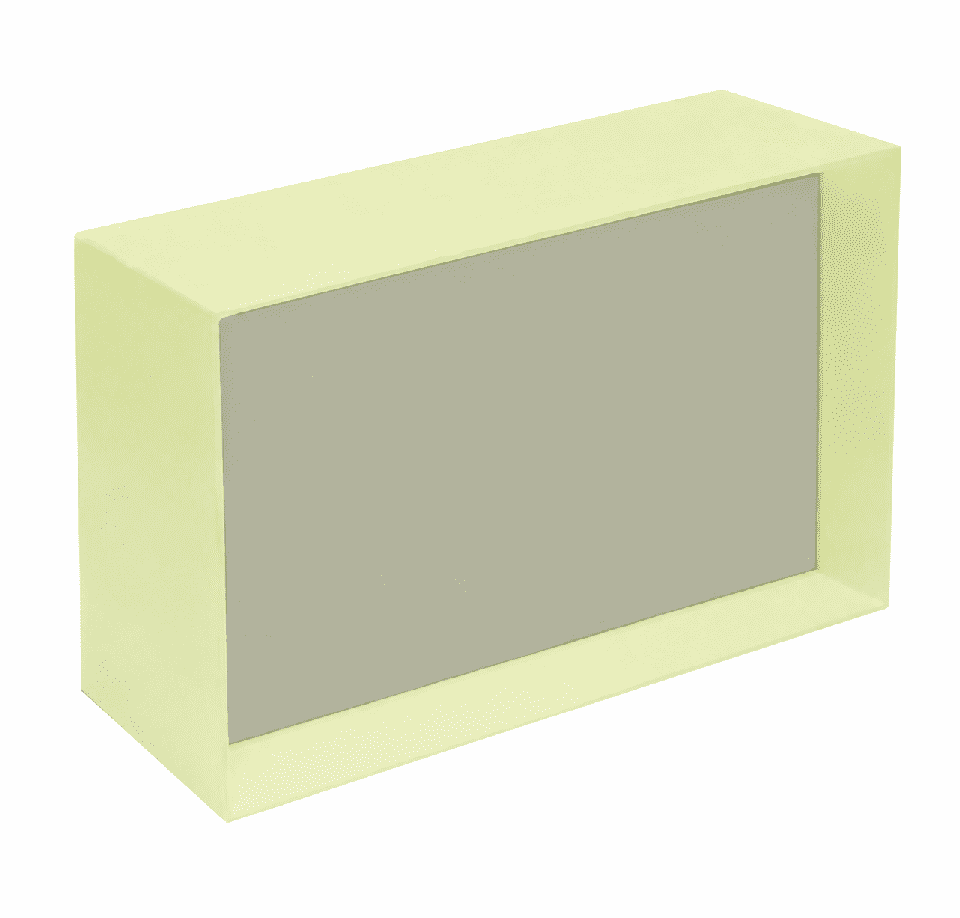
Products overview
Our Radiation-Proof Lead Glass is designed for environments where both clear visibility and reliable radiation protection are essential. Made with lead oxide-containing optical glass, it provides effective shielding against X-ray radiation while maintaining excellent transparency for observation and monitoring.
With a lead equivalent range of 3–30 mmPb and light transmittance of over 98%, this lead glass is suitable for medical imaging rooms, radiation-controlled areas, nuclear medicine facilities, laboratories, and customized shielding projects.
Available in multiple sizes and thicknesses, the glass can be selected according to different installation and radiation protection requirements.

Product Specifications
| Specification | Details |
|---|---|
| Product Name | Radiation-Proof Lead Glass |
| Material | Lead Oxide-Containing Optical Glass |
| Lead Equivalent | 3–30 mmPb |
| Light Transmittance | Over 98% |
| Product Size | 200–2400 mm, Customizable |
| Standard Thickness Options | 8 / 10 / 12 / 15 / 18 / 20 / 25 mm |
| Standard Sizes | 1000×800 / 1200×800 / 1200×900 / 1500×900 / 1200×1000 mm |
| Main Function | X-Ray Radiation Shielding and Visual Observation |
| Customization | Custom Sizes and Specifications Available |

X-Ray Lead Glass for Transparent Radiation Shielding
X-ray lead glass is designed for radiation shielding applications where both X-ray attenuation and clear visual observation are required. Unlike opaque shielding materials such as lead sheet or lead-lined panels, radiation shielding lead glass creates a transparent protective viewing area, allowing operators to observe patients, equipment or inspection processes from behind a radiation barrier.
LOSHIELD X-ray shielding glass is available in multiple thicknesses and lead-equivalency configurations for medical, laboratory and industrial radiation-protection projects. With available specifications covering 3–30mmPb lead equivalency, the glass can be selected according to the shielding requirements defined for the individual project.
Transparent Protection Where Visibility Matters
Many radiation-controlled environments require personnel to maintain direct visual contact with the protected area while remaining behind a shielding barrier.
In these applications, transparent radiation shielding glass can be integrated into walls, control-room windows, doors, partitions and equipment enclosures to create a viewing area without replacing the surrounding radiation-protection system.
Typical applications may include:
- X-ray room observation windows;
- CT control-room viewing windows;
- fluoroscopy and radiology rooms;
- nuclear medicine facilities, where the specified product is suitable;
- radiation shielding doors and partitions;
- laboratory radiation-protection windows;
- industrial X-ray and NDT viewing systems.
The required lead equivalency for X-ray glass should always be determined from the project's radiation-shielding design rather than from room type alone.
Lead Glass Combines Visibility With X-Ray Attenuation
The key function of lead glass for radiation shielding is to combine optical transparency with radiation attenuation.
Lead-containing glass incorporates radiation-attenuating components into the glass composition, allowing the panel to function as a transparent section of a properly designed shielding system. This makes it fundamentally different from ordinary architectural glass, which should not be assumed to provide a specified level of X-ray protection.
For project evaluation, buyers should consider both shielding and optical parameters, including:
- required Pb equivalency;
- physical glass thickness;
- radiation energy or test conditions;
- visible light transmission;
- viewing-panel dimensions;
- installation and frame requirements.
These parameters should be evaluated together rather than selecting radiation protection glass based only on physical thickness.
3–30mmPb for Different Shielding Specifications
Different radiation shielding projects can require different levels of lead equivalency. Instead of limiting buyers to a single shielding specification, JTBYShield supplies 3–30mmPb X-ray lead glass configurations to support a wider range of project requirements.
The appropriate specification can be selected according to the Pb equivalency stated in the shielding design, followed by confirmation of the corresponding glass thickness, panel dimensions and available test documentation.
This makes the product suitable for B2B buyers sourcing:
custom X-ray lead glass, radiation shielding window glass, lead glass for X-ray rooms, and higher lead-equivalency transparent shielding for specialized projects.
Physical glass thickness and lead equivalency are not interchangeable values. Buyers should refer to the applicable product specification and test conditions when selecting a glass configuration.
Part of a Complete Radiation Shielding System
An X-ray lead glass window should not be evaluated as an isolated panel. Its shielding performance within a completed installation also depends on the surrounding frame, wall construction, joints and overlap with adjacent shielding materials.
For this reason, project buyers should confirm:
Required Pb equivalency → Glass specification → Viewing size → Frame integration → Shielding continuity
before ordering.
For hospitals, radiation-shielding contractors, medical equipment manufacturers and radiation-protection companies, LOSHIELD can provide available glass specifications, custom-size options and technical documentation to support project evaluation and B2B procurement.
Lead Equivalency vs Physical Glass Thickness
When selecting X-ray lead glass for radiation shielding, one of the most important distinctions is the difference between lead equivalency (mmPb) and physical glass thickness (mm). These two values describe different properties and should not be used interchangeably during product selection.
The physical thickness tells buyers how thick the glass panel is. The lead equivalency indicates how much radiation shielding performance the glass provides compared with a stated thickness of pure lead under defined test conditions.
For example, a 15 mm thick radiation shielding glass panel should not automatically be assumed to provide 15mmPb protection. The actual Pb equivalency of X-ray shielding glass depends on the glass composition, density, lead content and the radiation energy used during testing.
What Does Physical Glass Thickness Mean?
Physical thickness refers to the actual measured thickness of the lead glass panel.
Common project specifications may include glass thicknesses such as:
- 8 mm;
- 10 mm;
- 12 mm;
- 15 mm;
- 18 mm;
- 20 mm;
- 25 mm.
This value is important for handling, weight, frame design and installation, but it does not by itself define the radiation protection level.
When purchasing lead glass for X-ray rooms, buyers should therefore avoid selecting a panel based only on millimeter thickness.
What Does mmPb Lead Equivalency Mean?
The term mmPb lead equivalency describes the radiation attenuation performance of a shielding material relative to a specified thickness of lead.
For radiation shielding lead glass, the Pb-equivalent value should be based on a defined test method and stated radiation conditions.
Important verification points include:
- stated lead equivalency;
- physical glass thickness;
- test voltage or energy range;
- test method or standard;
- radiation attenuation data;
- sample or product configuration tested.
This information helps procurement teams compare different X-ray shielding glass specifications using actual shielding performance rather than physical dimensions alone.
How to Select the Correct X-Ray Lead Glass
For most projects, the selection process should begin with the required Pb equivalency rather than the physical thickness.
A practical sourcing sequence is:
Required Pb Equivalency → Matching Lead Glass Specification → Physical Thickness → Panel Size → Frame Integration → Test Documentation
For example, if a project drawing specifies a certain Pb-equivalent value for an observation window, the buyer should first match that value with the available X-ray lead glass specification, then confirm the corresponding physical thickness and installation dimensions.
The required shielding level should normally come from the project's approved radiation-shielding design, radiation physicist or qualified shielding consultant.
Why This Matters for Window and Frame Design
Physical thickness still plays an important engineering role even though it does not directly equal mmPb.
A thicker radiation shielding window glass may affect:
- total panel weight;
- required frame depth;
- support structure;
- installation method;
- edge clearance;
- shipping and handling;
- compatibility with lead-lined walls or doors.
This is why project buyers need both:
- Pb equivalency for radiation performance
and
- physical thickness for mechanical design.
Ignoring either value can create problems during specification or installation.
How to Select the Required Pb Equivalency
Selecting the correct Pb equivalency for X-ray shielding glass should begin with the radiation-protection requirement of the project, not with the physical thickness of the glass.
For hospitals, shielding contractors and medical equipment suppliers, the required lead equivalency is normally defined by the approved shielding design, radiation physicist, radiation safety officer or other qualified project professional.
Once that value is known, the appropriate X-ray lead glass can be selected according to the required mmPb, physical thickness, panel size and installation conditions.
Start With the Project Shielding Requirement
The most important question is:
What lead equivalency does the project require at the viewing opening?
This value may be specified in:
- radiation shielding calculations;
- architectural drawings;
- room shielding schedules;
- equipment installation specifications;
- tender documents;
- radiation-safety requirements.
For example, if the project requires a viewing window with a specified Pb equivalency, buyers should source radiation shielding lead glass that meets that requirement under the applicable test conditions.
The glass should not be selected simply because it is described as "thick" or "high lead."
Consider the Radiation Source and Energy
The required shielding level can vary depending on the radiation source, energy and intended application.
Important project information may include:
- X-ray tube voltage;
- operating energy range;
- equipment type;
- workload;
- distance from the source;
- room layout;
- occupancy around the shielding barrier.
These factors are normally considered during the shielding calculation before the final lead equivalency for radiation shielding glass is specified.
For this reason, JTBYShield does not recommend selecting mmPb based only on a general room type such as "CT room" or "X-ray room."
Match the Required mmPb With the Correct Glass Specification
After the required Pb equivalency has been confirmed, buyers can match it with the available 3–30mmPb X-ray shielding glass range.
The selection process should follow this order:
Required Pb Equivalency → Matching Glass Specification → Physical Thickness → Panel Size → Frame Integration → Technical Verification
This prevents a common sourcing mistake: choosing the glass by physical thickness first and assuming that the thickness automatically equals the required mmPb value.
Check the Test Conditions
A stated Pb equivalency should always be reviewed together with the applicable test conditions.
When comparing lead glass for radiation shielding, buyers should confirm:
- stated lead equivalency;
- physical glass thickness;
- test voltage or energy range;
- applicable test method;
- radiation attenuation results;
- sample configuration tested.
This is especially important when comparing products from different X-ray shielding glass suppliers, because two glass panels with similar thicknesses may not provide the same verified radiation attenuation.
Confirm the Viewing Window Size
The required panel size is another important project parameter.
Once the shielding level has been established, the buyer should confirm the clear viewing size and total glass dimensions required for the installation.
For custom X-ray lead glass windows, useful information includes:
- required viewing opening;
- finished glass dimensions;
- frame rebate or overlap;
- panel thickness;
- edge finish;
- quantity.
The shielding glass should integrate correctly with the surrounding lead-lined wall, door or frame so that the transparent opening does not become a weak point in the overall radiation barrier.
Verify Frame and Shielding Continuity
Lead equivalency alone is not enough if the glass is installed incorrectly.
For an X-ray observation window, the glass, frame and surrounding wall shielding should work together as one continuous radiation-protection system.
Project teams should confirm:
- glass-to-frame overlap;
- frame shielding level;
- wall Pb equivalency;
- joint treatment;
- installation tolerances.
This is particularly important for larger custom panels and higher Pb-equivalent shielding requirements.
Request Supporting Technical Documentation
Before approving a specification, B2B buyers should request available technical documentation for the selected radiation protection lead glass.
Useful documents may include:
- product technical datasheet;
- Pb-equivalency test report;
- radiation attenuation data;
- physical thickness information;
- visible light transmission data;
- dimensional tolerances;
- material specification;
- packing and handling information.
These documents help shielding contractors, hospitals and equipment manufacturers verify that the selected glass matches the project specification before production or installation.
Information to Send When Requesting a Quote
To help identify the appropriate custom X-ray lead glass, buyers should provide as much of the following information as possible:
Required Pb equivalency | X-ray energy or kVp | Glass size | Quantity | Application | Project drawing | Frame requirement | Destination market
If the required Pb equivalency has already been specified by the project's radiation physicist or shielding consultant, JTBYShield can use that value to match the appropriate glass configuration and provide available technical documentation for review.
For projects requiring transparent radiation protection, the correct approach is to select the shielding requirement first and the physical glass specification second.
Where X-Ray Lead Glass Is Used
X-ray lead glass is used in medical and veterinary imaging environments where radiation shielding and direct visual observation are required at the same time. Installed as part of a properly designed radiation barrier, radiation shielding lead glass allows staff to observe patients, animals or imaging procedures while maintaining the specified shielding level of the surrounding wall, door or partition.
JTBYShield 3–30mmPb X-ray shielding glass can be supplied in different lead-equivalency levels, thicknesses and panel sizes to match project-specific radiation protection requirements.
The required Pb equivalency should be determined by the project's approved shielding design or qualified radiation-protection professional rather than by room type alone.
Veterinary Hospitals & Veterinary X-Ray Rooms
Veterinary hospitals and animal imaging centers commonly use X-ray, DR and other diagnostic imaging equipment. Where a protected control or observation area requires direct visibility into the examination room, lead glass for veterinary X-ray rooms can be incorporated into the shielding barrier.
A properly specified X-ray observation window allows veterinary personnel to maintain visual contact with the animal and imaging area from behind the protective barrier.
For veterinary radiation shielding projects, buyers should confirm:
- required Pb equivalency;
- observation-window dimensions;
- physical lead-glass thickness;
- surrounding wall and frame shielding;
- available radiation attenuation documentation.
Custom-size radiation shielding glass for veterinary clinics can be supplied according to the required viewing opening and project drawings.
DR Rooms & Diagnostic X-Ray Rooms
Digital radiography (DR) and general diagnostic X-ray rooms are among the most common applications for X-ray lead glass windows.
The glass is typically incorporated into a control-room observation window or radiation shielding partition, providing a transparent viewing area between the operator and the X-ray examination space.
For a DR room lead glass window, the glass Pb equivalency should correspond to the shielding requirement specified for that particular barrier.
Project buyers should evaluate the complete shielding assembly, including:
Lead Glass + Shielded Window Frame + Wall Shielding + Joint/Overlap Design
This helps maintain shielding continuity around the transparent viewing area rather than treating the glass panel as an isolated radiation-protection component.
Dental Clinics & Dental X-Ray Rooms
Dental clinics using intraoral X-ray, panoramic imaging, CBCT or other dental radiography systems may require radiation barriers depending on equipment configuration, workload, room layout and applicable shielding requirements.
Where a transparent viewing section is included in the shielding design, dental X-ray lead glass can provide visual observation while forming part of the specified protective barrier.
For dental X-ray room shielding glass, important purchasing considerations include the required lead equivalency, glass dimensions, frame construction and installation location.
Custom radiation protection lead glass can be manufactured according to the dimensions specified for dental clinic renovation, new construction or equipment installation projects.
CT Rooms & CT Control-Room Windows
CT facilities often require a protected control area from which operators can observe the patient and scanning room.
A CT room lead glass window provides transparent separation between the control area and imaging environment while contributing to the radiation shielding system specified for the barrier.
For hospital CT projects, buyers may need to coordinate:
- specified mmPb requirement;
- clear viewing opening;
- finished lead-glass dimensions;
- physical glass thickness;
- panel weight;
- frame depth and overlap;
- wall shielding specification;
- technical and test documentation.
JTBYShield can supply lead glass for CT rooms in custom dimensions and available Pb-equivalent configurations according to project specifications.
One Lead Glass Range for Different Radiation Shielding Projects
Although veterinary hospitals, DR rooms, dental clinics and CT rooms can all use radiation shielding window glass, they should not automatically use the same Pb equivalency or physical glass thickness.
The correct specification depends on the approved radiation shielding design for each project.
For this reason, JTBYShield's 3–30mmPb radiation shielding lead glass range allows B2B buyers to select transparent shielding according to the required Pb value rather than relying on a single standard glass configuration.
When requesting custom X-ray lead glass for a project, buyers can provide:
Application | Required Pb Equivalency | Glass Size | Quantity | Project Drawing | Installation Requirement
Based on these specifications, the appropriate X-ray shielding lead glass configuration can be matched for hospital, dental, veterinary or diagnostic imaging projects.

Factory Manufacturing & OEM Support for X-Ray Lead Glass Projects
As a B2B supplier of X-ray lead glass and radiation shielding materials, JTBYShield supports project-based manufacturing for hospitals, radiation shielding contractors, medical equipment suppliers and radiation protection companies.
Our role is not limited to supplying standard glass panels. For qualified projects, we can coordinate product specification, size requirements, lead-equivalency options, cutting and finishing requirements, packaging and supporting technical documentation according to the buyer's project needs.
Factory Production for Radiation Shielding Lead Glass
The production of radiation shielding lead glass requires consistent control of material specification, glass thickness, dimensions and finished panel quality.
Depending on the selected product configuration, factory processing may include:
- standard and custom glass sizes;
- different physical thicknesses;
- multiple Pb-equivalent specifications;
- cut-to-size production;
- edge grinding or polishing, where available;
- dimensional inspection;
- surface inspection;
- protective packing for international shipment.
For B2B buyers, these capabilities make it easier to source custom X-ray shielding glass according to project drawings instead of modifying standard panels after delivery.
Custom Sizes for X-Ray Observation Windows
Radiation shielding projects often require glass dimensions that match a specific wall opening, door vision panel, equipment enclosure or control-room window.
JTBYShield can support custom X-ray lead glass according to required panel dimensions and project specifications.
Typical custom supply information may include:
- finished glass width and height;
- required Pb equivalency;
- physical glass thickness;
- edge-finish requirement;
- quantity;
- installation drawing;
- packaging requirement.
Providing these details at the quotation stage helps reduce specification mismatches before production.
OEM Lead Glass for Radiation Protection Companies
For radiation protection brands, distributors and shielding companies, JTBYShield can support OEM radiation shielding glass projects based on order quantity and technical requirements.
OEM support may include:
- custom product specifications;
- private-label packaging;
- distributor product labels;
- customized carton markings;
- project-specific documentation;
- buyer SKU or model identification;
- repeat-order supply.
This can help radiation protection companies integrate X-ray shielding lead glass into their own product portfolio without relying only on generic standard-size panels.
Support for Medical Equipment Manufacturers
Medical and industrial equipment manufacturers may require lead glass as part of a completed machine, viewing window or radiation shielding enclosure.
For these projects, JTBYShield can work according to equipment drawings and required shielding specifications to support OEM X-ray lead glass with defined dimensions and repeatable production requirements.
This may include supply for:
- X-ray equipment viewing windows;
- inspection enclosures;
- radiation shielding cabinets;
- control-room windows;
- lead-lined doors and partitions;
- custom equipment assemblies.
For repeat equipment production, consistency in dimensions and material specification can be especially important.
Quality Inspection Before Shipment
Before packing, finished radiation protection lead glass should be inspected according to the applicable product and order requirements.
Quality-control checks may include:
- glass dimensions;
- physical thickness;
- surface condition;
- edge condition;
- visible defects;
- packaging condition;
- product identification.
Where applicable, technical documentation and lead-equivalency information can also be prepared for project review.
For B2B procurement, this helps support greater consistency between samples, first production orders and repeat supply.

Protective Packaging for International B2B Orders
Lead glass is a heavy and fragile engineering material, so export packaging is an important part of project delivery.
Depending on panel size, thickness and order quantity, protective packing can be arranged to reduce the risk of edge damage, surface scratching and breakage during transport.
Packaging requirements may include:
- individual surface protection;
- edge protection;
- separation between glass panels;
- reinforced wooden cases;
- external carton or crate markings;
project or SKU identification.
For large custom X-ray lead glass panels, packaging design should be confirmed together with shipment and handling requirements.
From Technical Drawing to Repeat Supply
For qualified OEM and project orders, the sourcing process can follow a structured B2B workflow:
Project Requirement → Pb Specification → Drawing Review → Sample or Technical Confirmation → Production → Quality Inspection → Export Packing → Repeat Supply
Buyers can provide the required lead equivalency, panel dimensions, quantity, project application and drawings to request a technical review and quotation.
This makes JTBYShield suitable for customers sourcing custom radiation shielding lead glass, OEM X-ray lead glass, and project-specific transparent radiation shielding components.
Hot Tags: X-Ray Radiation Shielding Lead Glass | 3–30 mmPb Lead Equivalency, China, manufacturers, suppliers, factory, customized, wholesale, best, cheap, professional, for sale, near me


