





The essence of a YAG laser welding power supply is a sophisticated energy conversion and control system. Its core task is to provide the required electrical energy to the pump source (xenon lamp or krypton lamp), thereby stimulating the Nd:YAG crystal to produce stimulated radiation and form laser light.
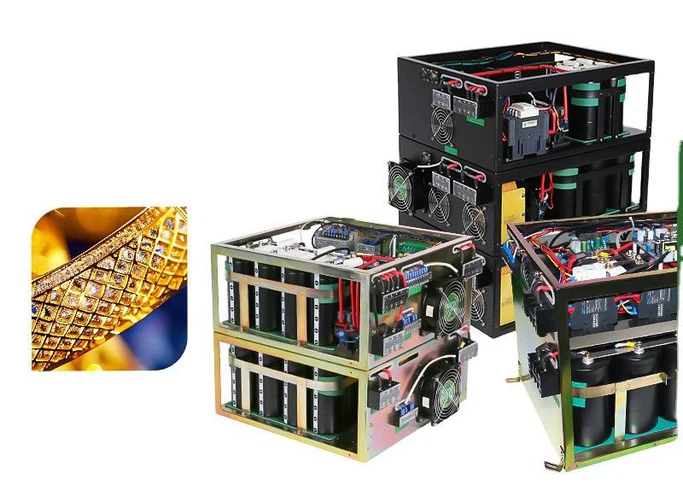
Working Principle
1. Energy Conversion Process:
Rectification and Filtering: First, industrial-frequency alternating current (AC) is converted into smooth direct current (DC) through a rectifier bridge and filter capacitors.
Inversion (Core Process): This DC power is converted into a high-frequency AC square wave ranging from tens to hundreds of kHz via a full-bridge or half-bridge inverter circuit and controlled by high-frequency switching devices (such as IGBTs or MOSFETs). This is the core of modern switching power supply technology, significantly improving efficiency and reducing size.
Boosting and Charging: After being boosted by a high-frequency transformer, the high-frequency AC power is rectified to charge the energy storage capacitor bank. The capacitors store the final energy for pumping.
Pumping and Laser Emission: When a trigger signal arrives, a high-voltage ignition pulse first ionizes the pump lamp (xenon lamp) to create a path. The energy stored in the energy storage capacitor is then discharged through the lamp in a very short time, generating an intense flash (pump light). This excites the neodymium ions in the YAG crystal to undergo energy level transitions. After oscillation and amplification in the resonant cavity, a high-energy laser pulse is output.
2. Key Control Parameters of the Power Supply:
Charging voltage/current: directly determines the amount of energy stored in the capacitor (E = 1/2CU²), thereby controlling the peak power and single-pulse energy of the laser output.
Pulse width: refers to the duration of the power supply discharge (pumping). It determines the time the laser energy acts on the workpiece, directly affecting the weld penetration depth, weld width, and heat-affected zone size. Wide pulses are suitable for deep penetration welding, while narrow pulses are suitable for fine machining.
Repetition rate: refers to the number of laser pulses output per second. A high frequency achieves continuous, smooth seam welding and improves efficiency; a low frequency is used for intermittent spot welding.
Main Categories
1. Classification by Operation Mode
① Pulsed Laser Power Supplies:
Principle: Operates in a repetitive pulse pattern, with each pulse independently charging and discharging the capacitor. Parameters (energy, width, and frequency) can be precisely configured independently.
Features: High instantaneous power, low average power, low heat input, and minimal thermal damage to the material. They are the workhorse for precision machining.
Subcategories: They can be divided into simmering laser power supplies (which require high-voltage pre-ionization for improved stability) and non-simmering laser power supplies with a simplified design.
② Continuous Laser Power Supplies:
Principle: Provides continuous and stable DC energy to a pump source (usually a krypton lamp, due to its higher photoelectric conversion efficiency), producing continuous, uninterrupted laser output.
Features: High average power, primarily used for deep-penetration welding and high-speed cutting, but with relatively significant thermal impact. The core of their power supply design lies in extremely high current stability and ripple control.
2. Classification by Modulation Method and Technology
① Analog Power Supply (Traditional SCR Power Supply):
Technical Features: Uses silicon-controlled thyristors (SCRs) as the main switching element to directly rectify and phase-control the power supply (50/60Hz) to charge large energy storage capacitors.
Advantages: Simple circuit structure, mature technology, low manufacturing cost, and strong overload resistance.
Disadvantages: Large and bulky size, high energy consumption, low efficiency (typically <40%), poor output stability (susceptible to grid fluctuations), narrow parameter adjustment range, long charging time resulting in limited repetition rate, and safety hazards due to direct connection to the grid (requiring water and electricity isolation).
② Switching Power Supply (Modern High-Frequency Inverter):
Technical Features: Uses IGBTs or MOSFETs as high-speed switching devices. The power supply is first rectified to DC, then inverted to high-frequency (e.g., 20-50kHz) AC. After voltage step-up/down via a high-frequency transformer, the rectified output is achieved. This achieves precise, high-frequency control of the charging process.
Advantages: Small size, light weight, high efficiency (over 85%), low energy consumption, excellent output stability (unaffected by power grid fluctuations), wide parameter adjustment range, fast response speed, and high repetition rate operation.
Disadvantages: Complex circuit design, stringent requirements for components and EMC/EMI design, and high initial cost. However, these devices have become a dominant market force.
3. Classification by Functional Characteristics
① Constant Current Source: A basic power supply that uses feedback control to maintain a constant pump lamp current, thereby indirectly stabilizing laser output.
② Negative Energy Feedback Power Supply: A hallmark of high-end power supplies. These power supplies use a built-in photodetector to monitor the actual laser output in real time and compare it with the set value. If any deviation occurs, the control system dynamically adjusts the charging voltage to ensure highly consistent energy from pulse to pulse. This is crucial for applications requiring extremely consistent welding quality, such as aerospace and medical devices.
Application Scenarios of Different Power Supply Types
1. Analog Pulse Power Supply Applications:
Primarily used in general hardware processing applications where welding quality and efficiency are not critical, such as spot welding of common tools, kitchenware, door and window fittings, and low-end electronic components. In these applications, cost-effectiveness and basic functionality are paramount considerations.
2. Switching Pulse Power Supply Applications:
This is the absolute workhorse of precision manufacturing and high-end processing. Its precise energy control and unparalleled stability meet the demanding process requirements of cutting-edge industries.
Consumer Electronics: Precision spot welding of smartphone camera modules (CCMs), welding of USB Type-C interface shields, and welding of lithium battery tabs require minimal heat-affected zones and zero spatter.
Medical Devices: Hermetic sealing and welding of surgical instruments (such as scissors and tweezers), endoscope components, and pacemaker housings require absolutely reliable sealing and biocompatibility, with no contamination.
Aerospace: Repairing film cooling holes in engine turbine blades and welding various high-sensitivity sensor components. These processes involve specialized materials (such as high-temperature alloys) and complex processes, requiring highly reliable and repeatable welding processes.
Automotive: Welding of engine fuel injectors, various sensors (oxygen sensors, pressure sensors), and busbars in new energy vehicle power battery modules requires withstanding high strength and vibration.
Jewelry: Precision welding of highly reflective materials such as gold and platinum requires aesthetically pleasing results.
3. Applications of Continuous Laser Power Sources:
Primarily used in the manufacture of thick-walled components requiring high-power deep penetration welding.
Automotive: Welding of powertrain components such as transmission gears, drive shafts, and clutches.
Mold and Die Industry: Repair and surface enhancement of large molds.
Heavy Machinery: Welding of thick-plate steel structures and hydraulic cylinders.
A YAG laser welding power supply is more than just a simple power supply unit; it's a critical subsystem that directly determines laser output performance and weld quality. In terms of technological evolution, switch-mode pulse power supplies based on high-frequency inverter technology have become the market mainstream due to their superior overall performance, while negative energy feedback technology is standard for high-end precision applications.
Choosing the right power supply requires a deep understanding of its technical principles and classification characteristics, as well as precise matching with actual application requirements (materials, processes, and production capacity). Looking ahead, with the in-depth integration of digital and intelligent technologies and the application of new devices, YAG laser welding power supplies will continue to evolve towards higher efficiency, smaller size, greater intelligence, and greater stability and reliability, providing a powerful and precise power source for high-end precision manufacturing.
Contact information:
If you have any ideas, feel free to talk to us. No matter where our customers are and what our requirements are, we will follow our goal to provide our customers with high quality, low prices, and the best service.
 Email:info@loshield.com
 Tel:0086-18092277517
 Fax: 86-29-81323155
 Wechat:0086-18092277517


