


In aesthetic and dermatological treatments, Intense Pulsed Light (IPL) technology is widely used for hair removal, skin rejuvenation, and vascular lesion therapy. While highly effective, IPL devices emit intense bursts of broad-spectrum light that pose serious risks to eye health if proper protection is not used.
A common misconception is that dark sunglasses offer sufficient eye protection during IPL procedures. This is not true - and using regular sunglasses in place of professional IPL safety goggles can lead to permanent eye damage.
This article explains, in clear and scientifically accurate terms, why ordinary sunglasses are not a substitute for certified IPL laser protection eyewear, based on optical principles, international safety standards, and documented risks.

1. Fundamental Differences in Optical Protection Mechanisms
IPL Safety Goggles: Engineered for High-Energy Light Blocking
IPL devices produce pulses of light across a broad wavelength range - typically 500 to 1200 nanometers (nm) - including visible and near-infrared (NIR) radiation. This energy can penetrate deep into eye tissues.
Professional IPL protection goggles are specifically designed to block these wavelengths using advanced optical filtering technologies:
Wavelength-Specific Filtering: These goggles are calibrated to block the exact spectral output of the IPL device in use. For example, a filter used with a 590 nm cut-off filter will block all light above that threshold.
High Optical Density (OD): Certified goggles provide an optical density (OD) of 4 or higher, meaning they reduce transmitted light by a factor of 10,000 times or more (e.g., OD4 = 99.99% blockage).
Targeted Absorption or Reflection: They use multi-layer coatings or specialized materials to absorb or reflect harmful wavelengths, not just darken overall vision.
Regular Sunglasses: Designed for Sunlight, Not Medical Light Therapy
Everyday sunglasses are intended for outdoor use and protect against natural sunlight. Their capabilities are limited:
UV Protection Only: Most sunglasses block UVA and UVB rays (below 400 nm), but offer little to no protection in the visible and near-infrared range (500–1200 nm) - precisely where IPL energy is strongest.
No High-Energy Resistance: They are not tested against high-intensity pulsed light and may degrade, crack, or allow dangerous levels of radiation to pass through under IPL exposure.
No Wavelength Selectivity: Unlike medical-grade goggles, they uniformly dim light across the spectrum, which does not provide targeted protection.
2. Real Risks of Using Sunglasses During IPL Treatments
Exposure to unfiltered IPL light can cause severe and irreversible eye injuries. Using non-compliant eyewear increases the risk of:
✅ Retinal Damage
IPL near-infrared light can pass through the eye's lens and focus on the retina.
This concentrated energy may cause thermal or photochemical burns to retinal tissue, potentially leading to permanent vision loss or blind spots.
✅ Corneal Injury
High-intensity visible and UV light can damage the cornea, resulting in photokeratitis - a painful condition similar to sunburn of the eye, causing redness, tearing, and sensitivity to light.
✅ Lens and Long-Term Damage
Repeated exposure to intense light may contribute to early cataract formation due to oxidative stress in the lens.
✅ Impaired Treatment Monitoring
Tinted sunglasses distort color perception, making it difficult to observe skin reactions (such as erythema or purpura), which are critical for safe and effective treatment. This can lead to over-treatment or under-treatment, increasing the risk of burns or poor results.

3. Critical Design Features of Professional IPL Protection Goggles
Medical-grade IPL safety goggles incorporate engineering and design elements that regular sunglasses lack:
🔒 Full-Spectrum and Directional Protection
Wraparound or sealed frames prevent scattered or reflected light from entering the eyes from the sides, top, or bottom - a common hazard during IPL treatments.
🔍 Wavelength-Selective Transmission
Advanced filters allow certain wavelengths to pass through (e.g., for visual clarity) while blocking harmful ones. This enables clinicians to monitor skin response without compromising safety.
💪 Durability and Impact Resistance
Lenses are made from materials that withstand repeated exposure to high-energy pulses without cracking or degrading.
Many meet impact resistance standards, reducing the risk of injury from accidental breakage.
🏷️ Clear Labeling and Compliance
Certified goggles are clearly marked with:
Protected wavelength range (e.g., "500–700 nm")
Optical density (e.g., "OD 5+")
Compliance with international safety standards

4. International Safety Standards: A Non-Negotiable Requirement
Professional IPL protection must meet recognized safety certifications. These ensure the goggles have been tested under real-world conditions.
✅ Key International Standards:
EN 207 / EN 208 (Europe): Specifies requirements for laser protection eyewear, including resistance to direct and diffused laser radiation.
ANSI Z136.1 (USA): American National Standard for Safe Use of Lasers, covering classification and protective measures.
IEC 60825: International standard for the safety of laser products, including protective housings and user safeguards.
⚠️ Regular sunglasses are tested only for general UV protection (e.g., ISO 12312-2) and do not meet any laser or intense pulsed light safety standard.
5. Best Practices for Safe IPL Eye Protection
To ensure maximum safety during IPL procedures, follow these evidence-based guidelines:
✔️ Match Goggles to Device Specifications
Always use eye protection that corresponds to the wavelength and energy output of the IPL device in use.
Never assume one pair of goggles works for all devices.
✔️ Inspect and Replace Regularly
Check goggles for scratches, cloudiness, or frame damage before each use.
Replace them if any defects are found - damaged filters may lose protective capacity.
✔️ Protect Everyone in the Treatment Room
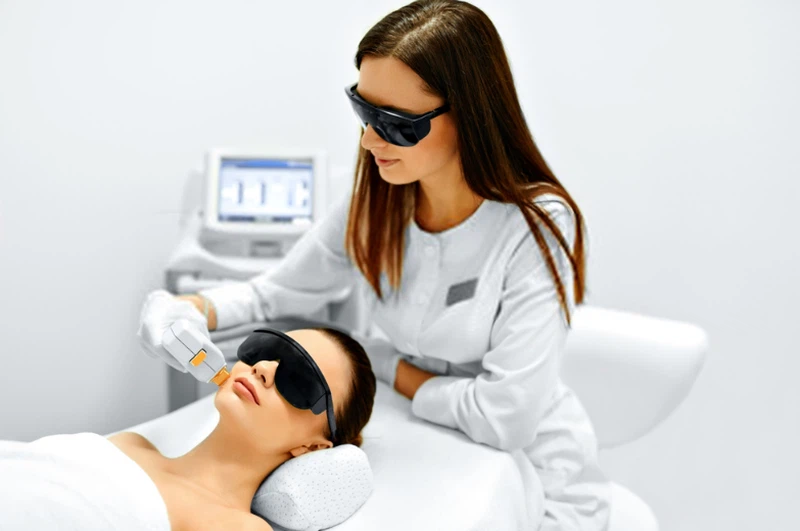
Both the patient and the operator must wear appropriate eye protection.
Reflective surfaces (e.g., mirrors, metal tools) can redirect light, posing risks even to bystanders.
✔️ Train Staff and Enforce Protocols
Include eye protection in standard operating procedures (SOPs).
Provide regular training on the risks of IPL exposure and the correct use of safety equipment.
✔️ Avoid "Universal" or Unlabeled Goggles
Goggles without clear wavelength and OD ratings should not be used. Protection must be specific and verifiable.
Conclusion: Safety Cannot Be Compromised
The dark tint of regular sunglasses may feel protective, but it offers no meaningful defense against the high-intensity, broad-spectrum light emitted by IPL devices. True eye safety comes from scientifically engineered, certified protection designed for the specific optical hazards of medical light therapy.
Using non-compliant eyewear - such as fashion sunglasses - during IPL treatments is a serious safety violation that can result in permanent vision damage and legal liability.
✅ Bottom Line:
Sunglasses ≠ IPL Protection
Certified Goggles = Essential Safety Equipment
Investing in proper IPL eye protection is not optional - it is a fundamental requirement for safe, ethical, and professional practice in aesthetic and dermatological care.