



1064nm vs 808nm Lasers: Understanding the Differences and Implementing Effective Laser Safety Measures
Laser technology plays a vital role in modern industry, medicine, research, and telecommunications. Among the various laser wavelengths used today, 1064nm and 808nm are two of the most commonly encountered in practical applications. Although both fall within the near-infrared (NIR) spectrum and are invisible to the human eye, they differ significantly in their physical properties, typical uses, and associated safety risks. Understanding these differences is crucial for ensuring safe and effective operation. This article explores the distinctions between 1064nm and 808nm lasers and provides a comprehensive guide to laser safety practices suitable for professional environments.
1. FundamentalCharacteristics of 1064nm and 808nm Lasers
1064nm Laser
The 1064nm wavelength is a primary output of solid-state lasers, particularly those based on certain gain media. It lies in the near-infrared range, which is invisible to the human eye. This wavelength is known for its deep penetration into materials and biological tissues, making it suitable for high-power industrial processes such as cutting, welding, and marking, as well as in medical procedures and remote sensing.
808nm Laser
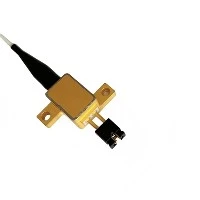
The 808nm wavelength is typically produced by semiconductor diode lasers. It is also in the near-infrared spectrum and invisible without specialized detection equipment. This wavelength is often used as a pump source to energize other laser materials that then emit at different wavelengths. It is also directly applied in medical treatments such as hair removal and certain therapeutic applications due to its specific interaction with biological pigments.

2. Key Differences Between 1064nm and 808nm Lasers
| Feature | 1064nm Laser | 808nm Laser |
|---|---|---|
| Typical Source | Solid-state lasers | Semiconductor diodes |
| Common Applications | Material processing, medical surgery, ranging | Pumping other lasers, dermatology, therapy |
| Tissue Penetration | Deeper penetration | Moderate penetration |
| Visibility | Invisible (near-infrared) | Invisible (near-infrared) |
| Primary Hazard | High potential for retinal damage | Risk of retinal and skin injury |
While both wavelengths are invisible, 1064nm generally supports higher power levels and is used in more intense applications, whereas 808nm is often associated with moderate power and targeted biological interactions.
3. Biological Hazards of Near-Infrared Lasers
Both 1064nm and 808nm lasers pose serious risks to human health, primarily to the eyes and skin.
Eye Hazards: The human eye is particularly vulnerable to near-infrared radiation. Because the lens and cornea are transparent to these wavelengths, the light can reach and be focused onto the retina. This can result in thermal damage, leading to burns, lesions, or permanent vision loss. Since the light is invisible, exposure may occur without any immediate sensation or warning.
Skin Hazards: High-intensity exposure, especially from 1064nm lasers, can cause skin burns. The severity depends on the power density, exposure duration, and wavelength-specific absorption by skin components.
The risk is not limited to direct beams-diffuse reflections from surfaces can also be hazardous under certain conditions, especially with high-power systems.
4. Core Principles of Laser Safety
Effectivelaser safety follows internationally recognized guidelines and best practices, emphasizing a hierarchy of controls:
Engineering Controls: Use beam enclosures, interlocks, shutters, and emission indicators to physically limit exposure.
Administrative Controls: Establish standard operating procedures, designate controlled areas, and provide clear warning signs.
Personal Protective Equipment (PPE): Employ appropriate laser safety eyewear and protective clothing when engineering controls are insufficient.
Environmental Management: Minimize reflective surfaces in the workspace and ensure proper room layout to reduce stray radiation.

5. Laser Protection Strategies for 1064nm and 808nm Wavelengths
Laser Safety Eyewear
The most critical personal protection is wearing laser safety glasses or goggles specifically designed for the operating wavelength.
For 1064nm lasers, eyewear must be rated to attenuate radiation at this wavelength. The required optical density (OD) depends on the laser's power or energy output. Higher power systems demand higher OD values to reduce transmitted light to safe levels.
For 808nm lasers, protection must also be wavelength-specific. Eyewear should be selected based on the expected exposure levels and must provide sufficient attenuation to prevent retinal injury.
Important Note: Eyewear designed for one wavelength may not protect against another. In environments where multiple wavelengths are present, dual-wavelength protective eyewear may be necessary.
Workplace Safety Measures
Enclose laser paths whenever possible.
Install safety interlocks on access panels to disable the laser when opened.
Post clear warning signs indicating the presence of laser radiation, including the wavelength and maximum output.
Use non-reflective surfaces and remove unnecessary reflective objects (e.g., tools, jewelry) from the work area.
Training and Procedures
All personnel working with or near lasers should receive safety training covering:
Recognition of laser hazards
Proper use of protective equipment
Emergency response procedures
Device-specific operating protocols

6. Special Considerations in Medical and Aesthetic Applications
In clinical settings such as dermatology or aesthetic treatments:
Patients must be provided with appropriate eye protection during procedures involving 808nm or 1064nm lasers.
Operators must wear certified safety eyewear at all times.
Treatment rooms should be controlled access areas with clear signage.
7. Emergency Response and Incident Prevention
Regularly inspect laser systems, protective equipment, and facility controls.
In case of suspected eye exposure, cease operations immediately, avoid further exposure, and seek professional medical evaluation without delay.
Document any incident for review and process improvement.
Conclusion
While 1064nm and 808nm lasers are both valuable tools across multiple fields, their invisible nature and potential for causing serious injury require strict adherence to safety protocols. The differences in their applications and power levels necessitate tailored protection strategies. By implementing engineering controls, using correct personal protective equipment, and maintaining a culture of safety, organizations can harness the benefits of laser technology while minimizing risks to personnel.