



Laser technology has become increasingly prevalent in various industries, from medical procedures to manufacturing processes. However, the use of lasers also poses potential hazards to the eyes and skin. To mitigate these risks, specialized laser safety goggles have been developed. In this article, we will discuss the features and benefits of 405nm 532nm OD4+ VLT30% laser safety goggles, provide examples of their applications, and share industry knowledge related to laser safety.

Product Parameters
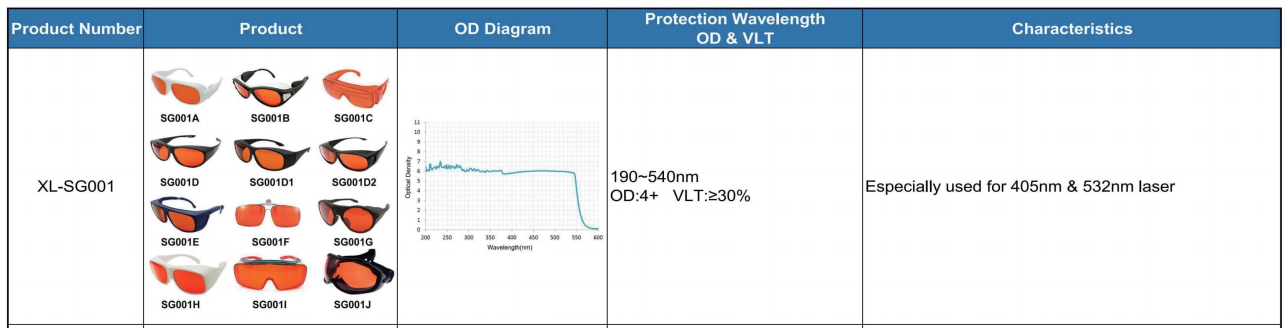
The 405nm 532nm OD4+ VLT30% laser safety goggles are designed to protect users from laser radiation at wavelengths of 405nm and 532nm. The OD4+ rating indicates that the goggles can block at least 99.99% of the incident laser energy, providing a high level of protection. The VLT30% designation means that the goggles allow 30% of visible light to pass through, ensuring adequate visibility while maintaining laser safety.
In addition to the wavelength-specific protection, these goggles feature a scratch-resistant coating, impact-resistant lenses, and comfortable frames made from lightweight materials. The lenses are also anti-fog and anti-scratch, ensuring clear visibility during use.
Application Examples
1. Medical Procedures: In dermatology and cosmetic surgery, lasers are commonly used for treatments such as tattoo removal and skin resurfacing. The 405nm 532nm OD4+ VLT30% laser safety goggles are essential for protecting both patients and medical professionals from potentially harmful laser radiation.
2. Manufacturing Processes: Lasers are used in various manufacturing processes, such as cutting, welding, and engraving. Workers in these environments must wear appropriate laser safety goggles to prevent eye injuries from accidental laser exposure.
3. Research and Development: Scientists and engineers working with lasers in research and development require laser safety goggles that provide protection against specific wavelengths of interest. The 405nm 532nm OD4+ VLT30% goggles are ideal for experiments involving lasers with wavelengths of 405nm and 532nm.
4. Educational Settings: Schools and universities often incorporate laser technology into science and engineering curricula. Students and instructors must wear laser safety goggles during these lessons to prevent eye injuries.

Industry Knowledge
1. Laser Classification: Lasers are classified based on their output power, ranging from Class 1 (lowest risk) to Class 4 (highest risk). The type of laser safety goggles required depends on the class of laser being used.
2. Wavelength-Specific Protection: Different lasers emit different wavelengths of light, and each wavelength requires specific protection. It is crucial to choose laser safety goggles that provide adequate protection against the specific wavelengths of lasers being used.
3. Laser Safety Programs: Employers are responsible for implementing laser safety programs that include employee training, hazard identification, and proper personal protective equipment (PPE), such as laser safety goggles.
4. Regulations and Standards: Laser safety is regulated by various organizations, including the International Laser Safety Association (ILSA) and the American National Standards Institute (ANSI). Compliance with these regulations and standards is essential for ensuring the safety of workers and the public.
Conclusion
The 405nm 532nm OD4+ VLT30% laser safety goggles offer superior protection against laser radiation at specific wavelengths, making them suitable for a wide range of applications. By understanding the importance of laser safety and implementing proper safety measures, individuals and organizations can ensure the safe use of lasers in various industries.