



With the widespread application of laser technology, especially in the fields of industrial processing and medical cosmetology, 1064nm lasers are favored for their high efficiency and precision. However, this laser wavelength is potentially harmful to the eyes, so it is particularly important to choose a suitable laser protection plate.
1. Application of 1064nm laser
Industrial processing: 1064nm laser performs well in metal cutting, welding and other fields, providing efficient and fine processing capabilities. It has strong penetration and can quickly and accurately complete various complex cutting tasks.
Medical cosmetology: This band of lasers is often used in skin treatment, laser hair removal and other projects. It has strong penetration and can penetrate deep into the bottom layer of the skin for treatment to achieve ideal results.
Military and communications: 1064nm lasers are also used in military target indication, ranging and fiber optic communications as signal transmission carriers. In these applications, the high energy and precision of the laser are indispensable.

2. Damage to the eyes caused by 1064nm laser in medical and industrial use
1064nm laser belongs to the category of infrared laser, which is invisible to the human eye, but long-term or high-intensity exposure to this band may cause thermal damage to the retina and even blindness. In addition, reflected or scattered lasers in industrial applications may also accidentally irradiate the eyes of operators, causing acute or chronic light damage. Therefore, wearing appropriate laser protective glasses is a necessary precaution.
3. How to choose a laser protective plate
Determine the optical density (OD value): The OD value indicates the degree of attenuation of laser radiation by the lens. For example, OD6+ means that the laser intensity will be weakened to 1/1,000,000 of the original. For 1064nm lasers, it is recommended to choose a protective plate with OD6+ level to provide adequate protection.
Consider visible light transmittance (VLT): VLT refers to how much visible light the lens allows to pass through. A high VLT value means better visual clarity, but this usually reduces laser protection capabilities. According to the needs of the working environment, select an appropriate VLT value while ensuring safety.

4. Differences between 1064nm OD6+ brown and blue laser protection panels
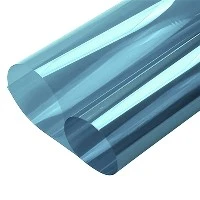
Color difference: The main difference between brown and blue laser protection panels is their color. Brown protection panels usually have higher visible light absorption and are suitable for strong light environments; while blue protection panels allow more visible light to pass through and are suitable for occasions that require a certain light transmittance.
Application scenarios: Brown protection panels are more suitable for outdoor or strong light environments because they can effectively reduce glare and provide a more comfortable visual experience. Blue protection panels are more suitable for indoor or application occasions that require precise color recognition.
Performance characteristics: In addition to color, the two colors of protection panels may also differ in optical density, visible light transmittance, etc. Specific performance requires reference to the product specification sheet and technical documents provided by the manufacturer.

Summary
Choosing the right laser protection panel is essential to protect your eyes from 1064nm laser damage. Users should decide whether to use brown or blue 1064nm OD6+ laser protection panels based on specific application requirements and usage environment. Regardless of which option you choose, make sure that the selected product meets international safety standards and can provide adequate protection.