


Laser Safety Glasses Selection Guide
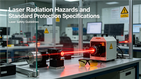
Introduction Laser Safety Glasses is a critical component of personal protective equipment for anyone working with lasers. It is important to select the appropriate eyewear to protect the eyes from harmful laser radiation. This guide provides information on the different types of lasers, the eyewear requirements for each type, and considerations for selecting the right laser safety eyewear.
Laser Classifications Different types of lasers have different levels of radiation, which are classified according to their potential risks. The classification system ranges from Class 1 (safe under normal conditions) to Class 4 (high power lasers that can cause severe injury). The following table summarizes the classification system:
| Class | Description |
|---|---|
| 1 | Safe under normal operation conditions; no hazardous radiation |
| 1M | Safe under normal operation conditions; may be hazardous if viewed directly with optical instruments |
| 2 | Low-power lasers (up to 1 mW); eye exposure may be hazardous if viewed directly for long periods |
| 2M | Low-power lasers (up to 1 mW); may be hazardous if viewed directly with optical instruments |
| 3R | Lower power visible lasers (up to 5 mW); eye exposure may be hazardous if viewed directly |
| 3B | Moderate-power lasers (up to 500 mW); can cause skin burns or eye damage |
| 4 | High-power lasers (> 500 mW); can cause severe injury or damage |
According to the American laser safety standard ANSIZ136.1 and the International Electrotechnical Commission and the European Union laser safety standard IEC CE EN207/EN208, lasers can be classified according to the following standards.

1.American laser safety standard ANSIZ136.1:Measured by optical density (OD, Optical Density), the logical relationship beti.en optical density OD and transmittance T: D=-log10 T.
2.International Electrotechnical Commission, European Union laser safety standard lEC CEEN2O7/EN208:consider the opticaldensity OD, and also need to consider the damage threshold, that is, the ability of laser protective glasses to resist laser radiation.Other countries including China, Japan etc. usually follow this standard.
Laser Safety Glasses Requirements Different types of lasers require different levels of protection. The eyewear must be able to block the specific wavelengths of the laser radiation, as well as provide sufficient optical density (OD) to reduce the radiation to safe levels. The OD indicates the ability of the lens to attenuate (reduce) the intensity of the radiation. The following table summarizes the recommended OD for different laser classes:
| Class | Wavelength range (nm) | Recommended OD |
|---|---|---|
| 2M | 400-700 | OD 2-3 |
| 3R | 600-700 | OD 3 |
| 3B | 190-400, 700-1400 | OD 4+ |
Important Considerations When selecting Laser Safety Glasses, consider the following factors:
(1) Confirm the working wavelength of the laser.
(2) Confirm the output power of the laser.
Continuous laser: output power
Pulse laser: single pulse energy, pulse width, pulse repetition frequency, etc.
(3) Calculate MPE (Maximum Permissible Exposure)
(4) Evaluate the maximum exposure duration
(5) Evaluate the maximum exposure
(6) Calculate the required optical density
(7) When using lasers in the visible band, confirm whether it is necessary to see the laser?
(8) Choose the appropriate shape of laser protective glasses (whether you need to wear corrective glasses, such as myopia, etc.)
About MPE (Maximum Permissible Exposure)
The MPE value is defined as: 1/10 of the laser output energy when the probability of damage is 50% under direct laser irradiation. This value is a reference index representing human safety. The MPE value is expressed in two quantities of laser wavelength and exposure time. However, it should be noted that the MPE value is based on a certain light-receiving area, a certain power density (w/m2) and energy density (J/m2).
This area is the limit light-receiving area. The value varies depending on the type of damage, laser wavelength, part (eye or skin), and irradiation time.
About Optical Density OD Value (Optical Density)
Indicates the degree of light transmission, and the more commonly used indicator is the transmittance (%).
In general, we use the percentage value (%) of the transmittance to indicate the degree of transmittance.
But there are also times when it is more convenient to use its logarithmic value, we define the transmittance value represented by logarithm as OD value (optical density).
Optical density is usually used in optical filters, where it represents the attenuation rate of laser light emitted by laser goggles. Its calculation formula is:

(PI: Human Injection PT: Transmittance, T: Transmittance of Specific Wavelength)
*The larger the OD value, the larger the attenuation rate of the incident beam, and the stronger the protection function.
*The larger the OD value, the lower the transmittance.

Conclusion Selecting the right laser safety eyewear is critical to protect the eyes from harmful laser radiation. The appropriate eyewear must be selected based on the laser class, specific wavelengths, power, and optical density requirements. It is important to consider factors such as comfort, frame style, certification, and cleanliness when choosing laser safety eyewear. Following these guidelines will help ensure that you are properly protected while working with lasers.
Notice
- Please do not look directly at the laser while wearing laser safety goggles.
- Avoid direct laser light on the protective glasses, otherwise it may damage the glasses.
- Please do not use it in occasions other than the specified laser and wavelength. (even if the laser name is the same, its wavelength will be different)
- During operation, please do not take off the laser protective goggles. Laser safety glasses cannot be used as welding safety glasses.
- Completely absorbing laser safety goggles cannot completely absorb all laser light. (Please refer to the absorption characteristic graph)
- Please do not use laser protective goggles with a transmittance below 20% in a dark room such as a dark room. Please do not continue to use laser protective glasses that have been directly irradiated by strong laser light or have been damaged.
Contact information:
If you have any ideas, feel free to talk to us. No matter where our customers are and what our requirements are, we will follow our goal to provide our customers with high quality, low prices, and the best service.
 Email:info@loshield.com
 Tel:0086-18092277517
 Fax: 86-29-81323155
 Wechat:0086-18092277517


