



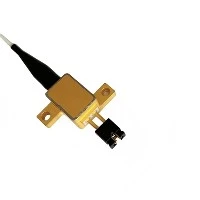
Laser diode stacks represent a critical advancement in photonic technology, enabling the generation of intense optical power from a compact source. As highly efficient "energy engines," they have become indispensable in industrial manufacturing, medical therapeutics, scientific research, and defense systems.

1. The Technological Core of Laser Diode Stacks
1.1 Fundamental Architecture and Operating Principle
The fundamental unit of a stack is the laser diode bar, a monolithic array of single emitters fabricated side-by-side on a single semiconductor chip. These bars are then vertically stacked, with the number of bars determining the total output power. The stacking technology is primarily defined by the cooling method:
Micro-channel Coolers: Utilizing ultra-efficient liquid cooling directly within the heat sink, these allow for the highest packing density and power density, often exceeding 1 kW/cm².
Conductively Cooled Packages: A more robust, often lower-cost approach where the bars are mounted onto a passive heat spreader, suitable for applications with less extreme thermal demands.
A critical characteristic of the output is the stark difference between the fast-axis (perpendicular to the p-n junction) and slow-axis (parallel to the p-n junction) divergence. This highly asymmetric and divergent beam presents the primary challenge for most applications.
1.2 Core Performance Metrics
Output Power and Power Density: Commercial stacks are available from hundreds of watts to over 100 kW from a single aperture. Power density is a key figure of merit, directly impacting application efficiency.
Wall-Plug Efficiency (WPE): Typically exceeding 50%, this exceptional efficiency translates to lower operational costs, reduced thermal management load, and enhanced portability compared to other high-power laser technologies like lamp-pumped or DPSS lasers.
Wavelength Range: While the most mature technology exists in the 780-980 nm range (driven by pumping Nd and Yb gain media), stacks are available from visible blue (GaN-based) to mid-infrared (Quantum Cascade Lasers).
Lifetime and Reliability: Lifetimes of tens of thousands of hours are common. Reliability is assessed through accelerated aging tests, with failure modes often linked to catastrophic optical mirror damage (COMD) or gradual facet degradation.
2. A Panoramic View of Diverse Applications
2.1 Industrial Manufacturing – The "Indestructible" Processing Tool
Pumping of Solid-State Lasers (The Dominant Application):
Disk Lasers: Stacks pump the thin-disk crystal, enabling extremely high power with excellent beam quality and thermal management.
Fiber Lasers: Stacks are used to pump the double-clad active fiber, serving as the workhorse source for modern high-power fiber lasers.
Rod and Slab Lasers: Pumping traditional Nd:YAG or Yb:YAG crystals for various industrial and military systems.
Direct Material Processing:
Plastic Welding: Through precise beam shaping (e.g., creating a line focus), stacks enable transmission welding of plastics with high speed and quality.
Cladding and Hardfacing: Used to deposit wear- or corrosion-resistant coatings onto large metal components like engine valves or turbine blades.
Brazing and Soldering: Providing the heat source for joining dissimilar metals.
2.2 Medical and Aesthetic Therapeutics – The "Precise and Minimally Invasive" Scalpel
Surgery: Used as a cutting and ablation tool in procedures requiring simultaneous cutting and coagulation.
Aesthetics: The primary light source for hair removal, skin rejuvenation, and tattoo removal systems.
Dentistry: Applied for tooth whitening and the treatment of hard tissues.
Photodynamic Therapy (PDT): Activating photosensitizing drugs to treat certain cancers.
2.3 Scientific Research and Frontier Technology – The "Searchlight" for the Unknown
Pumping Ultrafast Lasers: Serving as the robust, efficient pump for Ti:Sapphire and other ultrafast amplifiers.
Atom Cooling and Trapping: Providing the precise wavelengths required for magneto-optical traps (MOTs) in cold atom physics and quantum computing research.
Nonlinear Frequency Conversion: Pumping optical parametric oscillators (OPOs) to generate specific mid-IR or THz wavelengths.
2.4 Defense and Security – The "Decision-Superiority" Core
Directed Energy Weapons (DEW): Acting as the primary pump source for high-energy laser (HEL) systems or, in some concepts, as the direct-effect weapon itself in diode-pumped alkali lasers (DPALs).
Infrared Countermeasures (IRCM): Jamming heat-seeking missiles by emitting a powerful, modulated IR signal.
Illumination and Ranging: Used in active IR illumination for night vision and LIDAR systems for target identification and ranging.
2.5 Other Significant Applications
Space Communications: Pumping high-power fiber amplifiers for free-space optical communication between satellites and ground stations.
Printing and Display: Pumping solid-state lasers that generate red, green, and blue (RGB) light for high-brightness laser projection and cinema.

3. Future Trends
The Pursuit of Higher Brightness: The industry is shifting from simply increasing raw power to maximizing brightness through improved beam quality and advanced spectral combining.
Intelligence and Modularity: The development of "plug-and-play" modules that integrate the diode stack, driver, cooler, and control electronics for simplified system integration.
Exploration of New Materials: Advancements in GaN-based blue and green direct-diode stacks, and the maturation of Quantum Cascade Laser stacks for the mid-IR.
Cost Reduction and Reliability Enhancement: Continuous improvement in manufacturing yields and packaging techniques to drive down costs and open up new industrial markets.
4. Conclusion
Laser diode stacks have cemented their strategic position as the enabling technology for high-power photonics. Their unparalleled wall-plug efficiency, power scalability, and versatility have made them the source of choice across a breathtaking range of fields. The future of this technology lies not merely in achieving higher power, but in the relentless pursuit of the ultimate goal: a compact, efficient, and cost-effective "ideal photon source" with the highest possible brightness, capable of unlocking applications yet to be imagined.
Contact information:
If you have any ideas, feel free to talk to us. No matter where our customers are and what our requirements are, we will follow our goal to provide our customers with high quality, low prices, and the best service.
 Email:info@loshield.com; laser@loshield.com
 Tel:0086-18092277517; 0086-17392801246
 Fax: 86-29-81323155
 Wechat:0086-18092277517; 0086-17392801246


