



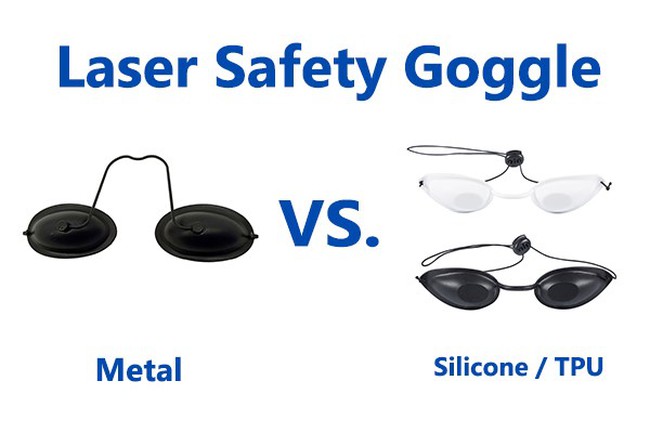
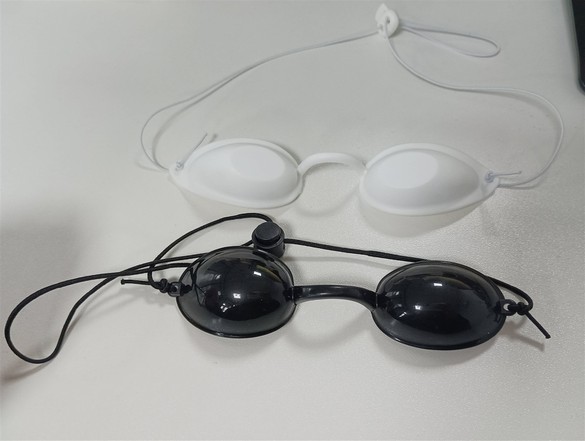
Laser safety goggles are essential protective equipment for professionals working with lasers in medical, industrial, and aesthetic fields. Below is a detailed comparison of UV-to-IR metal laser goggles and silicone laser goggles, focusing on their material properties, protective performance, comfort, and application scenarios.
1. Material Composition and Durability
Metal Goggles:
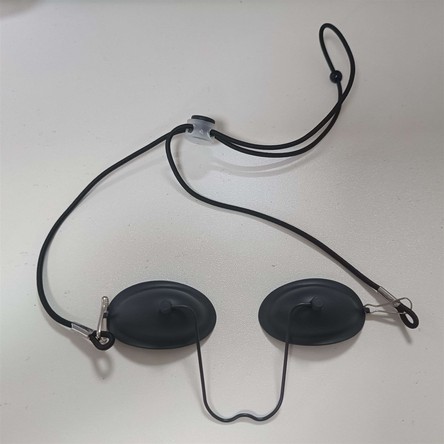
Made from stainless steel, these goggles emphasize structural rigidity and long-term durability. They are resistant to mechanical impacts, high temperatures, and chemical exposure, making them suitable for harsh environments like industrial laser cutting or surgical settings . Their robust construction allows repeated sterilization (e.g., autoclaving) without degradation.
Silicone Goggles:
Constructed from soft silicone or polycarbonate blends, these prioritize flexibility and skin contact. Silicone molds closely to facial contours, reducing gaps that might allow stray laser reflections. However, they are less resistant to physical wear and high temperatures compared to metal .
2. Protective Performance
Spectral Coverage and Optical Density (OD)
Broad spectrum: Protects against 190–14,000 nm (UV to far-IR), ideal for multi-wavelength environments like CO₂ (10,600 nm) or Nd:YAG (1064 nm) lasers .
High OD: Typically OD7+, blocking 99.99999% of laser energy, critical for high-power industrial or medical lasers .
Narrower coverage: Designed for 200–2000 nm (visible to near-IR), targeting aesthetic lasers like IPL (400–1200 nm) or diode lasers (808 nm) .
Variable OD: Ranges from OD4+ to OD8+, depending on the model. For example, silicone goggles for low-risk clinics may use OD4+, while pulsed dye lasers require OD8+ .
Laser Damage Threshold
Metal goggles withstand higher energy densities due to reflective surfaces, while silicone relies on absorptive coatings that degrade faster under intense exposure .
3. Comfort and Ergonomics
Pros: Adjustable frames ensure stability during dynamic tasks.
Cons: Heavier weight may cause fatigue; limited ventilation can lead to fogging .
Pros: Lightweight (<20g) and hypoallergenic, with ventilation channels to reduce fogging .
Cons: Less stable during rapid movements; limited adjustability in single-use models .
4. Application Scenarios
Metal Goggles:
Industrial Applications:
High-power laser welding, cutting, and engraving with IR/UV lasers .
Environments requiring frequent sterilization, such as surgical laser procedures (e.g., CO₂ lasers in dermatology or ophthalmology) .
Silicone Goggles:
Aesthetic and Clinical Settings:
IPL treatments, LED phototherapy, or fractional lasers where patient comfort and disposable hygiene are priorities .
Low-risk labs or educational settings using Class 3R/4 lasers .
|
|
|
5. Maintenance and Cost
Reusable with sterilization (autoclaving or chemical cleaning), reducing long-term costs.
Higher upfront cost justified by longevity.
Disposable or limited reuse, ideal for high-turnover clinics.
Absorptive coatings degrade after ~6 months of regular use .
6. Regulatory Compliance
Both types comply with EN 207/208 (Europe) and ANSI Z136.1 (U.S.) standards. Metal goggles often undergo stricter durability tests (e.g., EN 166 for impact resistance) .

Conclusion: Choosing Based on Needs
Metal Goggles are optimal for:
Broad-spectrum protection, high durability, and sterilization needs in industrial or medical settings.
Silicone Goggles excel in:
Comfort-focused, disposable applications like aesthetic clinics or low-risk environments.
Always verify the goggles' OD, wavelength coverage, and compliance with laser system specifications.