



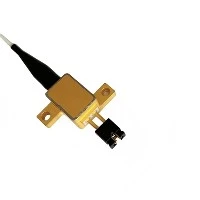
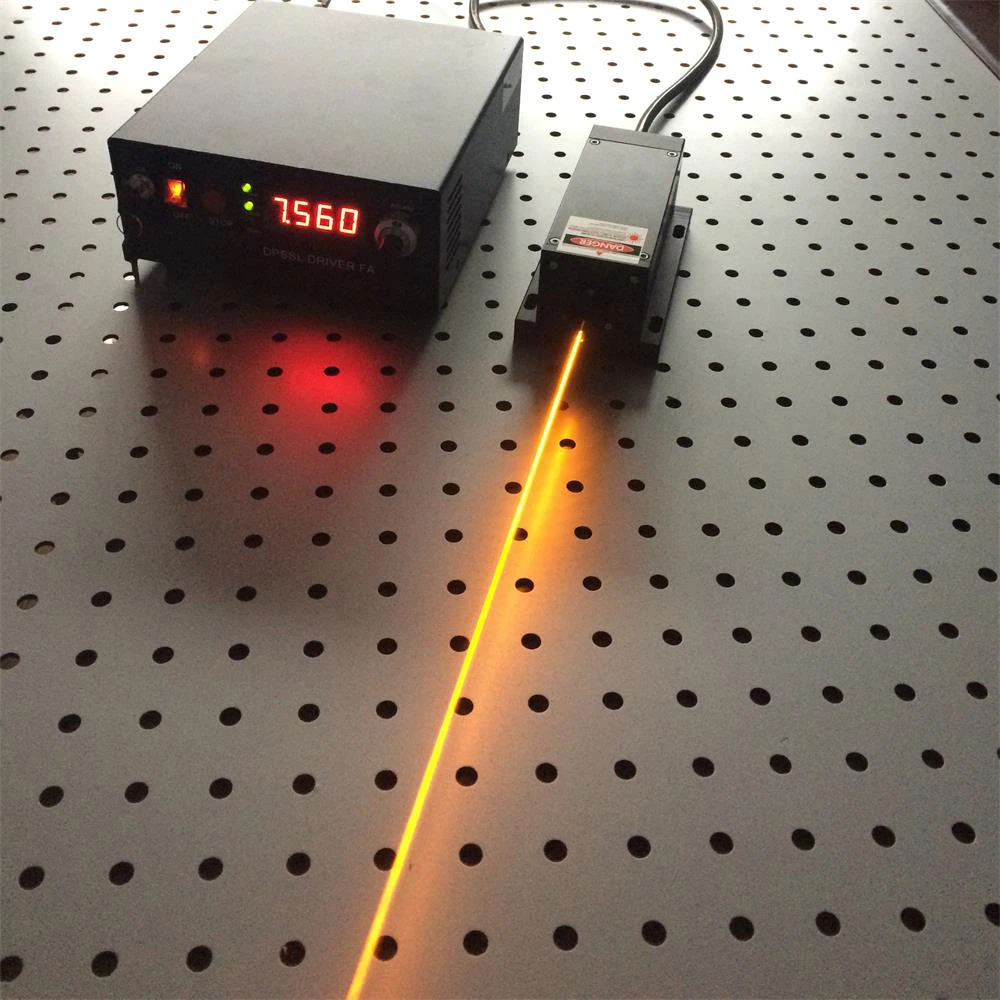
589 nm lasers leverage the unique spectral properties of the sodium atomic D-line. These lasers achieve highly coherent light output through frequency multiplication or specialized solid-state gain media, offering exceptional wavelength stability, tunable power, and high-quality beams. Their applications span scientific research (e.g., cold atom manipulation, high-precision spectral analysis), industrial production (precision machining and measurement), healthcare (ophthalmic surgery, dermatology), and cutting-edge technology (quantum optics, data storage), becoming a crucial bridge between fundamental physics and technological innovation. The article also explores current technological challenges and future developments, highlighting the irreplaceable role of 589 nm lasers as versatile tools in modern science and engineering.
1. Introduction
1.1 Historical Context and Significance of the 589 nm Wavelength
The selection of 589 nm is inherently linked to the intense resonance line of neutral sodium atoms, famously split into the closely spaced D₁ (~589.6 nm) and D₂ (~589.0 nm) components collectively termed the Sodium Doublet or D-lines. Historically, sodium vapor lamps dominated as monochromatic sources at this wavelength for tasks requiring high temporal coherence before laser advent. The ability to generate highly coherent, directional, and intense collimated beams at precisely this wavelength via solid-state laser technology unlocked revolutionary capabilities across numerous fields. Its proximity to peak sensitivity of human vision and compatibility with silicon detectors further enhance its utility.
1.2 Evolution and State-of-the-Art of 589 nm Laser Technology
Early efforts focused primarily on dye lasers pumped by Argon-ion lasers, offering tunability encompassing the D-lines but suffering from limited power, efficiency, and stability. Modern implementations predominantly utilize frequency-doubled diode lasers or sophisticated solid-state solutions employing specialized crystals doped with rare-earth or transition metal ions carefully engineered for emission near 589 nm. Advancements in nonlinear optical materials, diode laser power, thermal management, and resonator stabilization have dramatically improved output power, beam quality, frequency stability, and operational lifetime, enabling robust deployment in demanding applications. Ongoing research targets enhanced narrowband operation directly at the D-lines, higher average powers, better wall-plug efficiency, and integration into compact modules.
2. Fundamental Working Principles of 589 nm Lasers
2.1 Core Laser Physics Prerequisites
2.1.1 Conditions for Light Amplification via Stimulated Emission
At its core, laser action necessitates Population Inversion – an unnatural condition where more atoms or molecules occupy an excited energy state than a lower one. Incident photons matching the energy difference between these states trigger Stimulated Emission, producing additional identical photons traveling in phase and direction. Simultaneously, an Optical Resonator/Cavity formed by mirrors provides feedback: one highly reflective, one partially transmitting. Photons bouncing along the cavity axis undergo repeated passes through the gain medium, amplifying the light via successive rounds of stimulated emission. Oscillation occurs when round-trip gain overcomes losses (mirror transmission, scattering, absorption).
2.1.2 Significance of the ~589 nm Spectral Region
Operating near the sodium D-lines offers distinct advantages dependent on application:
Spectral Matching: Direct alignment with atomic transitions (especially Na D₂-line) enables efficient interaction processes vital for spectroscopy, cooling, and trapping alkali metal atoms.
Detection Efficiency: Silicon-based photodetectors exhibit excellent responsivity in this wavelength range.
Human Vision Sensitivity: While generally avoided for invisible laser classes due to safety concerns, understanding visibility remains relevant for beam alignment and low-level monitoring.
Transmission Windows: Many common optical materials (glass, fused silica) transmit well here, simplifying component selection compared to UV or IR extremes.
2.2 Common Approaches to Generating 589 nm Radiation
2.2.1 Workhorse Gain Media Options
Direct laser emission precisely at 589 nm from a simple four-level system within common laser hosts is challenging. Prevalent methods involve:
Frequency Doubling (Second Harmonic Generation - SHG): Currently the dominant method. Near-infrared diode lasers (typically around 1178 nm, corresponding to half the desired wavelength) are efficiently converted using birefringent nonlinear crystals like KNbO₃ (Potassium Niobate), RTA-LiNbO₃ (Periodically Poled Magnesium Oxide Doped Lithium Niobate), or PPKTP (Periodically Poled KTiOPO₄). Careful temperature control maintains phase matching for optimal conversion efficiency. Advantages include leveraging high-power, efficient diode pump lasers and mature nonlinear crystal technology. Disadvantages encompass complexity, potential green induced infrared absorption limiting high power, and stringent polarization requirements.
Specialized Solid-State Lasers: Rare-earth ion dopants (e.g., Nd³⁺, Er³⁺, Yb³⁺) or transition metal ions (e.g., Ti³⁺, Cr³⁺) incorporated into various host crystals (YAG, YLF, GdVO₄, sapphire) can yield laser transitions tunable near 589 nm through careful crystal field engineering and precise concentration control. These often require complex pump schemes (flashlamp or diode laser pumped) and sophisticated thermal management. While potentially simpler architecturally, achieving high power and good beam quality simultaneously at exactly 589 nm presents significant engineering challenges compared to SHG. Examples include Praseodymium (Pr³⁺) or Barium Randall-Wilkinson oscillators under specific conditions.
Dye Lasers: Historically important, utilizing organic dye molecules dissolved in solvents pumped by other lasers (commonly Argon-ion or copper vapor lasers). Tunable coverage includes the D-lines. Largely superseded by more efficient and robust alternatives for most applications today, though still valued for ultra-narrow linewidth master oscillator purposes.
2.2.2 Pumping Mechanisms and Source Integration
Optical Pumping: Dominates modern systems. High-brightness diode lasers serve as nearly universal pump sources for both direct solid-state lasers and the fundamental wavelength stage preceding frequency doubling. Fiber-coupled diodes offer flexibility. Direct diode pumping minimizes thermal load compared to traditional lamp pumping.
Electrical Discharge Pumping: Primarily relevant for gas lasers (Cu vapor, He-Ne), rarely used for 589 nm generation itself but may pump broadband sources seeding dye lasers. Low efficiency limits applicability.
Energy Transfer Pumping: Exploits sensitizer ions absorbing pump light and transferring energy non-radiatively to the active lasant ion. Used in some specialized crystals to improve pump absorption efficiency.
2.3 Step-by-Step Laser Buildup Process
Excitation & Population Inversion Formation: Pump photons excite particles within the gain medium to upper laser levels. Rapid energy redistribution among nearby states creates the necessary population inversion relative to the lower laser level. Rate equations describe this dynamic equilibrium establishment.
Initiation & Spontaneous Emission Seed: Fluorescence photons spontaneously emitted during excitation serve as initial seeds. Those aligned with the resonator axis propagate.
Amplification & Resonant Feedback: Seeds experience exponential amplification via stimulated emission during multiple passes through the gain medium confined by the resonator mirrors. Intracavity intensity grows rapidly.
Saturation & Steady-State Oscillation: As intracavity intensity increases, gain saturates due to depletion of the excited state population. Gain clamps at the loss threshold level, establishing sustained oscillation at a stable power level determined by pump rate, cavity losses, output coupler transmission, and gain cross-section. Spatial distribution forms transverse electromagnetic modes (TEM₀₀, TEM₀₁, etc.). Longitudinal modes compete based on gain profile and cavity length.
Output Coupling: A fraction of circulating light escapes through the partially transmitting output coupler mirror as the useful laser beam. Beam divergence is governed primarily by the diffraction limit set by the output coupler aperture and cavity magnification properties.
3. Key Performance Characteristics of 589 nm Lasers
3.1 Optical Performance Metrics
3.1.1 Wavelength Accuracy and Stability
Precise targeting of the sodium D₂-line (nominally 589.155 nm) or controlled offset is critical for many applications. Accuracy relies on absolute wavelength calibration standards traceable to national metrology institutes. Stability against temporal drift due to thermal fluctuations, mechanical vibrations, acoustic noise, and aging effects determines suitability for interferometry, spectroscopy, and atomic manipulation. Active stabilization techniques (piezoelectric transducers for mirror mounts, temperature control, feedback loops locking to reference cavities or atomic transitions) are essential for research-grade instruments. Short-term stability (< kHz linewidth) is achievable.
3.1.2 Power Output Range and Regulation
Available average power spans orders of magnitude: milliwatts for laboratory spectroscopy or atom trapping seeds; watts for industrial processing; tens of watts emerging from high-end frequency-doubled systems pushing multimode capabilities. Continuous Wave (CW) operation dominates. Pulsed Operation (Q-switched or mode-locked) produces high peak powers (kW-MW range) at reduced duty cycles, beneficial for ablation, microstructuring, and nonlinear frequency conversion cascades. Power stability (< % fluctuation) is vital for quantitative measurements and consistent manufacturing processes.
3.1.3 Beam Quality Assessment (M², Pointing Stability)
Beam Propagation Factor (M²) quantifies how closely the actual beam resembles an ideal Gaussian beam (M²=1). Near-diffraction-limited beams (M² ~1-1.5) are imperative for tight focusing in microscopy, lithography, microprocessing, and interference applications. Higher M² values degrade focus spot size and increase divergence. Pointing stability ensures consistent beam position at the target plane, influenced by mechanical stability and environmental isolation. Polarization extinction ratio measures unwanted orthogonal polarization suppression capability.
3.2 Non-Optical Performance Considerations
3.2.1 Efficiency Analysis (Wall Plug to Laser Light)
Overall efficiency chains together stages: Diode Pump Laser Electrical-to-Optical > Pump Delivery System Losses > Gain Medium Absorption & Stokes Loss > Laser Slope Efficiency > Cavity Extraction Efficiency > Frequency Conversion Efficiency (if applicable). End-to-end wall plug efficiency for high-power SHG systems typically falls within 5-20%, heavily impacted by conversion efficiency. Improving efficiency remains a key driver for reducing operating costs and thermal loads.
3.2.2 Reliability, Lifetime, and Maintenance Needs
System reliability integrates component lifetimes: diode laser bars/modules, nonlinear crystal longevity under high circulating power densities, thermal cycle fatigue resistance, power supply robustness, and control electronics stability. Predictive health monitoring helps mitigate unscheduled downtime. Routine maintenance involves cleaning optics, replenishing coolants, replacing ageing components like pump diodes or crystals. Industrial-grade systems prioritize modularity for serviceability. Typical operational lifetimes range from thousands to tens of thousands of hours under proper conditions.
4. Diverse Applications Leveraging 589 nm Light
4.1 Scientific Research Paradigms
4.1.1 Advanced Spectroscopy and Elemental Analysis
The exceptional spectral brightness and narrow linewidth of stabilized 589 nm lasers make them superb probes. Resonance Fluorescence Spectroscopy: Excitation exactly at the sodium D-line induces intense fluorescence, enabling ultra-trace detection of sodium contaminants or vapor clouds. Saturation Spectroscopy: Lamb-dip measurements exploit power-dependent penetration into the D-line absorption profile, revealing hyperfine structure with unprecedented resolution crucial for fundamental constant determination and tests of physics beyond the Standard Model. Velocity Selective Coherent Population Trapping (VSCPT): Uses counterpropagating beams tuned slightly above/below the D-line lines to identify and slow specific atomic velocity classes. Applications span analytical chemistry, combustion diagnostics, plasma characterization, and geochemical sampling.
4.1.2 Cold Atom Manipulation and Degenerate Gas Studies
Lasers locked tightly to the D-lines are indispensable tools in creating and probing ultracold quantum gases:
Doppler Cooling & Optical Molasses: Multidimensional radiation pressure dampens atomic motion towards microkelvin temperatures. Red detuning mitigates scattering force heating.
Optical Trapping: Far-detuned "FORT" (Far Off-Resonant Trap) dipole traps provide conservative confinement independent of magnetic fields. Blue-detuned dipole traps offer tighter confinement at expense of increased scattering.
Bose-Einstein Condensation (BEC): Following cooling stages, elastic collisions drive atoms into the lowest quantum state. 589 nm light facilitates evaporative cooling and serves as a diagnostic probe.
Feshbach Molecule Association: Controlled interactions between ultracold fermionic potassium atoms scattered by 589 nm light enable studies of strongly correlated Fermi liquids and superfluid pairing mechanisms.
4.1.3 Quantum Optics Investigations
High-coherence 589 nm sources enable foundational quantum experiments:
Single-Atom Masers: Strong coupling between individual trapped atoms and high-finesse cavities containing weak coherent fields demonstrate maser action at the quantum limit.
Quantum State Preparation & Manipulation: Picocoulomb-sensitive electronic transitions driven by precisely controlled 589 nm pulses allow deterministic preparation and manipulation of atomic qubits.
Tests of Local Realism: Bell inequality violations using entangled photon pairs generated via spontaneous parametric down-conversion pumped by 589 nm light challenge classical worldviews.
4.2 Industrial Manufacturing and Metrology
4.2.1 Precision Interferometric Sensing and Calibration
Single-frequency, ultra-stable 589 nm lasers serve as primary length standards in high-precision comparators and coordinate measuring machines (CMMs). Their short wavelength enables nanometric displacement measurement sensitivity via heterodyne or homodyne detection. Applications include calibrating machine tool stages, inspecting semiconductor wafer steppers, characterizing microelectromechanical systems (MEMS), and qualifying optical components. Environmental compensation systems counteract air refractivity changes.
4.2.2 Microfabrication and Material Processing Techniques
Focused 589 nm radiation enables precise material modification:
Direct Laser Writing (DLW): Two-photon polymerization using pulsed 589 nm sources allows submicron feature fabrication within photoresist volumes.
Microcutting & Drilling: Short-pulse ablation cleanly processes thin films, glasses, ceramics, and brittle materials with minimal thermal damage zones. Singulation of MEMS devices benefits significantly.
Surface Marking & Texturing: Annealing or ablating metallic surfaces creates durable, high-contrast marks without consumables. Decorative patterns on consumer electronics leverage this.
Welding Thin Films: Carefully controlled CW irradiation joins delicate dissimilar materials (metal to glass feedthroughs) prevalent in hermetic packaging.
4.2.3 Optical Component Production Facilitation
589 nm serves as a key reference wavelength throughout the manufacture of optical elements:
Anti-Reflection Coating Design: Standardized performance metric ("Visible Attenuated") centers around 589 nm. Deposition processes monitor reflection minima at this wavelength.
Refractive Index Homogeneity Testing: Interferometric measurements map spatial variations in glass blanks using transmitted 589 nm light.
Lens Figure Measurement: Deviations from perfect spherical surfaces manifest as wavefront distortions measured interferometrically at 589 nm.
Fiber Optic Attenuator Trimming: Lateral offset grinding fixtures use 589 nm launch light to monitor attenuation levels achieved during fiber taper formation.
4.3 Medical Diagnosis and Therapy Innovations
4.3.1 Ophthalmic Interventions: Refractive Surgery and Pathology Treatment
LASIK/PRK Ablation: Frequency-doubled diode arrays generating ~589 nm provide the excimer laser source for precise corneal stroma reshaping correcting myopia, hyperopia, and astigmatism. Pulse energies and repetition rates are tightly controlled to achieve predictable tissue removal profiles.
Posterior Capsule Opacification Clearance: Neodymium:YAG laser capsulotomy utilizes harmonic generation; however, emerging approaches explore optimized 589 nm photodisruption sequences for secondary cataract management.
Retinal Disease Photocoagulation: Selective targeting of leaking blood vessels in diabetic retinopathy or choroidal neovascular membranes leverages melanin absorption peak near 589 nm, minimizing collateral damage compared to longer wavelengths. Panretinal photocoagulation protocols utilize pattern scanners delivering hundreds of microburns per session.
4.3.2 Dermatological Procedures: Vascular Lesions and Pigmented Blemishes
Targeted destruction relies on selective photothermolysis:
Port Wine Stains & Hemangiomas: Hemoglobin's strong absorption peak near 589 nm makes pulsed dye lasers (originally based on flashlamp-pumped dye cells tuned to 589 nm) the gold standard. Modern variants use KTP crystals frequency-doubled to 589 nm. Purple light preferentially damages abnormal blood vessels while largely sparing surrounding tissue. Sequential treatments gradually fade lesions.
Pigmented Nevi & Tattoo Removal: Melanin absorption drops significantly beyond 589 nm. Q-switched Alexandrite lasers (755 nm) dominate deeper pigments, while quasi-long-pulse Ruby lasers (694 nm) address black/dark blue tattoos. However, green light (around 589 nm) offers advantage for bright red and orange tattoo pigments poorly targeted by longer wavelengths. Millisecond domain pulses optimize epidermal protection while sufficiently heating dermal pigment granules for clearance.
4.3.3 Biomedical Research Tools: Imaging and Manipulation
Confocal Microscopy: Although fluorescent labels dominate, reflected light confocal imaging using 589 nm illumination enhances contrast for unstained biological samples like collagen matrices or spheroid cultures.
Optical Tweezers: Single-beam gradient traps formed by focused 589 nm light manipulate microspheres, viruses, bacteria, and isolated cells. Lower scattering compared to UV facilitates longer working distances. Combination with steerable mirrors enables multi-spot manipulation arrays.
Photodynamic Therapy Sensitization: Emerging photosensitizers exhibit significant absorption peaks near 589 nm. Topical administration followed by localized irradiation activates reactive oxygen species production within tumor tissues or infected wounds. Dosimetry benefits from real-time diffuse reflectance spectroscopy monitoring at the treatment wavelength.
4.4 Information Systems and Data Handling
4.4.1 Potential Roles in Optical Communications Networks
While low-loss windows favor 1310/1550 nm for long-haul transmission, shorter wavelengths offer advantages for chip-scale interconnects. On-Chip Free-Space Optical Interconnects: Compact silicon photonic circuits integrated with micromachined mirrors or waveguide routers could utilize visible wavelengths like 589 nm for board-level optical buses, benefiting from wider bandwidth availability and potentially lower latency compared to electrical interconnects facing physical limits. Challenges include efficient modulation schemes and integrating sources/detectors onto CMOS chips.
4.4.2 Holographic Data Storage Exploration
Multilayer volumetric recording using shifting wavelengths promises petabyte-scale capacities. Shift-Multiplexed Holography: Recording consecutive pages at incrementally shifted wavelengths around 589 nm allows superimposing data within the same physical location in the recording material (photopolymer or photorefractive crystal). Reading involves tuning the readout laser accordingly. Material sensitivity and Bragg selectivity across the shift range constrain practical implementations currently exploring blue/green wavelengths alongside 589 nm. Promising pathways exist for archive storage requiring high density rather than rapid access times.
5. Conclusion
5.1 Synopsis of Core Findings
This exploration confirms the 589 nm wavelength's enduring significance stemming from its deep connection to fundamental atomic resonances, particularly the sodium D-line. Despite the inherent challenge of precisely generating this wavelength, mature technologies centered around frequency doubling of near-infrared diode lasers deliver robust, increasingly powerful, and reliable sources characterized by excellent beam quality and manageable cost structures. Tailored designs address diverse requirements ranging from ultra-narrow linewidth scientific research tools to high-power industrial processors.
5.2 Future Outlook and Anticipated Developments
Several key areas promise continued evolution:
Direct Diode Accessibility: Advancements in semiconductor bandgap engineering may eventually yield high-power, high-brightness diode lasers directly at 589 nm, eliminating complex frequency conversion stages and boosting efficiency significantly. Quantum dot or nanostructure intermediate bands offer potential pathways.
Enhanced Frequency Stability & Purity: Integration with miniature vacuum chambers housing stabilized sodium cells or iodine vapor cells offers prospects for unprecedented passive frequency stabilization suitable for next-generation optical clocks and portable standards. Active stabilization leveraging ultra-low-noise electronics will push shot-noise limited linewidths further.
Power Scaling Frontiers: Innovations in nonlinear crystal design (larger apertures, composite structures managing thermal lensing) combined with higher-power fundamental diode pump lasers aim to break existing power barriers for applications like large-area micromachining or long-range sensing. Management of thermal effects remains critical.
Miniaturization & Integration: Monolithic integration of diode pump lasers, nonlinear converters, and stabilization electronics onto compact footprints supports embedded instrumentation, handheld diagnostic devices, and gossamer CubeSat constellations requiring autonomous optical benches.
Expanding Application Horizons: Continued refinement opens doors to novel domains such as quantum networking (synchronization links), secure quantum key distribution exploiting vacuum fluctuations at 589 nm, advanced biophotonics manipulating cellular mechanics, and hybrid light-matter interfaces probing topological states.
In summary, the 589 nm laser stands as a mature yet flexible technology platform whose foundational principles continue to enable cutting-edge applications across disciplines. Ongoing innovation promises to extend its reach and performance boundaries significantly in the years to come.
Contact information:
If you have any ideas, feel free to talk to us. No matter where our customers are and what our requirements are, we will follow our goal to provide our customers with high quality, low prices, and the best service.
 Email:info@loshield.com; laser@loshield.com
 Tel:0086-18092277517; 0086-17392801246
 Fax: 86-29-81323155
 Wechat:0086-18092277517; 0086-17392801246


