



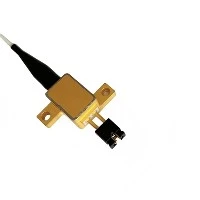
YAG laser (yttrium aluminum garnet laser) is a solid laser with crystals doped with rare earth elements such as neodymium and erbium as the working medium. Since its development in the 1960s, it has been widely used in medical, industrial, scientific research and other fields with its high energy, adjustable wavelength and strong stability. Its core advantage is that it can achieve multi-scenario applications from fine tissue cutting to high-power material processing through different doping ions, working modes and parameter adjustments. However, the high-energy characteristics of lasers are also accompanied by potential hazards, and scientific classification and standardized protection are required to ensure safe use.
Classification of YAG lasers
1. Classification by doping ions
Nd:YAG (neodymium-doped yttrium aluminum garnet laser)
The wavelength is 1064nm (base frequency), and it can output 532nm green light after frequency doubling. It is characterized by strong penetration and significant thermal effect, and is the core model in the medical and industrial fields. For example, VISULAS YAG III (Zeiss) is used for posterior capsulotomy in ophthalmology, and MedLite C6 (Cynosure) is used for the treatment of skin pigmented diseases.
Er:YAG (Er:YAG laser)
The wavelength is 2940nm, with high water absorption, suitable for shallow tissue ablation. It performs well in dentistry (caries treatment) and delicate ophthalmic surgery (such as corneal reshaping).

2. Classification by working mode
Continuous wave laser: continuous output of energy, used for deep tissue thermal therapy or industrial welding, such as high-power cutting machine (IPG Photonics).
Pulsed wave laser: short-term high-energy pulse, suitable for precision cutting (such as iridotomy) or blasting treatment (such as posterior capsule opacification).
Q-switch mode: nanosecond pulses (such as Nd:YAG Q-switch), specializing in pigmented diseases (Ota nevus, tattoo removal.

3. Classification by application field
Medical laser: such as Nd:YAG laser therapy machine for ophthalmology (standard YY0789-2010), dental Er:YAG equipment (Fotona).
Industrial laser: high-power Nd:YAG system (Trumpf TruDisk) for metal cutting/welding.
Scientific research laser: tunable YAG laser for spectral analysis and material research.
Application scenarios and common equipment
1. Medical field
Ophthalmology:
Treatment of posterior capsule opacity: VISULAS YAG III cuts the opaque posterior capsule through the photoblasting effect.
Glaucoma surgery: Q-switched Nd:YAG laser for iridotomy (equipment such as Lumenis Selecta II).
Dermatology:
Pigmented diseases: MedLite C6 (wavelength 532nm/1064nm) removes Ota nevus.
Vascular lesions: Long pulse Nd:YAG (Candela GentleYAG) treats hemangiomas.
Dentistry and stomatology:
Er:YAG laser (Fotona LightWalker) is used for caries removal and periodontitis treatment, with both sterilization and minimally invasive advantages.
2. Industrial and scientific research fields
Material processing:
Cutting/welding: IPG Photonics' YLS series lasers (kilowatt-level power) process stainless steel and titanium alloys.
Precision marking: Fiber-coupled Nd:YAG systems (such as Rofin PowerLine) are used for electronic component identification.
Scientific research:
Tunable YAG lasers are used for nonlinear optical experiments, such as stimulated Raman scattering research.

Possible hazards caused by lasers
1. Direct damage
Eye damage: 1064nm Nd:YAG lasers can penetrate the cornea and burn the retina; 2940nm Er:YAG laser can easily damage the surface of the cornea.
Skin burns: High-energy pulses cause epidermal carbonization or deep tissue necrosis.
2. Indirect hazards
Reflection hazards: Laser beams reflected from metal surfaces may accidentally injure operators.
Gasification products: Toxic fumes produced by gasification of tissues or materials (such as volatile organic compounds in dental treatment.
Electrical and fire risks: Circuit failures of high-power equipment or failure of the cooling system may cause fires.

Selection of laser protective products
1. Personal protective equipment
Protective glasses:
Wavelength matching: 1064nm requires OD6+ protective glasses Nd:YAG special glasses, and 532nm requires dual-band protection.
Material standards: Lenses must comply with EN207 (anti-laser shock) certification.
Protective clothing and gloves: Flame-retardant materials cover the entire body, and industrial scenes require additional infrared protective masks.
2. Environmental and equipment protection
Engineering control: Fully enclosed operating cabins are equipped with interlocking devices to prevent accidental startup.
Identification and isolation: Warning signs are set up in the laser work area to restrict unauthorized personnel from entering.
3. Management measures
Operation training: pass ISO 11553 standard training, master equipment calibration (such as energy meter use) and emergency plans.
Regular testing: use laser power meter to verify output stability and avoid energy exceeding the standard.

Summary
YAG laser technology has become a core tool for minimally invasive medical treatment and industrial precision processing due to its multi-wavelength and high-precision characteristics. However, its high-energy characteristics require users to strictly follow the principle of classified use: the medical field needs to select Er:YAG or Nd:YAG laser according to tissue absorption characteristics, and industrial scenes need to match power and material properties. Protective measures need to be implemented comprehensively from three aspects: personal equipment (such as wavelength-specific goggles), environmental control (closed operating cabin) and management system (regular training). In the future, with the development of ultrafast YAG laser and intelligent control technology, its application scenarios will be further expanded, but safety protection will always be the cornerstone of technology promotion.