


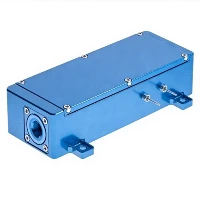

The 10600nm laser (wavelength 10.6μm, far-infrared) is the typical output of carbon dioxide (CO₂) lasers. Known for its high power, efficiency, and strong penetration, it is widely used in industrial processing, medical aesthetics, and scientific research. However, its invisibility and high energy pose risks, particularly to eyes and skin. This report analyzes its generation principles, applications, hazards, and protective measures.
1. Generation of 10600nm Laser
Working Medium: CO₂ lasers use a gas mixture (CO₂, N₂, He). Electrically excited CO₂ molecules transition to higher energy levels and release photons via stimulated emission.
Resonance Cavity: Optical resonance cavities (e.g., gold-coated mirrors) amplify photons through phase-synchronized reflections, generating stable 10600nm wavelength output.
Efficiency: The energy conversion efficiency reaches 10%-20%, with output power ranging from tens of watts to kilowatts, suitable for high-precision processing.

2. Applications of 10600nm Laser
2.1 Industrial Applications
Material Processing:
Cutting & Engraving: High-precision cutting of metals, plastics, and glass (e.g., automotive parts and electronic components).
Welding & Drilling: Micron-level hole processing for aerospace components.
Non-Metal Processing: Engraving intricate patterns on wood, leather, and textiles for customization.
2.2 Medical Applications
Surgery: Used for soft tissue ablation with minimal bleeding, such as tumor removal and ENT surgeries.
Dermatology: Stimulates collagen regeneration to treat scars and wrinkles, requiring precise energy control to avoid burns.
2.3 Scientific Research
Atmospheric Studies: Detects water vapor absorption for meteorological monitoring.
LIDAR: Long-range detection for terrain mapping and autonomous vehicles.
|
|
|


3. Hazards of 10600nm Laser
3.1 Eye Damage
Invisibility: The 10600nm wavelength is invisible, bypassing the blink reflex. Direct exposure causes retinal burns or permanent blindness.
Diffuse Reflection: Scattered light from metal or glass surfaces can damage the cornea.
3.2 Skin Burns
High-energy lasers cause deep burns, especially under prolonged or focused exposure.
3.3 Fire Risks
Sparks from laser processing may ignite flammable materials.

4. Protective Measures of 10600nm Laser
4.1 Personal Protective Equipment (PPE)
Absorptive Lenses: Designed for 10600nm, with optical density (OD) ≥4 and visible light transmittance ≥60%.
Reflective Lenses: Use coatings to reflect specific wavelengths but may degrade over time.
Protective Clothing: Flame-resistant materials to prevent skin burns.
4.2 Engineering Controls
Enclosed Workstations: Equipped with interlock systems to prevent accidental exposure.
Beam Path Management: Use beam stops or diaphragms to limit laser diffusion.
4.3 Operational Protocols
Standardized Procedures: Include pre-operation checks, energy calibration, and emergency shutdowns.
Training: Emphasize hazard recognition, PPE usage, and emergency response.

5. Summary
The 10600nm laser is indispensable in industrial and medical fields, but its risks demand rigorous safety protocols. Current protection relies on PPE, engineering controls, and standardized operations. Compliance with international standards (e.g., EN207, ANSI Z136.1) ensures safe application.