




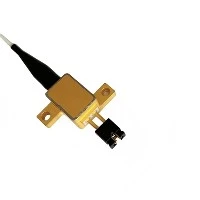
Lasers are devices that use the principle of stimulated radiation to amplify or oscillate light in certain excited substances. Lasers are also divided into single-mode and multi-mode. The essential difference between single-mode lasers and multi-mode lasers is that there is only one mode in the output beam mode of single-mode lasers, while there are multiple modes in the output beam mode of multi-mode lasers.

Single-mode lasers produce extremely high-quality beams with a single transverse mode (TEM00), which means that the beam diverges very little during propagation, can maintain a smaller focus and higher brightness, and are suitable for applications with extremely high beam quality requirements such as precision measurement, medical surgery, and optical data storage.

In contrast, multi-mode lasers produce beams containing multiple transverse modes. Although their output power is usually higher and the cost is relatively low, the beam quality is not as good as single-mode lasers. They are suitable for applications that do not require extreme beam quality, such as material processing, printing, and large-scale lighting. In general, the choice of single-mode or multi-mode lasers depends on the specific requirements of beam quality, output power, and cost for specific applications.

Single-mode laser is an important classification in laser technology, with a wide range of characteristics and applications.
1. Definition of single-mode laser
The concept of transverse mode (TEM00 mode): The laser beam generated by a single-mode laser has the lowest-order transverse mode, namely the TEM00 mode. This mode is also called the fundamental mode or Gaussian mode. It presents a light intensity distribution that smoothly decreases from the center to the outside, so that the beam diverges very little when propagating over long distances and maintains a high degree of spatial coherence.
Beam quality (M2 factor): The M2 factor is a parameter to measure the quality of a laser beam. It describes the quality deviation of the beam compared to an ideal Gaussian beam. Due to its almost perfect Gaussian mode, the M2 factor of a single-mode laser is close to 1, indicating extremely high beam quality.
2. Advantages of single-mode laser
High beam quality: Due to its excellent transverse mode structure, single-mode lasers provide very high beam quality, especially in applications that require extremely fine beams and pure light spots.
Low divergence angle: The divergence angle of a single-mode laser is very small, which allows the beam to remain focused when transmitted over long distances, reducing the problem of spot enlargement caused by distance.
High brightness: The high brightness of single-mode lasers makes them very useful in applications that require high light intensity, such as precision cutting and precision welding.
3. Applications of single-mode lasers
Precision measurement: In measurement applications that require extremely high accuracy, such as distance measurement and calibration instruments, single-mode lasers are preferred due to their high directivity and low beam divergence.
Medical surgery: In medical applications such as ophthalmic surgery and skin treatment, single-mode lasers are widely used due to their fine manipulation and precise energy control.
Optical data storage: In optical disc burning and data storage technology, the use of single-mode lasers can significantly improve data storage density and reading accuracy.
Multimode lasers have demonstrated their unique value and wide applicability in multiple industrial and commercial applications.
1. Definition of multimode lasers
Generation of higher-order transverse modes: Unlike the single fundamental mode (TEM00) produced by single-mode lasers, multimode lasers can operate in higher transverse modes to produce multiple modes of light spots, which usually include multiple light intensity peaks and form complex light spot patterns.
Beam quality (higher M2 factor): In multimode lasers, due to the presence of multiple transverse modes, its M2 factor is higher than that of single-mode lasers, indicating that the beam quality is lower and the divergence angle is larger, but it is suitable for different application scenarios.
2. Advantages of multimode lasers
Higher output power: Multimode lasers can generally provide higher output power than single-mode lasers, which makes them more suitable for applications that require high power, such as material processing and large area irradiation.
Cost-effectiveness: Compared with single-mode lasers, multimode lasers are generally cheaper to manufacture, making them more popular in cost-sensitive applications.
Wider application areas: Due to their high power and low cost, multimode lasers are particularly popular in manufacturing, advertising and other industries that require high-power laser solutions.
3. Applications of multimode lasers
Material processing: In material processing fields such as metal cutting, welding and surface treatment, multimode lasers provide enough power to process large areas or thick materials.
Printing industry: In laser printing technology, the high power of multimode lasers can quickly process large amounts of data encoding and image rendering.
Large-area lighting: In stage lighting, architectural lighting, and security and surveillance applications, multimode lasers are widely used due to their higher power output to achieve bright and wide coverage effects.
When choosing a laser, it is key to understand the characteristics of different lasers and their applicable fields. This involves not only considering technical specifications, but also foreseeing future development trends.
1. Choose according to application requirements
Trade-off between precision and power: For applications that require extremely high precision (such as precision measurement or medical surgery), single-mode lasers are usually the first choice due to their high beam quality and low divergence angle. For applications that require higher power output (such as material processing or large-scale illumination), multi-mode lasers are more suitable.
Consideration of cost and performance: Single-mode lasers are usually more expensive, but provide better beam quality; while multi-mode lasers have obvious advantages in cost-effectiveness, especially suitable for large-scale industrial applications. Users need to make choices based on budget and performance requirements.
2. Technology development trends
Improvements in single-mode laser technology: With the advancement of technology, single-mode lasers have increased power while maintaining beam quality, making them increasingly used in fields previously dominated by multi-mode lasers.
Increased power and reduced costs of multi-mode lasers: Technological innovations are also driving the development of multi-mode lasers, especially in terms of increasing output power and reducing manufacturing costs, which makes them more attractive in various industrial applications.
When choosing a laser, it is important to select the right type of laser, considering the different requirements for laser characteristics such as power, accuracy, and cost for different application needs. Single-mode lasers are suitable for precision operations such as medical surgery and precision measurement due to their excellent beam quality and low divergence angle; while multi-mode lasers are more suitable for applications such as material processing and large-area lighting due to their higher output power and cost-effectiveness.
As technology continues to advance, the advantages of single-mode and multi-mode lasers are constantly being strengthened, which has gradually expanded their application range. For example, single-mode lasers can now provide higher power without losing beam quality, while multi-mode lasers have increased power while reducing costs. These technological advances not only provide better solutions for existing applications, but also open up new application areas.
Given these complex selection factors, it is crucial to work with experienced technical and product experts. JTBYShield can provide professional technical support and consulting services to help customers choose the type of laser that best suits their specific application needs. Whether it is technical description, performance comparison or cost-benefit analysis, JTBYShield's professional team can provide detailed guidance and support to ensure that each customer can find the best laser solution to meet their precise needs.
By working with JTBYShield, you will not only get the most advanced laser products, but also benefit from our in-depth industry experience and comprehensive technical support to ensure that your application can achieve the best performance.
Contact information:
If you have any ideas, feel free to talk to us. No matter where our customers are and what our requirements are, we will follow our goal to provide our customers with high quality, low prices, and the best service.
 Email:info@loshield.com
 Tel:0086-18092277517
 Fax: 86-29-81323155
 Wechat:0086-18092277517


