



What is Laser Scanning? Whether it is reading product barcodes, projecting laser shows or welding car bodies, laser scanning is simply moving a laser beam across a surface. While simple in concept, the actual technology used for laser scanning can be quite complex. We have all come across laser scanning on a regular basis. This technology is used to pass a laser beam through a product barcode when shopping in a store, but laser scanning is used for much more than that.
Basic principles of laser scanning
I. Principles of laser generation
In a laser scanning system, the laser first generates a high-intensity, monochromatic beam. This beam is generated by exciting the active medium in the laser, such as semiconductors, gases or crystals, causing a population inversion and subsequent stimulated radiation.
The reflector of the optical resonator is used to force the beam to reflect back and forth in the medium, increasing the number of photons in the activated medium. When the system reaches the threshold, a continuous laser beam can be generated.
II. Direction and control of the laser beam
The generated laser beam needs to be directed to a specific object or environment. In a laser scanning system, scanning mirrors such as polygonal rotating mirrors or vibrating mirrors are usually used to achieve this.
These scanning mirrors can quickly deflect the direction of the laser beam and cover the entire target area according to a preset trajectory. By precisely controlling the movement of the scanning mirror, the laser can scan the object in a grid for subsequent data collection.
III. How lasers collect feedback information
After the laser beam hits the scanned object, the beam will be reflected, refracted or scattered according to the surface characteristics of the object.
A portion of the reflected light is captured by detectors, which are usually photodiodes or charge-coupled device (CCD) sensors. The detectors convert the collected light signals into electrical signals, which are further processed into digital information. By analyzing these data, the three-dimensional structure of the object or other required parameters can be constructed.
Uses:
I. Data Acquisition and Imaging
1. Process
Lasers are used to determine some physical properties of an object, such as size, shape, spatial position, spatial orientation, color, color changes, surface texture, chemical composition, and more. To achieve this, a laser beam is scanned across the surface of an object or inside an object. The projected laser pattern is then imaged – or the returning light is detected (by reflection, scattering, or fluorescence) – and analyzed to obtain the desired information.
2. Common Applications
- Reading barcodes, QR codes, Datamatrix codes, and more.
- Measuring the physical dimensions of products passing on a conveyor belt and identifying products that do not meet specifications.
- Scanning a laser beam around a moving vehicle performs the function of a lidar.
- Image food products (such as shrimp or nuts) passing on a conveyor belt to grade them by size or identify substandard products.
- Scanning real objects, such as teeth or the inside of a building, to create accurate computer models
- Confocal microscopy, where a laser beam is projected onto a sample through a microscope and scanned across the sample to build an image
- Optical coherence tomography (OCT) for medical imaging
- Semiconductor wafer inspection
II. Data Writing and Display
1. Process
Laser is used to display information, or to produce patterns or images. To achieve this, the laser beam is moved over or inside an object while modulating its intensity.
2. Common Applications
- Scanning a rotating photosensitive drum in a laser printer
- Laser presentation lights and signs
- Laser alignment instruments for construction and surveying
III. Material processing
1. Process
Laser is used to physically transform (cut, weld, ablate, melt, etc.) or affect (anneal, discolor, heat, etc.) materials in a spatially varying manner. This is achieved by moving the laser beam over or inside the object while modulating the intensity.
2. Common applications
- Laser marking
- Laser welding
- Laser cutting
- Laser engraving
- Laser heat treatment
- Laser cladding
The uses listed above (which are only a small subset of laser scanning applications) have a wide range of technical requirements. These include parameters such as scanning speed, the size of the area or volume that must be covered, the laser power involved, the cost, size, reliability and life of the scanner.
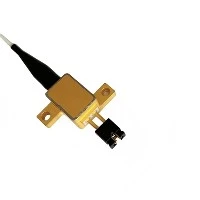
JTBYShield R&D personnel have developed different laser scanning modules to meet the different needs of these applications. The laser module is the core component in the laser scanning system, responsible for generating a precise laser beam to perform scanning tasks.
Types and characteristics
1. Semiconductor laser module
Common in low-cost and low to medium power applications.
Small and light, high energy efficiency, low maintenance cost.
2. Fiber laser module
Suitable for industrial applications requiring high power and high precision.
Can provide high-quality laser beams with low maintenance requirements.
3. Gas laser module
Commonly used for precision measurement and long-distance scanning.
Produces a laser beam with high stability and high precision, but is large in size and high in cost.
We specialize in manufacturing laser equipment parts such as laser diodes, laser modules, infrared lasers, fiber lasers, and laser engraving/cutting machines, etc. We have a professional R&D team, accept OEM and ODM, we can design and manufacture any type of laser according to your needs. If you are interested, please feel free to contact me for more details!
Contact information:
If you have any ideas, feel free to talk to us. No matter where our customers are and what our requirements are, we will follow our goal to provide our customers with high quality, low prices, and the best service.
 Email:info@loshield.com
 Tel:0086-18092277517
 Fax: 86-29-81323155
 Wechat:0086-18092277517


