



Since its birth in the 1960s, laser technology has experienced rapid development and widespread application. At first, the lasers developed by scientists were mainly used in the fields of communication and measurement. With the advancement of technology, lasers have been used in many fields, especially in precise distance measurement. Laser ranging technology uses the rapid propagation characteristics of light to measure distance by calculating the time it takes for light waves to go back and forth. This method is particularly useful in surveying and mapping, construction, military and other fields. With the continuous development of technology, laser rangefinders have become more portable and accurate, making applications from spacecraft to smartphones possible, greatly promoting the development of modern measurement technology.

Principle of laser distance measurement
Generally speaking, there are two methods of using laser to measure distance, one is called pulse method and the other is called phase method. The principle of laser pulse distance measurement is: the laser emitted by the laser emitting device is reflected by the measured object and then received by the receiver. By recording the round trip time of the laser at the same time, half of the product of the speed of light and the round trip time is the distance between the distance measuring instrument and the measured object. The accuracy of the pulse method to measure distance is generally around +/- 10 cm. The phase method does not measure the phase of the laser, but measures the phase of the signal modulated on the laser. The measurement accuracy of a good quality laser distance measurement machine can reach 1 mm error, so the laser is suitable for various high-precision measurement purposes.
Laser ranging technology can be divided into two main categories: pulse laser ranging and phase laser ranging. Each of these two technologies uses different methods to achieve distance measurement and is suitable for different application scenarios.
1. Pulse laser ranging
Working principle: The pulse laser ranging system emits extremely short laser pulses, which are reflected back after encountering the target object and detected by the receiver. The distance can be calculated by measuring the time from the pulse emission to the reception. This is because the propagation speed of the laser (the speed of light) is known, so by calculating the total time for the light pulse to go back and forth, the distance can be accurately determined: distance = (speed of light × time) / 2.
Application: This technology is particularly suitable for long-distance measurement, such as topographic mapping, aerospace navigation and military applications, because it can accurately measure distances from a few meters to a few kilometers.
2. Phase laser ranging
Working principle: Phase laser ranging technology determines the distance by measuring the phase difference between the emitted continuous wave laser and the reflected laser. When the emitted laser wave hits the target and returns, it will produce a phase difference with the original wave. This phase difference is proportional to the time of laser propagation, which can be used to calculate the distance.
Application: Phase ranging is usually used for medium and short-range distance measurement, such as building measurement, industrial automation, and some scientific research experiments. Its advantage is that it can provide high accuracy and resolution, which is suitable for scenes that require precise details.
These two types of laser ranging technologies each have their own advantages and limitations. Which technology to choose depends on the specific application requirements and environmental conditions. Through these high-precision laser ranging technologies, accurate measurements ranging from meters to kilometers can be achieved, and they are widely used in many fields.
Implementation method of laser ranging technology
Laser ranging technology achieves accurate distance measurement through precise physical measurement and advanced equipment configuration. This process involves precise equipment configuration and clear operating procedures.
1. Device configuration
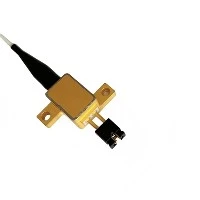
Laser: It is the core part of laser ranging equipment and is responsible for emitting laser beams. Depending on the application requirements, pulsed lasers or continuous wave lasers can be selected.
Detector: used to receive the laser beam reflected or scattered back by the target object and convert these optical signals into electrical signals. Common detectors include photodiodes and avalanche photodiodes.
Lens: Before the laser and detector, the lens is used to focus the outgoing laser beam and collect the reflected beam. The quality and design of the lens have a significant impact on the measurement accuracy of the entire system.
Timing system: It is especially important for pulse laser ranging systems. The timing system needs to be extremely precise to record the precise time from launch to return of the laser beam. Commonly used timing devices include digital timers and synchronization controllers.
2. Operational procedures
Step 1: Equipment calibration: First ensure that all optical components (such as lenses and lasers) have been correctly installed and calibrated to ensure straight transmission of the laser beam and correct reception of reflected light.
Step 2: Set measurement parameters: According to the specific needs of measurement, set relevant parameters, such as measurement range, measurement mode (single or continuous measurement), etc.
Step 3: Start measurement: activate the laser to emit a beam, and start the timing system at the same time. Make sure that the laser beam is not blocked during the measurement and that the detector can receive enough reflected light.
Step 4: Data reading and processing: After the measurement is completed, read the data from the device and perform necessary data processing, such as unit conversion, error correction, etc.
When using laser ranging equipment, you also need to pay attention to the following points:
Avoid looking directly at the laser: Laser may cause damage to the eyes. Avoid looking directly at the laser emission source during operation.
Environmental factor considerations: Environmental factors such as fog, rain, and dust may affect the propagation and reflection of laser light, thus affecting the measurement results.
Target characteristics: The surface material, color and angle of the target may affect the reflection effect. You should try to choose a target with good reflection effect for measurement.
Through these sophisticated equipment and strict operating procedures, laser ranging technology can provide high-precision distance measurement results in a variety of environments to meet the needs of various professional fields.
Application of laser ranging technology
Laser ranging technology is widely used in many fields due to its high precision and flexibility, from industrial production to daily life, to scientific research, and its impact is far-reaching.
1. Industrial application
Construction industry: In the construction industry, laser ranging technology is used to accurately measure distance, height and depth, such as measuring the size of buildings, the diagonal of rooms, etc., to ensure the accurate construction of building structures and foundations.
Engineering management: In land surveying and civil engineering, laser ranging instruments can quickly draw topographic maps and perform volume measurements to help engineers plan the construction of roads, bridges and tunnels.
Manufacturing: In the manufacturing industry, laser ranging is used in automated production lines, such as in robot guidance systems, to achieve automatic alignment of parts and precise control of the assembly process.
2. Scientific research
Topographic mapping: Laser ranging technology is an important tool in topographic mapping, which can be used to create high-precision digital elevation models (DEMs) and provide data support for geographic information systems (GIS).
Astrometry: In the field of astronomy, laser ranging technology is used to measure the distance between the earth and the moon or other satellites, and even to measure the distance between the earth and the sun and planets.
Ocean exploration: Laser ranging equipment can be equipped on ships or drones to measure the depth of the ocean, the speed of ocean currents, and the seabed topography.
3. Daily life
Autonomous driving vehicles: In autonomous driving technology, laser ranging is one of the key technologies. Through the laser radar system (LiDAR), the vehicle can perceive the surrounding environment in real time, detect obstacles, and achieve safe navigation.
Sports technology: In sports and fitness equipment, laser ranging technology is used to measure speed and distance. For example, golf rangefinders help athletes calculate the distance of shots, and smart watches use laser ranging to monitor users' sports performance.
These applications of laser ranging technology demonstrate its broad potential in improving production efficiency, promoting scientific development, and enhancing the quality of daily life. With the continuous advancement of technology and the reduction of costs, laser ranging is expected to be innovatively applied in more fields.
Contact information:
If you have any ideas, feel free to talk to us. No matter where our customers are and what our requirements are, we will follow our goal to provide our customers with high quality, low prices, and the best service.
 Email:info@loshield.com
 Tel:0086-18092277517
 Fax: 86-29-81323155
 Wechat:0086-18092277517


