

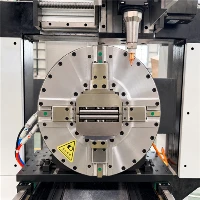
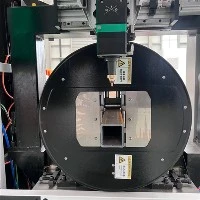
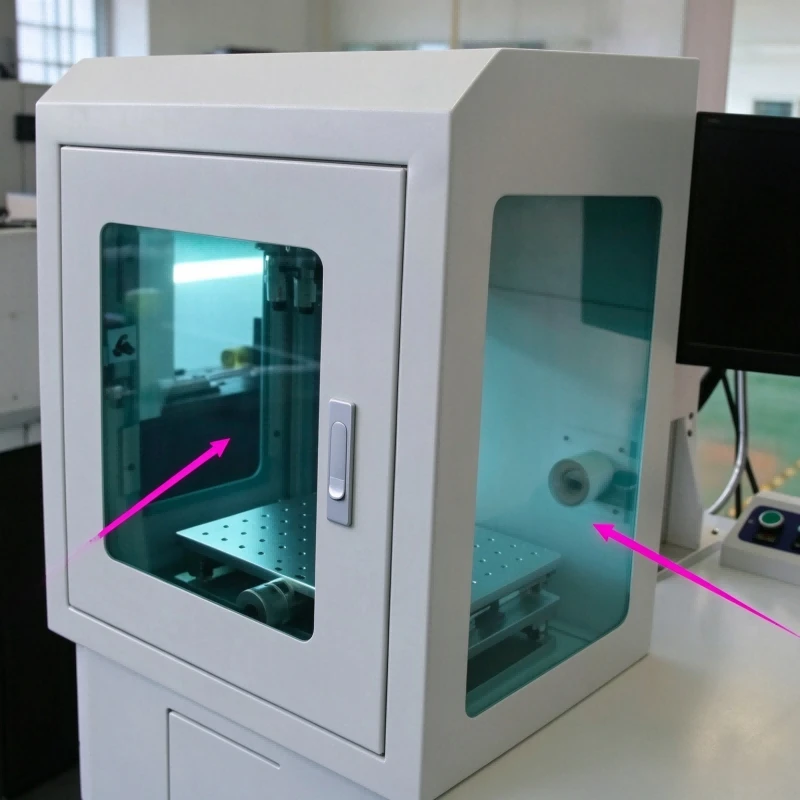
Industrial laser equipment is widely used in cutting, welding, marking, and precision manufacturing. While these systems offer high efficiency and accuracy, they also present potential safety risks from laser radiation.
For machines equipped with viewing windows, selecting the right protective material is essential. Laser safety window film can help reduce the transmission of specific laser wavelengths while maintaining visibility for operators.
However, not all protective films provide the same level of protection. Understanding their optical properties, material characteristics, and application requirements is important before making a purchasing decision.
What Is Laser Safety Window Film?
Laser safety window film is a specialized optical material designed to absorb or reflect laser radiation within certain wavelength ranges.
Unlike ordinary window tinting films, laser protective films are developed to provide wavelength-specific attenuation. Their performance is typically measured by optical density (OD), which indicates how effectively a material reduces laser transmission.
These films may be considered for protective viewing windows in laser cutting machines, welding systems, marking equipment, and industrial laser enclosures.
For example, equipment operating around 1064nm requires protective materials with verified attenuation at that wavelength. A film designed for one laser wavelength may not provide sufficient protection at another.
Key Factors When Choosing Laser Safety Window Film
Selecting the right laser protective film involves several technical considerations. The following factors are particularly important for industrial equipment manufacturers and buyers.
1. Laser Wavelength Compatibility
Laser wavelength is the first factor to check when selecting a protective film.
Industrial laser systems operate at different wavelengths. Many fiber laser systems work near 1064nm, while CO₂ lasers commonly operate at 10.6μm.
A film designed for near-infrared laser protection should not be assumed to work with other laser types.
Before purchasing, confirm the operating wavelength of your equipment and review the film's corresponding optical attenuation data.
2. Optical Density (OD)
Optical density indicates how much laser radiation is attenuated by a protective material at a specified wavelength.
For instance, OD3 corresponds to approximately 0.1% transmission, while OD4 corresponds to approximately 0.01% transmission.
A higher OD value means greater attenuation at the specified wavelength, but it does not automatically make a film suitable for every application.
The required OD depends on laser power, exposure duration, beam characteristics, and the equipment's safety design. Buyers should verify the product's test data rather than relying on a single OD rating.
3. Visible Light Transmission
A protective viewing window should allow operators to monitor the laser processing area without unnecessary exposure to hazardous radiation.
Visible light transmission affects how clearly users can observe workpieces and machine operations.
A film with poor visibility may make inspection and positioning more difficult, particularly in enclosed equipment with limited lighting.
When comparing products, consider optical clarity, color appearance, and visible light transmission alongside laser attenuation performance.
4. Material Durability and Installation
Industrial environments can expose viewing windows to dust, scratches, temperature changes, and frequent cleaning.
The protective film should be compatible with the window substrate and suitable for the expected operating conditions.
Installation also matters. Poor adhesion, uncovered edges, or damaged film can affect the performance of a protective window assembly.
For long-term industrial use, buyers should consider material stability, maintenance requirements, and the manufacturer's installation recommendations.
Applications of 1064nm Laser Protective Film
Near-infrared lasers around 1064nm are commonly used in industrial marking, welding, and other laser processing applications.
Because this radiation is invisible to the human eye, appropriate protective measures are especially important.
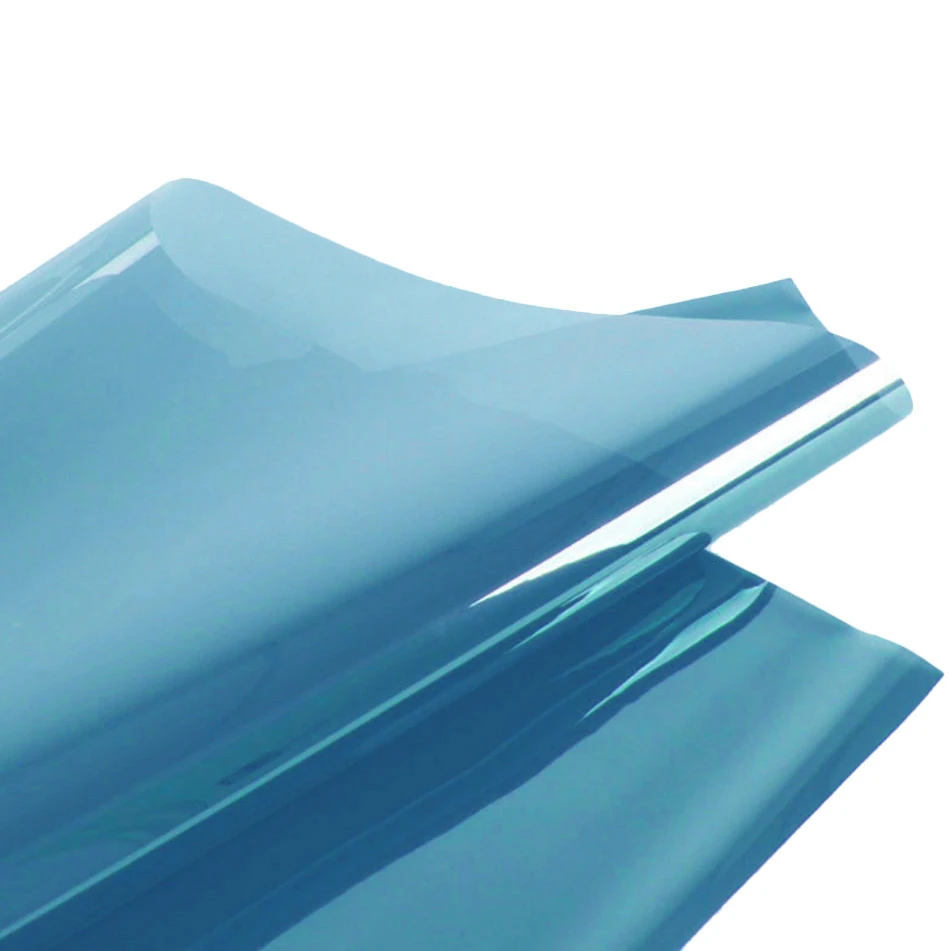
JTBYShield offers a 950nm–1064nm absorption-type laser protective film designed to attenuate selected near-infrared wavelengths.
The film is available in a thin, flexible format, making it a potential material option for custom protective window applications where its optical and physical performance meets the equipment's requirements.
For industrial equipment manufacturers, factors such as film dimensions, substrate compatibility, and installation conditions should be reviewed before integration.
How to Choose a Reliable Laser Protective Film Supplier
For industrial buyers, product specifications are only part of the purchasing decision.
A reliable laser protective film supplier should provide clear technical information, including wavelength coverage, optical density, material properties, and available test data.
Customization is another important consideration. Equipment manufacturers may require different film sizes or specific material configurations for their viewing windows.
It is also worth discussing installation requirements and expected operating conditions with the supplier before placing a bulk order.
Clear communication during the selection process can help ensure that the chosen material matches the intended application.
Conclusion
Choosing laser safety window film for industrial equipment requires careful evaluation of wavelength compatibility, optical density, visibility, and material durability.
The right protective material should meet the equipment's technical requirements while supporting safe and practical operation. Its suitability should be confirmed as part of the complete laser safety assessment.
For projects involving near-infrared laser protection, JTBYShield provides absorption-type laser protective film solutions for industrial applications.
Contact JTBYShield to discuss your laser wavelength, window dimensions, and purchasing requirements.