

Laser technology has become a cornerstone of modern industry, healthcare, and scientific research. Its applications range from precision manufacturing to advanced medical treatments and cutting-edge optical experiments. According to the International Laser Safety Association, the global laser equipment market is growing at an annual rate of 15%, projected to exceed $15 billion by 2025. While lasers drive innovation and efficiency, they also pose significant safety risks.
Laser radiation, particularly at high power levels, can cause irreversible harm to human eyes and skin. Even low-power lasers may lead to vision damage with prolonged exposure, while high-power lasers can cause burns or permanent injury within seconds. Statistics from the International Electrotechnical Commission (IEC) indicate that 30% of laser-related accidents stem from inadequate safety measures. Establishing robust laser safety protocols, including physical barriers like laser protective curtains, is now essential in laser-equipped environments.
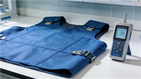
Laser protective curtains serve as a critical component of laser safety systems. By blocking specific wavelengths of laser radiation, they safeguard personnel and environments. Among these, 1070nm wavelength laser protective curtains are particularly vital due to their widespread use in industrial applications. This article explores their applications, the significance of the PEL>258.09W/cm² (1070nm φ=1mm T=100s) parameter, and key considerations for selecting protective curtains.

Applications of 1070nm Laser Protective Curtains
Industrial Manufacturing
The 1070nm wavelength is a workhorse in industrial laser applications, including cutting, welding, and surface treatment of metals. Its high energy density and material penetration make it ideal for heavy-duty tasks. In this sector, laser protective curtains are indispensable for safeguarding workers and equipment.
Key Applications:
Laser Cutting/Welding Systems: Installed on machine doors and observation windows to block stray laser radiation during operations.
Production Line Safety: Partitioning high-risk zones in large-scale facilities to prevent accidental exposure.
Automated Workcells: Integrated with safety interlocks to ensure curtains close automatically during laser operation.
Design Considerations:
Power Compatibility: Match curtain PEL ratings to the laser's maximum output.
Environmental Durability: Resistance to temperature fluctuations, dust, and humidity.
Operational Efficiency: Materials that balance visibility (for monitoring) and protection.
Healthcare
In medical settings, 1070nm lasers are used for surgical procedures and dermatological treatments. Protective curtains create controlled environments to shield patients, surgeons, and staff from scattered or reflected laser beams.
Key Applications:
Laser Surgery Rooms: Installed around operating tables to contain laser radiation.
Aesthetic Treatments: Protecting adjacent areas in clinics performing skin resurfacing or vascular treatments.
Design Considerations:
Biocompatibility: Materials must meet medical-grade safety standards.
Sterilization: Easy to clean and resistant to microbial growth.
Non-Interference: Avoid materials that could interfere with imaging or monitoring equipment.
Scientific Research
Research labs rely on 1070nm lasers for experiments in photonics, material science, and quantum physics. Protective curtains enable safe operation of high-power systems like laser-induced breakdown spectroscopy (LIBS) setups.
Key Applications:
Optical Laboratories: Enclosing laser beam paths to prevent accidental exposure.
Educational Facilities: Training environments where students handle lasers.
Design Considerations:
Modular Design: Adjustable configurations for evolving experimental setups.
Data Integrity: Non-reflective surfaces to avoid interference with measurements.
Compliance: Adherence to standards like ANSI Z136.1 for safe laser use.

Understanding PEL>258.09W/cm² (1070nm φ=1mm T=100s)
What Does PEL Mean?
PEL (Maximum Permissible Exposure Limit) defines the highest laser radiation level a protective curtain can safely block under specific conditions. For 1070nm lasers, this parameter is tested using:
Wavelength: 1070nm (common in fiber lasers).
Beam Diameter (φ): 1mm (standard for laser safety testing).
Exposure Time (T): 100 seconds (representing short-term exposure scenarios).
A PEL>258.09W/cm² rating means the curtain can withstand laser irradiance exceeding 258.09W/cm² under these conditions, providing a safety buffer for high-power industrial lasers.
Why This Parameter Matters
High-Power Compatibility: Suitable for industrial lasers exceeding 1kW output.
Safety Margin: Exceeds typical operational requirements, reducing risk.
Regulatory Compliance: Meets IEC 60825-4 standards for laser protective barriers.
Verification and Certification
When selecting curtains, request third-party test reports from accredited labs (e.g., TÜV, SGS). Key verification steps include:
Confirming test conditions match the product's claimed PEL.
Reviewing damage threshold data under repeated exposure.
Ensuring compliance with IEC 60825-4 and ANSI Z136.1 standards.

Conclusion
Laser protective curtains are a linchpin of laser safety, particularly for 1070nm systems prevalent in industry, healthcare, and research. Their effectiveness hinges on precise parameter matching, such as PEL>258.09W/cm² (1070nm φ=1mm T=100s), which ensures protection in high-power environments.
As laser technology advances, so must safety protocols. Future innovations may integrate smart sensors for real-time monitoring or adaptive materials that adjust protection levels dynamically. However, the foundation remains selecting certified, rigorously tested curtains tailored to specific operational needs.
By prioritizing laser safety, industries can harness the full potential of laser technology while minimizing risks. This commitment not only protects personnel but also enhances productivity and compliance, ensuring sustainable growth in the laser-driven economy.