



I. Introduction to Laser Cladding
Laser cladding is a sophisticated surface engineering technique that involves using a high-energy laser beam to melt coating materials, which then fuse to a substrate to form a clad layer with enhanced properties. The process significantly improves the surface's wear resistance, corrosion resistance, high-temperature durability, and oxidation resistance. Laser cladding is used both for repairing worn or damaged parts and for enhancing the surface properties of new parts during manufacturing.
II. Common Laser Wavelengths in Laser Cladding
Several types of lasers are commonly used in laser cladding, each with distinct wavelengths, and they include:
Fiber Lasers: These lasers typically operate at wavelengths between 1060 and 1080 nanometers. Fiber lasers are the most commonly used in laser cladding due to their high beam quality and high electrical-to-optical conversion efficiency.
Carbon Dioxide (CO2) Lasers: CO2 lasers emit at a wavelength of 10.6 micrometers. These are particularly effective for cladding materials with high reflectivity, such as aluminum and copper.
Solid-State Lasers (e.g., Nd:YAG Lasers): Neodymium-doped Yttrium Aluminum Garnet (Nd:YAG) lasers operate at a wavelength of 1064 nanometers. While their efficiency is slightly lower than that of fiber lasers, their flexibility and stability make them valuable for certain specific applications.
III. Main Application Fields of Laser Cladding
Laser cladding finds applications across diverse industries, leveraging its ability to enhance material properties and extend the life span of critical components:
Aerospace Industry: Laser cladding is used to repair damage and improve the fatigue resistance and high-temperature capabilities of components such as turbine blades, engine parts, and structural elements.
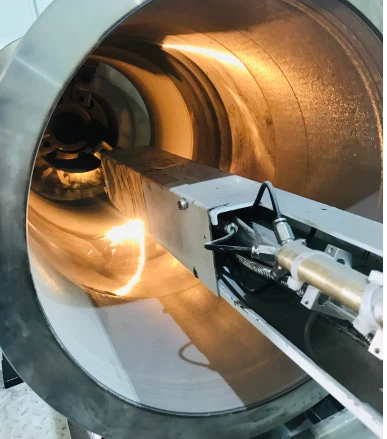
Energy Sector: In the power generation, oil, and gas industries, laser cladding is employed for repairing and enhancing equipment like boilers, turbine blades, and pipes subjected to harsh environments. This extends their operational life and improves efficiency.
Automotive Manufacturing: Critical automotive parts such as drive shafts, camshafts, and cylinders benefit from laser cladding due to its ability to enhance wear resistance and impact resistance.
Railway Transportation: Laser cladding is used to repair and strengthen rail tracks, wheels, and other components to extend their life and reduce maintenance costs.
Metallurgy: Components like rolls, molds, and dies in the metallurgical industry are subject to extreme wear and corrosion. Laser cladding significantly improves their surface properties, enhancing durability and performance.
Medical Devices: Certain medical devices made from specialized materials require enhanced surface properties for better performance. Laser cladding offers precise control over material deposition, which is crucial for such high-precision applications.
IV. Laser Protection Measures
Working with high-energy laser systems mandates strict adherence to safety protocols to ensure operator safety and maintain a safe working environment. Key protective measures include:
Laser Safety Eyewear: Operators must wear laser safety goggles calibrated to the specific wavelength of the laser in use. These goggles protect the eyes from direct and scattered laser radiation.
Protective Clothing: Operators should wear protective clothing, including gloves and aprons, to shield against laser exposure and potential splashes of molten metal.
Laser Safety Curtains and Barriers: The work area should be enclosed with laser safety curtains or barriers to confine the laser beam and prevent it from causing harm outside the designated area.
Ventilation and Fume Extraction: Laser cladding generates fumes and particulate matter, which can be hazardous. Effective ventilation and fume extraction systems must be in place to maintain air quality and protect the operator's respiratory health.
Standard Operating Procedures (SOPs): Strict adherence to SOPs for laser machine operation, maintenance, start-up, and shutdown is crucial. These procedures should include emergency protocols in case of a laser incident.
Training and Education: All personnel operating laser cladding equipment must undergo comprehensive laser safety training. This training should cover the hazards of laser radiation, proper usage of protective equipment, and emergency response tactics.
Signage and Warning Systems: Areas where laser operations occur should have clear warning signs and system interlocks to prevent unauthorized access during laser operation. Audible and visual alarms can alert personnel to active laser conditions.
Automated Monitoring Systems: Advanced laser systems often incorporate automated monitoring and shutdown systems that detect malfunctions or unsafe conditions and shut down the laser to prevent accidents.

V. Detailed Aspects of Laser Cladding Process
A. Materials Used in Laser Cladding
The choice of materials is crucial for the efficacy of laser cladding. Commonly used cladding materials include:
Metallic Powders: Nickel-based, cobalt-based, and iron-based alloys are frequently used, providing excellent corrosion resistance, hardness,and wear resistance. These powders are selected based on their compatibility with the substrate material and the specific performance requirements.
Ceramic Powders: Materials like carbides, nitrides, and oxides are used when high hardness and wear resistance are crucial. For instance, tungsten carbide is used for applications requiring substantial abrasion resistance.
Composite Materials: Combining metals with ceramics offers the advantages of both materials, providing high toughness and superior wear resistance.
B. Process Parameters
Several process parameters are critical in laser cladding and influence the quality and properties of the clad layer:
Laser Power: The power of the laser beam directly affects the depth of penetration and the degree of melting of the coating and substrate materials. Higher power increases penetration but also raises the risk of substrate damage.
Scanning Speed: The speed at which the laser moves across the substrate impacts the heat input and cooling rates. Optimal scanning speed ensures good bonding without excessive heat input that could distort the substrate.
Powder Feed Rate: The amount of powder fed into the melt pool must be carefully controlled to ensure consistent layer thickness and avoid defects like porosity or lack of fusion.
Shielding Gas: Gases such as argon or helium are used to protect the melt pool from atmospheric contamination, preventing oxidation and ensuring a high-quality clad layer.
Overlap and Hatch Spacing: The way adjacent laser passes overlap and the spacing between them can affect the uniformity and integrity of the clad layer.
C. Advantages and Challenges
Advantages:
Improved Surface Properties: Enhanced wear, corrosion, and high-temperature resistance extend the life of components.
Precision and Control: Laser cladding allows for precise control of material deposition and minimal heat-affected zones.
Material Versatility: Capable of depositing a wide range of materials, including metals, ceramics, and composites.
Reduced Downtime: Effective for in-situ repairs, reducing the need for part replacement and associated downtime.
Challenges:
Initial Setup Costs: The capital cost for laser cladding equipment and systems can be significant.
Complex Process Control: Achieving optimal results requires precise control and understanding of multiple process parameters.
Material Compatibility: The success of the clad layer depends on the compatibility between the substrate and the cladding material.
D. Case Studies and Practical Applications
Aerospace Turbine Blades: Laser cladding is used to repair worn or damaged turbine blades, restoring them to their original dimensions and properties, thereby saving significant costs compared to replacement.
Oil and Gas Equipment: Drill bits and valve seats in the oil and gas industry are subjected to extreme wear and corrosion. Laser cladding enhances their durability and performance under harsh operational conditions.
Automotive Engine Components: Cylinder bores and camshaft lobes are laser clad to improve their wear resistance, leading to longer engine life and improved performance.
Medical Implants: Orthopedic implants, such as knee or hip replacements, are laser clad with biocompatible materials to enhance their integration with human bone and reduce wear.
VI. Conclusion
Laser cladding technology presents a transformative approach to surface modification, offering unparalleled improvements in material performance and component life. Its application across various industries not only enhances product quality but also contributes to significant cost savings and operational efficiency.
However, the complexity of the process and the need for stringent safety measures highlight the importance of comprehensive training, careful planning, and adherence to best practices. As technology advances, innovative developments in laser cladding will likely address current challenges, making the process even more efficient and accessible.
The future of laser cladding is promising, with ongoing research aimed at expanding its capabilities, reducing costs, and improving its already exceptional precision and versatility. By embracing these advancements, industries can continue to leverage laser cladding to achieve superior performance and sustainability in their operations.