



Laser therapy is widely used in medical and aesthetic applications, including dermatology, physiotherapy, and surgical procedures. While these treatments offer significant clinical benefits, the high-intensity light emitted by therapeutic lasers poses potential risks-especially to the eyes. Proper selection and use of laser safety products, particularly laser protective eyewear, are essential to minimize radiation exposure and prevent injury.
This guide provides science-based information to help users make informed decisions when selecting laser safety products.
Why Is Laser Eye Protection Necessary?
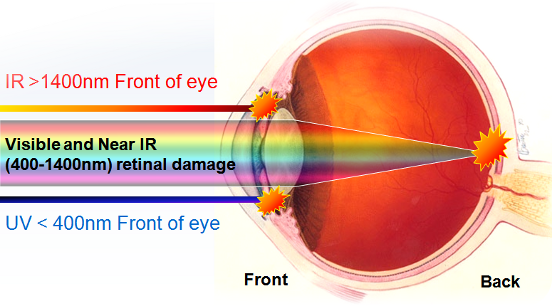
Lasers emit coherent, monochromatic, and highly directional light. Even brief exposure to direct or reflected laser beams can cause irreversible damage to the eyes, including retinal burns, cataracts, or permanent vision loss.
Therapeutic lasers often operate at power levels classified as Class 3B or Class 4 under international safety standards (IEC 60825-1), both of which present a known hazard and require protective measures. Unlike ordinary sunglasses, standard eyewear does not provide adequate protection against laser radiation.
Key Parameters for Selecting Laser Protective Eyewear
Choosing effective laser safety glasses requires understanding the specific characteristics of the laser in use. The following five parameters are critical:
1. Laser Wavelength (λ, in nanometers)
Different laser sources emit light at specific wavelengths. Common therapeutic lasers include:
Nd:YAG lasers: 1064 nm
Diode lasers: 800–980 nm
Ruby lasers: 694 nm
Alexandrite lasers: 755 nm
CO₂ lasers: 10,600 nm
Protective eyewear must be designed to block the exact wavelength(s) of the laser in use. A filter effective at one wavelength may offer little or no protection at another.
2. Optical Density (OD)
Optical density measures the ability of the lens to attenuate laser radiation. Higher OD values indicate greater protection.
For example:
OD 3 = reduces beam intensity by a factor of 1,000
OD 4 = reduces intensity by 10,000
OD 6 = reduces intensity by 1,000,000
The required OD depends on the laser's output power and the maximum permissible exposure (MPE) limit defined in safety standards. Always select eyewear with an OD rating sufficient for your laser's operating conditions.
3. Maximum Permissible Exposure (MPE)
MPE is the highest level of laser radiation to which a person may be exposed without adverse biological effects. It varies by wavelength, exposure duration, and tissue type. Safety eyewear must ensure that transmitted radiation remains below the MPE level.
4. Visible Light Transmission (VLT)
VLT indicates how much ambient light passes through the lens. While high optical density is crucial for protection, very low VLT can impair visibility and user comfort.
A balance is needed: lenses should provide adequate protection while allowing sufficient visibility for safe operation. Typical VLT values range from 10% to over 50%, depending on the filter design.
5. Lens Material and Frame Design
Lens materials include polycarbonate, glass, and specialized optical coatings. Each offers different durability, weight, and spectral filtering properties.
Frame design should provide a secure fit, side protection, and coverage around the eyes to prevent exposure from scattered or reflected beams.
Additional Laser Safety Measures
While protective eyewear is essential, it should be part of a broader safety strategy:
Use laser safety barriers or curtains to enclose treatment areas.
Post warning signs outside laser operation zones.
Ensure all personnel are trained in laser safety procedures.
Regularly inspect eyewear for scratches, degradation, or damage that could compromise protection.

Best Practices for Use and Maintenance
Verify compatibility with your laser's wavelength and power output before use.
Check certification labels on the eyewear for compliance with recognized standards such as IEC 60825 or ANSI Z136.1.
Store properly in a protective case when not in use to avoid contamination or damage.
Replace damaged eyewear immediately-scratched or degraded lenses may not provide the stated level of protection.
Use only for intended applications-do not assume one pair of glasses protects against all types of lasers.
Conclusion
Laser therapy offers valuable medical benefits, but its safe use requires strict adherence to radiation safety practices. Selecting appropriate laser protective eyewear based on wavelength, optical density, and fit is a critical step in reducing occupational and clinical risks.
By understanding the technical specifications and following established safety guidelines, healthcare providers and operators can work safely with laser systems, protecting both themselves and their patients.