

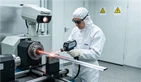


Laser technology has revolutionized various industries, including manufacturing, medicine, and research. However, with the increased use of lasers comes the need for appropriate safety measures, particularly when working with Class IV lasers emitting wavelengths such as 355nm and 455nm. These high-powered lasers have a significant potential for eye damage, making it crucial to wear specialized laser safety goggles.
Parameters:
Optical Density (OD): The OD rating of a laser safety goggle is a measure of its ability to block laser energy. An OD4+ rating means that the goggle can block more than 99.99% of the incident laser energy at the specified wavelength. This level of protection is essential when working with Class IV lasers like those emitting 355nm or 455nm wavelengths, as they have a high potential for eye damage.
Visible Light Transmission (VLT): VLT refers to the amount of visible light that can pass through the goggle lens. A VLT of 30% means that only 30% of the visible light will pass through the lens while the remaining 70% will be blocked. This reduced light transmission ensures that the wearer's eyes are protected from bright light and harmful laser radiation.

Applications:
Laser Safety Goggles with OD4+ and VLT 30% are ideal for use in various industrial, medical, and research settings where Class IV lasers are employed. These goggles provide a high level of protection against eye damage caused by exposure to powerful laser beams at 355nm and 455nm wavelengths. Some common applications include:
1. Laser Cutting and Engraving: Industrial laser cutters and engravers often operate at these wavelengths, producing high levels of laser power. Workers need to wear these goggles to avoid eye injuries from stray beams or reflected light.
2. Medical Procedures: Some medical devices, such as laser pointers used in ophthalmology, may emit laser light at these wavelengths. Medical professionals must wear these goggles during procedures to protect their eyes from accidental exposure.
3. Scientific Research: Researchers working with laser systems that emit 355nm or 455nm wavelengths need to protect their eyesight from potential harm. These goggles allow them to safely observe experiments and handle laser equipment without risking eye damage.
Other Considerations:
When choosing laser safety goggles, it is essential to consider factors such as comfort, fit, durability, and compatibility with other safety equipment. The goggles should fit snugly on the face without causing discomfort or leaving gaps that could allow laser light to penetrate. They should also be durable enough to withstand the rigors of industrial or medical use, resisting scratches, impacts, and other forms of damage. Additionally, the goggles should be compatible with other safety gear, such as helmets or respirators, if necessary.


Protective Features:
To ensure optimal protection, laser safety goggles for 355nm and 455nm wavelengths should have several key features:
1. High optical density (OD): As mentioned earlier, an OD4+ rating is essential for blocking more than 99.99% of the incident laser energy at the specified wavelength. This ensures that your eyes are protected from the high-powered laser beams.
2. Reduced visible light transmission (VLT): A VLT of 30% blocks 70% of the visible light, reducing glare and ensuring that the wearer's eyes are not overwhelmed by bright light or harmful laser radiation.
3. Multi-layer coatings: The lenses should have multi-layer coatings that reflect and absorb laser energy, preventing it from reaching the eyes. These coatings are designed to withstand the specific wavelengths of 355nm and 455nm, providing reliable protection even under intense laser exposure.
4. Side shields or wraparound design: To protect against scattered laser light that may enter from different angles, the goggles should have side shields or a wraparound design. This helps to prevent accidental exposure to reflected or scattered laser beams.
5. Chemical resistance: Since laser systems may be used in environments with chemicals or corrosive substances, the goggles should be made with materials that are resistant to chemical attack. This ensures that the goggles maintain their protective qualities even in harsh conditions.
6. Mechanical strength: The goggles should be able to withstand mechanical stress, such as vibrations or shocks, without compromising their optical properties. This is particularly important in industrial settings where equipment vibration is common.
7. Regulatory compliance: It is crucial to choose goggles that comply with various safety standards and regulations, such as those set by the International Electrotechnical Commission (IEC) and American National Standards Institute (ANSI). This ensures that the goggles meet the required safety criteria and provide reliable protection.

8. Comfort and fit: Apart from providing excellent protection, the goggles should also be comfortable to wear for extended periods. They should have an adjustable headband and soft foam padding around the frame to ensure a secure and comfortable fit on the face.
9. Durability: The goggles should be made from high-quality materials that can withstand regular use without sustaining damage. This includes scratch-resistant lenses and frames that can tolerate accidental drops or impacts.
10. Compatibility with other safety gear: In some scenarios, workers may need to wear additional safety equipment, such as helmets or respirators. It is essential to choose goggles that are compatible with these items, allowing for easy integration into existing safety protocols.
In conclusion, OD4+, VLT 30% laser safety goggles are critical for protecting your eyes from potential damage when working with Class IV lasers at 355nm and 455nm wavelengths. Their high level of optical density and reduced visible light transmission ensure that your eyes remain safe in various industrial, medical, and research settings. By understanding the importance of these goggles and their features, you can make an informed decision about which ones to use in your specific application. Remember, when it comes to laser safety, always prioritize protection and follow best practices to prevent accidents and injuries.