



With the continuous development of laser technology, Ho:YAG lasers have been widely used in medical, industrial, and scientific research fields due to their strong absorption by water at the 2.1-micron wavelength. In minimally invasive surgery, they enable highly precise tissue cutting and ablation; in industrial processing, they offer efficient material handling capabilities; and in scientific experiments, they serve as stable mid-infrared light sources.
However, with their widespread use comes the increasing concern for safe operation. As a high-energy near-infrared laser, Ho:YAG poses potential risks to the eyes and skin, especially under high-power conditions. Therefore, strict protective measures must be taken during the use of Ho:YAG laser equipment to ensure the occupational health and safety of operators.
The core of laser protection lies in selecting appropriate protective equipment in accordance with international standards. Among these, the EN 207 standard specifies optical performance and protection levels for laser safety eyewear, while the EN 12254 standard sets technical requirements and testing methods for laser shields such as protective windows and doors.
This guide introduces the application scenarios, safety risks, and protection standards of Ho:YAG lasers, and focuses on the EN 207 PC material laser safety goggles and EN 12254 acrylic laser shields we provide. It aims to help users understand the importance of laser protection and offer practical guidance for real-world applications.

1. Overview of Ho:YAG Lasers
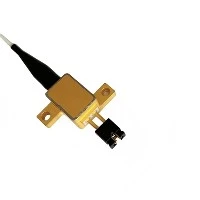
Ho:YAG (Holmium-doped Yttrium Aluminum Garnet) lasers operate at a wavelength of 2.1 micrometers (μm) in the near-infrared range. This wavelength is strongly absorbed by water, making Ho:YAG lasers ideal for precision cutting and ablation in environments with high water content.
Key Features:
High absorption by water
Precise tissue or material interaction
Suitable for both pulsed and continuous operation
Used in both low and high-power applications
Despite their advantages, Ho:YAG lasers are classified as Class 3B or Class 4 lasers under the IEC 60825-1 standard, meaning they pose a serious risk of eye and skin injury if not properly protected.
2. Main Application Areas of Ho:YAG Lasers
2.1 Medical Field
Urology: Lithotripsy for kidney and ureteral stones
ENT (Ear, Nose, and Throat): Removal of vocal cord polyps, nasal polyps, and tonsillectomy
Dentistry: Gingival contouring, cavity preparation, and root canal disinfection
Gynecology: Cervical lesion treatment and endometrial ablation
Neurosurgery and Orthopedics: Soft tissue ablation and spinal disc decompression
2.2 Industrial Field
Precision Cutting: Metals, ceramics, and composites
Laser Drilling: Micro-hole processing in hard materials
Welding: Micro-welding of electronic components and medical devices
Surface Treatment: Cleaning, polishing, and heat treatment
2.3 Scientific Research and Military
LIDAR (Light Detection and Ranging): Atmospheric sensing and terrain mapping
Spectroscopy: Mid-infrared light source for material analysis
Military: Target designation and laser countermeasures

3. Hazards and Protection Standards
3.1 Main Hazards of Ho:YAG Lasers
Eye Injury: The cornea and lens are particularly vulnerable due to high water absorption at 2.1 μm.
Skin Burns: High-power lasers can cause burns even with brief exposure.
Reflected Radiation: Even scattered or reflected beams can be hazardous.
3.2 International Protection Standards
To ensure safe operation, laser safety must comply with recognized international standards:
EN 207: Specifies the optical density (OD), visible light transmission (VLT), and construction requirements for laser safety eyewear.
EN 12254: Defines the performance and testing criteria for laser shields, including protective windows and doors.
These standards help ensure that laser protection equipment is suitable for the laser class and wavelength being used.
4. Laser Protection Product Recommendations
4.1 Laser Safety Goggles (EN 207, PC Material)
Laser safety goggles are the most critical personal protective equipment (PPE) when working with Ho:YAG lasers. Our goggles are made from polycarbonate (PC) material and comply with the EN 207 standard.
Product Specifications:
| Parameter | Description |
|---|---|
| Wavelength Range | 2.0–2.2 μm (suitable for Ho:YAG lasers) |
| Optical Density (OD) | OD 4.0–5.0 (based on laser power level) |
| Visible Light Transmission (VLT) | 20%–40% |
| Lens Material | Polycarbonate (PC) |
| Protection Class | Class 3B / Class 4 (according to IEC 60825-1) |
| Standard Compliance | EN 207 |
| Frame Type | Goggle-style or full-seal frame with side protection |
| Applicable Scenarios | Medical surgery, laser cutting, welding, and lab use |
Product Advantages:
High optical density ensures effective attenuation of 2.1 μm laser light.
Lightweight and comfortable, suitable for long-term wear.
Good visibility with VLT between 20% and 40%.
Fully compliant with EN 207, suitable for Class 3B and Class 4 laser environments.
Compatible Laser Equipment:
Medical Ho:YAG laser therapy systems
Industrial Ho:YAG laser cutters, drills, and welders
Scientific Ho:YAG laser light sources
4.2 Laser Shield (EN 12254, Acrylic Material)
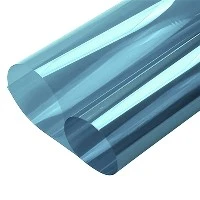
Laser shields are used to isolate laser operation areas and prevent beam leakage or reflection. Our acrylic (PMMA) laser shields are designed to meet the EN 12254 standard.
Product Specifications:
| Parameter | Description |
|---|---|
| Wavelength Range | 2.0–2.2 μm (suitable for Ho:YAG lasers) |
| Shielding Efficiency | OD ≥ 4.0 (attenuation rate ≥ 99.99%) |
| Material | Acrylic (PMMA) |
| Thickness | ≥ 3 mm (standard thickness) |
| Size | Customizable (standard sizes: 300×300 mm, 600×600 mm) |
| Standard Compliance | EN 12254 |
| Installation | Inserted, sliding, or hanging installation |
Product Advantages:
High shielding efficiency with OD ≥ 4.0 ensures effective laser attenuation.
Good transparency allows for visual monitoring of laser operations.
Lightweight and durable, easy to install on various laser equipment.
Customizable to meet specific equipment and space requirements.
Fully compliant with EN 12254, suitable for Class 3B and Class 4 laser environments.
Applicable Scenarios:
Observation windows for medical laser equipment
Protective doors for industrial laser cutters and welders
Isolation areas in laser laboratories
Demonstration laser equipment in educational settings

5. Protection Recommendations and Operating Guidelines
To ensure the safety of laser operators, it is recommended to implement the following measures when using Ho:YAG laser equipment:
5.1 Personal Protective Equipment (PPE)
Wear EN 207-certified laser safety goggles with OD ≥ 4.0 to protect against 2.1 μm laser exposure.
Wear flame-resistant clothing and gloves during high-power laser operations to prevent skin exposure.
5.2 Engineering Controls
Install EN 12254-certified laser shields on equipment windows, doors, or isolation zones to prevent laser leakage.
Set up interlock systems that automatically shut off the laser when the protective shield is removed.
Install laser power monitors to ensure output remains within safe limits.
5.3 Administrative Controls
Define laser operation zones with clear warning signs.
Restrict unauthorized personnel from entering laser areas.
Provide regular safety training to operators to enhance awareness.
Conduct regular inspections of protective equipment to ensure compliance and performance.
6. Conclusion
Ho:YAG lasers, with their 2.1 μm wavelength and strong water absorption, have broad applications in medical, industrial, and scientific research fields. However, their high energy output also poses significant safety risks.
To ensure operator safety, laser protection equipment must meet international standards:
EN 207-certified PC material laser safety goggles, with OD ≥ 4.0 and VLT between 20%–40%, offer lightweight and comfortable protection.
EN 12254-certified acrylic laser shields, with OD ≥ 4.0 and attenuation rate ≥ 99.99%, provide effective laser isolation for various equipment.
By selecting the right protective equipment and following safe operating procedures, laser-related risks can be significantly reduced, ensuring the health and safety of personnel.