



Laser welding-used across automotive, aerospace, medical device manufacturing, and precision engineering-involves high-power (typically Class 4) lasers that pose significant risks to eyes, skin, and respiratory health. To ensure operator safety in all laser welding scenarios, the following protective equipment is essential. All recommendations align with international safety standards, particularly EN 207 for eye protection in Europe.
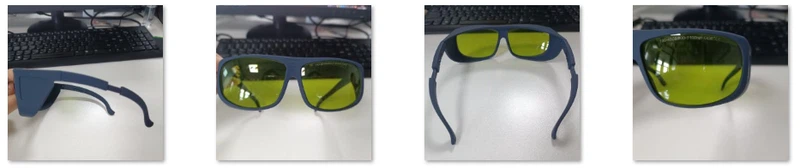
✅ 1. Laser Safety Eyewear (Most Critical)
Purpose: Protect eyes from direct, reflected, or scattered laser radiation.
Requirements:
EN 207-certified goggles or glasses (mandatory in EU workplaces).
Must match the exact laser wavelength (e.g., 1064 nm for Nd:YAG/fiber lasers, 10,600 nm for CO₂ lasers).
Sufficient Optical Density (OD) to reduce beam intensity below Maximum Permissible Exposure (MPE).
Example: For a 500W fiber laser (1064 nm, pulsed), goggles rated EN 207 R L6 are typically required.
Wraparound design to block peripheral exposure.
🔹 Recommended: JTBYShield offers EN 207-certified models (e.g., SDHJ-1 series) specifically tested for high-power pulsed and continuous-wave laser welding at 190–1100 nm.
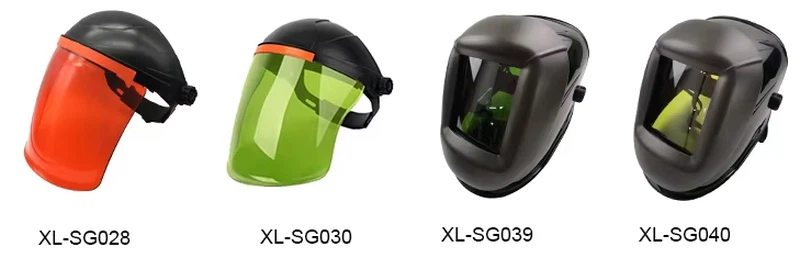
✅ 2. Protective Face Shields or Helmets
Purpose: Shield face and neck from spatter, UV flash, and diffuse reflections.
Requirements:
Integrated with or worn over laser safety goggles.
Made of heat-resistant, non-reflective materials.
Some auto-darkening helmets (for hybrid laser-arc welding) must not replace laser-rated eyewear unless explicitly certified for laser wavelengths.
✅ 3. Laser-Resistant Protective Clothing
Purpose: Prevent skin burns from beam exposure, hot spatter, or UV radiation.
Requirements:
Flame-resistant (FR) fabrics (e.g., Nomex®, leather, or specialized polyester blends).
Long sleeves, high collars, and no exposed skin.
Avoid reflective buttons, zippers, or accessories that could scatter laser light.

✅ 4. Gloves
Purpose: Protect hands from thermal burns, molten metal spatter, and incidental laser exposure.
Requirements:
Heat- and cut-resistant (e.g., Kevlar® or leather).
Non-reflective surface.
Ensure dexterity for precise control-never compromise safety for convenience.
✅ 5. Fume Extraction & Respiratory Protection
Purpose: Mitigate inhalation of hazardous fumes (e.g., metal oxides, ozone, nanoparticles).
Requirements:
Local Exhaust Ventilation (LEV) or fume extractors placed near the weld point (preferred method).
If ventilation is insufficient, use NIOSH-approved respirators (e.g., N95/P2 for particulates; P100 for heavy metals).
Regular air quality monitoring in enclosed workspaces.
✅ 6. Laser Safety Curtains, Barriers, and Enclosures
Purpose: Contain laser radiation within the work zone and protect bystanders.
Requirements:
Made of laser-absorbing or diffusely reflective materials rated for the operating wavelength.
Clearly marked with "Laser in Use" warning signs (per IEC 60825 / EN 60825).
Interlock systems on access doors (for fully enclosed cells).

✅ 7. Hearing Protection (When Applicable)
Purpose: Reduce noise from auxiliary systems (e.g., chillers, exhaust fans, robotic arms).
Note: Laser welding itself is quiet, but supporting equipment may exceed 85 dB.
⚠️ Critical Reminders:
Never rely on "cosmetic" tinted glasses-only use EN 207-certified (or ANSI Z136-compliant) eyewear.
Conduct a Laser Risk Assessment before operation (per EN 60825-1).
Ensure all personnel complete laser safety training.
Inspect protective gear regularly for damage (e.g., scratched lenses reduce protection).
Final Note on JTBYShield
For laser welding applications involving fiber, Nd:YAG, or diode lasers, JTBYShield's EN 207-certified eyewear provides verified protection against high-power pulsed and continuous beams. Always confirm the model's wavelength range and OD rating match your specific laser parameters.
Safety isn't optional-it's engineered into every certified piece of PPE.