



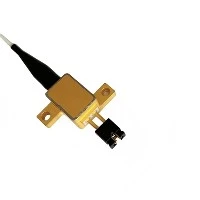
Class 3B lasers are moderate- to high-risk laser systems that can cause immediate eye injury-even from direct viewing or specular (mirror-like) reflections. Because of this, appropriate eye protection is not optional; it is a mandatory safety requirement whenever Class 3B lasers are in use outside of fully enclosed, interlocked systems.
This guide explains the hazards of Class 3B lasers and how to select effective, compliant eye protection based on established safety standards.
What Is a Class 3B Laser?
According to international standards (IEC 60825-1) and U.S. regulations (ANSI Z136.1), a Class 3B laser is defined by its output power:
Continuous wave (CW) lasers: 5 mW to 500 mW
Pulsed lasers: Energy levels that exceed Class 3R limits but do not reach Class 4 thresholds
Key hazard:
Direct exposure to the beam (even for a fraction of a second) can cause retinal burns, permanent vision loss, or blind spots.
Specular reflections (e.g., off glass, metal, or optics) are equally dangerous.
Diffuse reflections (e.g., off paper or matte surfaces) are generally safe-but not always, especially with higher-power 3B lasers near the 500 mW limit.
⚠️ Note: Class 3B lasers must not be viewed directly, even with the naked eye or optical aids like microscopes or telescopes.

When Is Eye Protection Required?
Eye protection is required whenever:
The laser is operated in an open-beam configuration (not fully enclosed).
There is any possibility of direct or reflected beam exposure to the eyes.
Engineering controls (e.g., beam enclosures, interlocks) are not sufficient to eliminate risk.
Even during alignment procedures-when low-power visible beams are used-proper eyewear should be worn if the laser is classified as 3B.
How to Choose the Right Eye Protection for Class 3B Lasers
Effective laser safety eyewear must be selected based on three critical parameters:
1. Laser Wavelength (nm)
Different materials absorb or block light differently depending on wavelength. Common Class 3B wavelengths include:
532 nm (green, frequency-doubled Nd:YAG)
635 nm, 650 nm (red diode lasers)
1064 nm (infrared, Nd:YAG or fiber lasers)
✅ Your eyewear must be rated for the exact wavelength(s) of your laser.
2. Optical Density (OD)
OD measures how much the eyewear reduces laser intensity. For Class 3B, the required OD ensures the transmitted light stays below the Maximum Permissible Exposure (MPE).
Example:
A 200 mW (0.2 W) CW laser at 532 nm
MPE for 0.25 seconds (aversion response time) ≈ 2.55 × 10⁻³ W/cm²
Required OD ≈ log₁₀(0.2 / 0.00255) ≈ 1.9 → Round up to OD 2+
In practice, OD 3 to OD 5 is common for Class 3B visible lasers to provide a safety margin.
3. Laser Operation Mode
CW (continuous wave): Protection based on power (W)
Pulsed: Must also consider pulse energy (J), duration (ns, ps), and repetition rate
Eyewear must be rated for the correct mode to ensure it can handle peak powers without damage.

Safety Standards for Laser Eyewear
EN 207 (Europe)
Requires eyewear to pass a direct laser exposure test (burn-through resistance).
Marked with: Laser type (e.g., D for CW, I for pulsed), wavelength, and protection level (e.g., 532 4D).
For Class 3B, EN 207-compliant eyewear is strongly recommended-even if OD calculations seem sufficient.
ANSI Z136.1 (United States)
Focuses on OD-based selection using MPE calculations.
Eyewear should be labeled with: Wavelength, OD, and applicable standard.
🔍 Important: OD alone does not guarantee safety if the lens material degrades or burns under real exposure. EN 207 addresses this by testing actual durability.
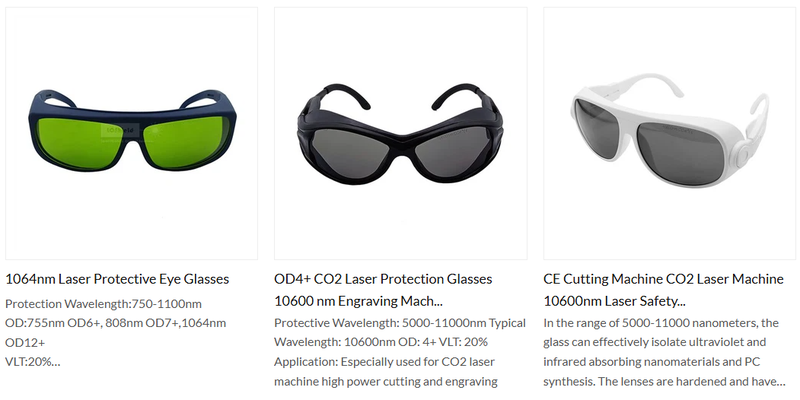
Additional Features to Consider
Visible Light Transmission (VLT): Higher VLT (>15–20%) improves visibility and reduces eye strain, especially for visible lasers.
Comfort and Fit: Must be wearable for extended periods and compatible with other PPE (e.g., face shields).
Side Protection: Wraparound design or goggles to block peripheral reflections.
Durability: Scratch-resistant coatings extend service life and maintain protection.
What NOT to Do
❌ Use generic "laser glasses" without verified specs
❌ Assume sunglasses or regular safety glasses offer protection
❌ Reuse damaged or scratched eyewear-compromised lenses may fail under exposure
❌ Rely on eyewear alone-always combine with engineering controls (beam blocks, enclosures) and administrative procedures (training, access control)
Summary: Key Takeaways
Class 3B lasers can cause instant, permanent eye damage.
Always wear wavelength-specific, OD-appropriate laser safety eyewear during open-beam operation.
Prefer eyewear that meets EN 207 (for durability) or is selected per ANSI Z136.1 guidelines.
Verify labeling: wavelength, OD, and compliance standard must be clearly marked.
Combine eyewear with other safety layers-never rely on PPE alone.
By selecting and using the right eye protection, you significantly reduce the risk of irreversible injury while working with Class 3B lasers. When in doubt, consult your institution's Laser Safety Officer (LSO) or refer to your local regulatory requirements.