



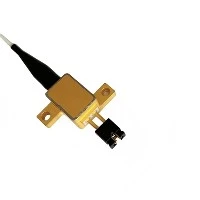
Laser sources of different wavelengths have a significant impact on Raman signals, because the wavelength of the light source directly affects the efficiency of Raman scattering and the degree of fluorescence interference.
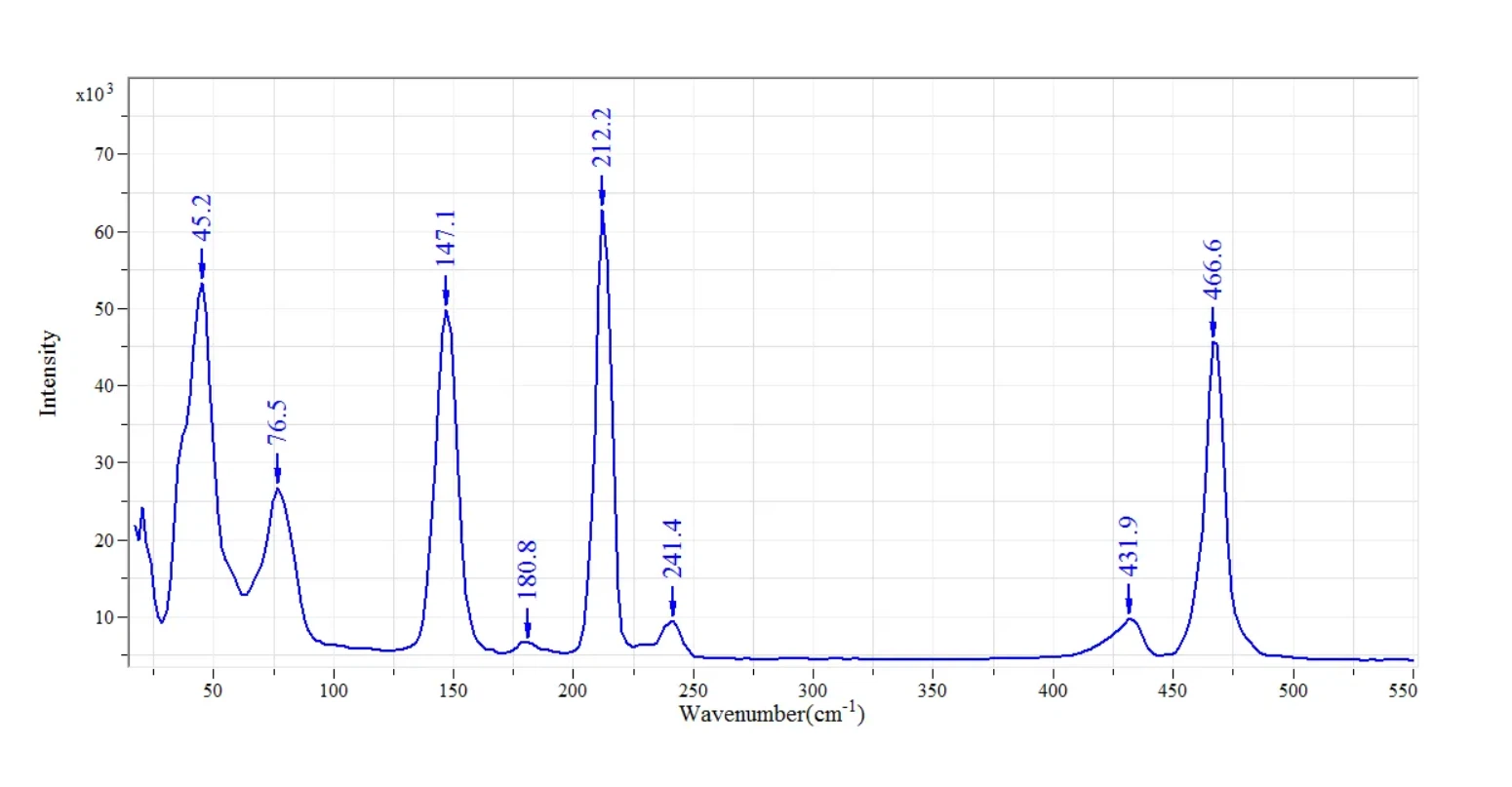
Using a shorter wavelength light source, such as ultraviolet light, can increase the intensity of Raman scattering, but it also enhances the fluorescence emission of the sample, which may interfere with the detection of Raman signals. In contrast, a longer wavelength light source, such as near-infrared light, can reduce the occurrence of fluorescence but weaken the intensity of the Raman signal. Therefore, choosing a light source with an appropriate wavelength is crucial for optimizing Raman spectroscopy analysis, balancing signal intensity and avoiding unnecessary fluorescence interference, which determines the success or failure of the experiment and the quality of the data.
1. Ultraviolet laser source
Short wavelength and high energy: Ultraviolet light sources have a shorter wavelength and higher energy, which allows them to excite the Raman mode of molecules and produce stronger Raman signals. This property is very useful when analyzing samples that require high sensitivity, such as when detecting low concentrations of chemicals or small molecules.
Possible damage to samples: The high energy of ultraviolet light may also cause photochemical damage to some sensitive samples, especially under long exposure. This damage may change the chemical structure of the sample, thereby affecting the accuracy of the Raman spectrum. Therefore, when using UV light sources for Raman spectroscopy, special attention needs to be paid to controlling the exposure time and the power of the light source to reduce potential damage to the sample.
Although UV light sources have significant advantages in improving the intensity of Raman signals, their potential destructiveness also needs to be considered and minimized in the experimental design. Choosing appropriate analytical conditions and taking appropriate precautions are key.
2. Visible laser sources
Wavelength and energy are intermediate: Light sources in the visible light region have wavelengths and energies between ultraviolet and infrared. This moderate energy level is usually sufficient to excite Raman scattering of most molecules without causing photochemical damage like ultraviolet light. Therefore, visible light sources provide a good balance between activating Raman signals and protecting sample structures.
Widely used in Raman spectroscopy: Visible light sources are widely used in Raman spectroscopy due to their good performance and low risk of sample damage. They are often used to analyze a variety of organic and inorganic substances, including polymers, biomaterials, and chemicals. In addition, visible light-excited Raman spectrometers are relatively easy to obtain and relatively simple to operate, making visible light sources very popular in scientific research and industrial applications.
Visible light sources provide an effective and safe analytical method in Raman spectroscopy, which is suitable for a variety of different samples and application scenarios.
3. Near-infrared laser sources
Longer wavelength and strong penetration ability: Near-infrared light sources have longer wavelengths and lower energy, which allows them to penetrate deeper into the sample, especially for applications that require deep profiling. Long wavelength light sources also mean that long-term irradiation can be performed without causing excessive heating of the sample surface, which is suitable for the analysis of heat-sensitive or volatile samples.
Suitable for samples with high fluorescence background: Due to the low energy of near-infrared light, its ability to excite fluorescence is weak, making it ideal for analyzing samples with high fluorescence background. When dealing with samples containing natural or added fluorescent substances (such as certain biological samples, dyes or specific compounds), the use of near-infrared light sources can significantly reduce fluorescence interference and improve the clarity and reliability of Raman signals.
Near-infrared light sources provide the ability to analyze samples deeply in Raman spectroscopy and allow users to obtain clear Raman signals even with high fluorescence backgrounds, thereby expanding the application range of Raman spectroscopy technology.
4. Infrared laser source
Longest wavelength, least impact on samples: Infrared light sources have the longest wavelength and lowest energy level, which greatly reduces the possible photochemical or thermal damage to the sample. Due to this low energy characteristic, infrared light sources are well suited for the analysis of sensitive or easily damaged samples, such as biological tissues, certain organic compounds, and coordination compounds. Long wavelength light sources also help reduce scattering in the sample, thereby improving the purity of the signal.
But the ability to excite Raman signals is weaker: Although infrared light sources are gentle on samples, their low energy characteristics also mean that they are less efficient in exciting Raman scattering. This generally results in weaker Raman signals, requiring more sensitive detection equipment and longer data acquisition time to obtain sufficient signal intensity. Therefore, when using infrared light sources for Raman spectroscopy analysis, some enhancement measures may need to be taken, such as using high-efficiency filters, increasing integration time, or using surface-enhanced Raman scattering technology.
Although infrared light sources have challenges in exciting Raman signals, their minimal impact on samples makes them invaluable in specific applications, especially when dealing with extremely sensitive or easily degraded samples.
Light sources of different wavelengths show their own characteristics in Raman applications, which determine their applicability and effect in different scenarios. The following will elaborate on the characteristics of light sources of different wavelengths in Raman applications:
1. Characteristics of UV laser sources in Raman applications
Enhancing the Raman signal of biological samples: Due to its shorter wavelength, the UV light source can enhance the Raman scattering effect of biological samples, making the Raman signal of biological molecules more obvious. This is of great significance for the study of biological macromolecules such as proteins and nucleic acids.
May cause fluorescence interference of samples: Although UV light can enhance Raman signals, it may also excite fluorophores in the sample and produce a strong fluorescence background, which will interfere with the detection of Raman signals. Therefore, when using UV light sources, special measures are usually required to reduce fluorescence interference.
2. Characteristics of visible laser sources in Raman applications
Balancing signal intensity and sample protection: Visible light sources can achieve a good balance between the intensity of Raman signals and the protection of samples in Raman applications. Visible light has a longer wavelength and will not easily cause fluorescence interference of samples like UV light, nor will it require high power to obtain sufficient Raman signals like infrared light.
Moderate fluorescence interference: Although visible light sources cause less fluorescence interference than ultraviolet light sources, the influence of fluorescence still needs to be considered in certain cases. Fluorescence interference can be reduced by selecting appropriate wavelengths and using filtering techniques.
3. Characteristics of near-infrared laser sources in Raman applications
Reduce fluorescence interference and improve signal-to-noise ratio: One of the main advantages of near-infrared light sources in Raman applications is that it can significantly reduce fluorescence interference, thereby improving the signal-to-noise ratio of Raman signals. This makes near-infrared Raman spectroscopy particularly suitable for samples that are prone to fluorescence.
Suitable for complex or sensitive samples: Due to the low energy characteristics of near-infrared light, it causes less damage to samples and is particularly suitable for analyzing complex or sensitive samples such as biological tissues, cultural relics, etc.
4. Characteristics of infrared laser sources in Raman applications
Lowest fluorescence interference: Infrared light sources hardly cause fluorescence interference in Raman applications, so they have great advantages in detecting samples that are extremely prone to fluorescence.
High power is required to obtain sufficient Raman signals: Since the intensity of Raman scattering is inversely proportional to the fourth power of the irradiated laser wavelength, infrared light sources require higher power to obtain sufficient Raman signals. This may cause damage to some sensitive samples.
In addition, when choosing a suitable light source, factors such as the stability of the light source, the quality of the beam, and the efficiency of matching with the detector need to be considered. At the same time, the control of the experimental environment, such as temperature and humidity, will also affect the measurement results of Raman spectroscopy. In actual operation, the signal collection can also be optimized by adjusting the parameters of spectral acquisition, such as integration time, laser power, etc.
In summary, light sources of different wavelengths have their own characteristics in Raman applications, and the selection of a suitable light source needs to be determined based on the properties of the sample and the experimental requirements. Understanding these characteristics will help make more reasonable choices in experimental design, thereby obtaining more accurate and reliable Raman spectral data.
Contact information:
If you have any ideas, feel free to talk to us. No matter where our customers are and what our requirements are, we will follow our goal to provide our customers with high quality, low prices, and the best service.
 Email:info@loshield.com
 Tel:0086-18092277517
 Fax: 86-29-81323155
 Wechat:0086-18092277517


