

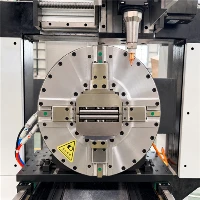
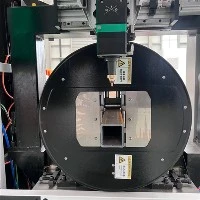
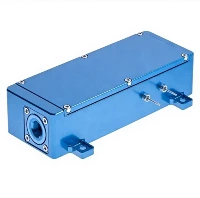
Laser Cleaning Machine is a high-tech method that uses high-energy laser beams to remove attachments on the surface of objects. The core principle of this technology lies in the interaction between laser and matter. Through high-energy-density laser irradiation, contaminants are instantly evaporated or peeled off, thereby achieving a cleaning effect.
Laser cleaning technology has broad application prospects in industrial production, cultural relic restoration, medical equipment and other fields due to its high efficiency and environmental protection. However, considering the cost and technical complexity, laser cleaning is not suitable for all scenarios, especially in cost-sensitive or low-equipment-demanding applications. Traditional cleaning methods still have their irreplaceable status. In the future, with the advancement of technology and reduction of costs, laser cleaning is expected to be applied and developed in more fields.
Laser rust removal is a relatively mature branch of laser cleaning. At present, the economic benefits of excellent laser rust removal machines have far exceeded traditional cleaning methods. Laser rust removal is also very common in life. Let me break down the logic of laser rust removal from a professional perspective. First, determine what the contaminants are and what the base material is. Our goal is to remove the contaminants without damaging the metal. The contaminant is rust, then we need to choose the appropriate laser type. What is the type of laser? Simply put, they are lasers of different wavelengths. At present, there are only three types of lasers actually used in laser cleaning: fiber laser with a wavelength of 1064nm, CO2 laser with a wavelength of 10600nm, and ultraviolet laser with a wavelength of 355nm. For rust, the most suitable one is fiber laser. This is because the absorption rate of fiber laser by rust is very high, and the cost-effectiveness of fiber laser is very high. It is the most cost-effective type of laser among the three lasers.

As an advanced surface treatment technology, laser cleaning can be divided into the following types according to its application purpose and mechanism of action:
Remove surface material:
This type of laser cleaning is mainly used to remove specific material layers on the surface of objects, such as removing rust, paint or old coatings from metal surfaces.
High-energy laser beams can precisely target micro-areas of material that need to be removed, causing them to rapidly heat and evaporate without affecting the base material.
This type of technology is particularly common in aerospace, automotive manufacturing, and the maintenance of large structures.
Surface particle removal:
Surface particle removal mainly refers to using laser to remove small particle contaminants on the surface of objects, such as dust, oil or other tiny particles.
The laser beam can lift particles off the surface through thermal expansion or shock waves without damaging the underlying surface.
This type of cleaning is suitable for semiconductor manufacturing, precision instrument assembly and other occasions that require extremely high cleanliness.
Surface dirt and contaminants removal:
This type of laser cleaning focuses on removing organic contaminants from the surface of the object, such as oil, grease, biofilm or other attached organic matter.
The energy of the laser will cause these pollutants to decompose and be removed through evaporation, thereby achieving disinfection and cleaning effects.
This type of cleaning method is particularly important in fields such as the medical industry, food processing, and cultural relic restoration.
Each type of laser cleaning requires selecting the appropriate laser and parameter settings based on the specific application scenario and target materials. For example, for sensitive materials or applications requiring high precision, it may be necessary to use nanosecond pulsed lasers or ultrashort pulsed lasers to reduce the heat affected zone. For thick coatings or rust layers, higher power continuous wave lasers or long pulse lasers may be required to achieve effective cleaning.

Advantages of laser cleaning technology:
A. Environmentally friendly:
Laser cleaning does not use chemical reagents, avoids the emission of harmful chemicals, and has minimal impact on the environment.
Due to its non-contact nature, the laser cleaning process does not produce secondary contamination, such as wastewater or chemical waste.
This is in line with the current global requirements for environmental protection and sustainable development.
B. No damage to the substrate:
Laser cleaning can control the energy and pulse width of the laser very precisely to remove surface contaminants without damaging the base material.
This non-contact cleaning method is especially suitable for sensitive materials such as ancient artifacts, delicate electronic equipment or fragile semiconductor materials.
C. Precise positioning and control:
The laser can be precisely guided through the optical system to achieve precise cleaning in tiny areas.
Modern laser systems are often equipped with high-precision control systems that enable precise cleaning of complex patterns and geometries.
This makes laser cleaning ideal for fine machining and high value-added product cleaning.
D. Suitable for various materials and shapes:
Laser cleaning technology is capable of processing various types of materials, including metals, plastics, ceramics, glass, composites, and more.
It is also able to adapt to different shapes and structures, whether flat, curved or complex three-dimensional structures.
This means that laser cleaning has broad application potential in multiple stages including design, manufacturing and maintenance.
These advantages make laser cleaning the cleaning technology of choice in many industrial sectors, especially in applications where precision, environmental protection and operational safety are extremely important. However, factors such as cost, operational complexity, and safety regulations still need to be considered in practical applications to ensure the feasibility and economy of the technology. As the cost of laser equipment decreases and technology advances, laser cleaning is expected to be applied in a wider range of fields.

Applications:
Laser paint removal, laser rust removal, laser cleaning of molds, laser cleaning of ships, laser cleaning of steel products, laser cleaning of cultural relics, etc. have all moved from the laboratory to social production. For example, laser paint removal, ships, airplanes, etc. all need to be regularly removed and then repainted. At present, the main paint removal process is pickling. Although pickling is also very cost-effective, it is inefficient and can easily hurt people. More importantly, the waste liquid after pickling is extremely expensive to treat. If not treated, it will pollute the environment. As environmental protection policies become more and more stringent, this method is facing elimination. Laser cleaning of molds is a very mature field of application. The cost of laser cleaning is ten times lower than that of traditional dry ice cleaning, and is only one-tenth of the cost of traditional cleaning.
A. Industrial field:
Metal rust removal and coating removal:
In industries such as automotive manufacturing and aerospace, laser cleaning is used to remove rust or old paint from metal surfaces in preparation for repainting.
This method is more precise and less damaging to the base material than traditional abrasive blasting or chemical stripping.
Precision Cleaning in Semiconductor Manufacturing:
During the manufacturing process of semiconductor chips, tiny impurities and contaminants need to be removed, and laser cleaning can accomplish this task very accurately without damaging sensitive electronic components.
This high-precision cleaning is critical to ensuring the performance of electronic devices.
Cultural relic restoration and art cleaning:
In cultural heritage protection, laser cleaning can be used to remove dirt and foreign coverings from the surface of ancient artifacts or artworks while avoiding damage to the original materials.
This non-invasive cleaning method is important for preserving historical information and artistic value.
B. Medical industry:
Disinfection and cleaning of medical devices:
Laser cleaning technology can be used to remove organic matter and microorganisms on medical devices and improve disinfection efficiency.
This approach reduces the use of chemical disinfectants, thereby reducing environmental impact and potential chemical risks.
Applications in skin treatment:
In dermatology treatments, certain types of lasers can be used to remove skin lesions, tattoo ink, or other unwanted skin pigments.
This treatment is usually gentler and has shorter recovery time than traditional surgery.
C. Scientific research:
Cleaning of laboratory equipment:
In a laboratory environment, laser cleaning can be used to remove residues from experimental equipment to ensure the accuracy and repeatability of experiments.
This method is suitable for experimental conditions requiring extremely high cleanliness.
Preparation of special materials:
In the field of materials science, laser cleaning can be used to remove impurities on or within materials in order to study their intrinsic properties.
This is particularly important for the development of new materials and basic scientific research.
These applications of laser cleaning technology demonstrate its versatility and flexibility in various fields. With the continuous advancement of laser technology, it is expected that laser cleaning will be innovatively applied in more fields and may become the preferred cleaning method in some fields.
Contact information:
If you have any ideas, feel free to talk to us. No matter where our customers are and what our requirements are, we will follow our goal to provide our customers with high quality, low prices, and the best service.
 Email:info@loshield.com
 Tel:0086-18092277517
 Fax: 86-29-81323155
 Wechat:0086-18092277517


