



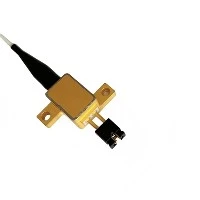
As a representative of solid-state lasers, Nd:YAG (neodymium-doped yttrium aluminum garnet) 1064nm lasers have been widely used in industry, medicine, scientific research, and military fields due to their high stability, high efficiency, and excellent pulse output characteristics.
The 1064nm wavelength has become the core band for near-infrared laser applications due to its good penetration and absorption characteristics in most materials. In recent years, with the advancement of laser technology, compact pulsed Nd:YAG lasers have further broadened their application scenarios due to their miniaturization, high integration, and low maintenance requirements.

Technical features of compact pulsed Nd:YAG 1064nm laser
1. Core performance parameters
Wavelength: 1064nm (near infrared), suitable for absorption and processing of various materials.
Pulse characteristics:
Pulse width: nanosecond (ns) to picosecond (ps) level, to meet different precision requirements.
Repetition rate: single pulse to hundreds of kHz, to meet different processing speed requirements.
Peak power: up to megawatt (MW) level, suitable for high-energy applications (such as laser shock strengthening).
Compact design: adopts efficient heat dissipation structure (such as microchannel cooling) and fiber-coupled output, and the volume can be as small as 1/3 of the traditional system.
2. Technical advantages
High beam quality (M² < 1.5): suitable for precision processing.
Long life (> 100,000 hours): thanks to solid-state gain medium and semiconductor pumping technology.
Low thermal lens effect: optimizes the stability of long-term operation.
Multi-mode compatibility: supports Q-switching, mode locking and other technologies to achieve ultra-short pulse output.

Main application areas
1. Industrial processing
(1) Micromachining
Precision drilling: In the aerospace field, it is used for the processing of film cooling holes for turbine blades (aperture <0.1mm).
Brittle material cutting: such as sapphire and ceramic chip cutting, with extremely small heat affected zone (HAZ).
(2) Laser marking and engraving
Dark material marking: In the electronics industry, it is used for permanent identification of PCBs and silicon wafers (high contrast and no damage).
Dynamic marking: Suitable for high-speed production lines (such as serial number printing of automotive parts).
(3) Welding
Highly reflective metal welding: Pulsed laser welding of materials such as copper and aluminum reduces spatter and improves yield.
Dissimilar metal welding: such as copper-aluminum connection, used in the manufacture of new energy vehicle batteries.
2. Medical and cosmetic
(1) Laser treatment
Pigmentary diseases: Ota nevus, tattoo removal (selective photothermal decomposition effect).
Vascular treatment: Port wine stains, spider nevi (hemoglobin absorbs 1064nm light energy).
(2) Cosmetic applications
Hair removal: Long pulse mode destroys hair follicles, with long-lasting effects.
Skin rejuvenation: Non-ablative stimulation of collagen regeneration.
(3) Dental applications
Hard tissue ablation: Caries treatment, root canal treatment, more precise than traditional drills.
3. Scientific research and military
(1) Nonlinear optics research
As a pump source for frequency doubling (532nm) and frequency tripling (355nm), used in ultrafast optical experiments.
(2) LiDAR
Used for autonomous driving and terrain mapping, the 1064nm wavelength has low transmission loss in the atmosphere.
(3) Directed energy applications
Short pulse mode can be used for laser interference (such as drone defense systems).
4. Other fields
Laser induced breakdown spectroscopy (LIBS): used for metal composition detection and environmental monitoring.
Cultural relic restoration: Non-contact removal of surface contaminants (such as cleaning of ancient paintings).
Application cases and latest progress
1. Typical cases
Industrial case: A new energy vehicle manufacturer uses a compact Nd:YAG laser to achieve copper-aluminum battery tab welding, and the yield rate is increased by 20%.
Medical case: A certain type of 1064nm laser therapy device has an efficacy of >95% in the clinical treatment of Ota nevus.
2. Technology development trend
Ultrafast pulse (ps/fs level): reduce thermal impact and improve processing accuracy.
Intelligent control: Combine AI to adjust parameters in real time and optimize processing effects.
Mixed wavelength output: such as 1064nm+532nm composite laser, expand medical and micro-processing applications.
Compact pulsed Nd:YAG 1064nm lasers have become key tools in industrial precision machining, medical cosmetology, scientific research and military fields due to their excellent performance. In the future, with the development of ultrafast laser technology, intelligent control and new materials, their application potential will be further released, pushing laser technology towards a more efficient and precise direction.
Contact information:
If you have any ideas, feel free to talk to us. No matter where our customers are and what our requirements are, we will follow our goal to provide our customers with high quality, low prices, and the best service.
 Email:info@loshield.com
 Tel:0086-18092277517
 Fax: 86-29-81323155
 Wechat:0086-18092277517


