



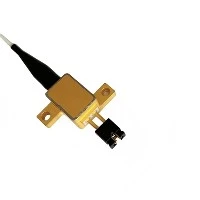
Diode laser stacks are critical components in modern photonics, enabling high-power laser output through the integration of multiple laser diodes. These systems are widely used in industrial manufacturing, medical treatments, defense systems, and scientific research.
Selecting the right diode laser stack is essential for achieving optimal performance, efficiency, and longevity in a given application. This guide provides a detailed, technical approach to choosing the best diode laser stack based on wavelength, power output, beam quality, cooling requirements, reliability, and cost.

Key Factors in Selecting Diode Laser Stacks
1. Wavelength Requirements
The laser wavelength determines how effectively the energy is absorbed by the target material. Common diode laser wavelengths include:
808 nm, 915 nm, 940 nm, 980 nm – Used for solid-state laser pumping, industrial heating, and medical applications.
1470 nm, 1940 nm – Preferred for medical and aesthetic procedures due to strong water absorption.
9xx nm range (e.g., 940 nm, 980 nm) – Ideal for metal processing (welding, cladding).
Selection Tip:
For metal processing, choose 808 nm or 9xx nm for deep penetration.
For medical applications, select water-absorbing wavelengths (1470 nm, 1940 nm) for precise tissue ablation.
2. Power Output & Efficiency
Diode laser stacks can operate in:
Continuous Wave (CW) mode – Constant output for cutting, welding, and pumping applications.
Quasi-Continuous Wave (QCW) mode – Pulsed operation for high peak power with reduced thermal load.
Power Scaling Considerations:
Single emitters (5–20 W) – Used in fiber-coupled systems.
Laser bars (50–150 W) – Common in industrial diode lasers.
Laser stacks (kW-level) – Used in high-power material processing and defense.
Efficiency & Cooling:
Wall-plug efficiency (WPE) typically ranges from 40–60%; higher efficiency reduces cooling demands.
Thermal rollover must be avoided by proper heat dissipation.
3. Beam Quality & Brightness
Beam quality is defined by:
M² factor (closer to 1 = better beam quality).
Beam parameter product (BPP) – Lower BPP means tighter focus.
Applications Requiring High Beam Quality:
Fiber coupling (e.g., fiber lasers).
Precision cutting & drilling.
LIDAR and directed energy systems.
4. Cooling & Thermal Management
Excessive heat degrades performance and shortens diode lifetime. Cooling methods include:
Conduction cooling – Simpler, but limited to lower power.
Microchannel coolers – Efficient for high-power stacks.
Water cooling – Used in industrial kW-level systems.
Thermal Management Best Practices:
Maintain junction temperature below 40°C for long lifespan.
Use thermoelectric coolers (TECs) for precise temperature control.
5. Reliability & Lifetime
Key reliability metrics:
Mean Time Between Failures (MTBF) – Typically 10,000–50,000 hours.
Catastrophic Optical Damage (COD) threshold – Avoid exceeding maximum current limits.
Manufacturer Testing:
Look for burn-in testing and accelerated aging reports.
Check for hermetic sealing in harsh environments.
6. Cost & Scalability
Budget Considerations:
Single emitters – Lower cost, but limited power.
Laser stacks – Higher initial cost, but better $/Watt ratio.
Modular vs. Custom Solutions:
Off-the-shelf stacks – Faster deployment.
Custom configurations – Optimized for specific applications.

Types of Diode Laser Stacks & Their Best Use Cases
1. Single Emitter vs. Bar vs. Stack
| Type | Power Range | Best For |
|---|---|---|
| Single Emitter | 5–20 W | Fiber coupling, low-power sensing |
| Laser Bar | 50–150 W | Industrial marking, pumping |
| Laser Stack | 500 W–kW+ | Metal cutting, defense, high-power pumping |
2. QCW vs. CW Operation
QCW (Pulsed) Lasers – Best for high peak power with low duty cycle (e.g., laser drilling).
CW Lasers – Ideal for continuous processing (e.g., welding, cladding).
3. Wavelength-Stabilized vs. Broad-Area Lasers
Wavelength-stabilized – Used in fiber laser pumping, spectroscopy.
Broad-area lasers – Better for high-power material processing.
Industry-Specific Selection Guide
1. Industrial Manufacturing
High power (kW stacks) + good beam quality for cutting/welding.
Water cooling for continuous operation.
2. Medical & Aesthetic Applications
Precise wavelength control (e.g., 1470 nm for vein treatments).
Compact, air-cooled systems for handheld devices.
3. Defense & Aerospace
High reliability, rugged packaging.
QCW stacks for LIDAR and directed energy.
4. Research & Scientific Use
Narrow-linewidth diodes for spectroscopy.
High brightness for optical trapping.
Conclusion
Choosing the right diode laser stack requires balancing wavelength, power, beam quality, cooling, reliability, and cost.
Key takeaways:
Match wavelength to material absorption (metals, tissues, etc.).
Select power mode (CW/QCW) based on duty cycle needs.
Ensure proper cooling to maximize lifespan.
Prioritize beam quality for precision applications.
By following this guide, engineers and procurement specialists can optimize performance and cost-effectiveness for their specific laser applications.
Contact information:
If you have any ideas, feel free to talk to us. No matter where our customers are and what our requirements are, we will follow our goal to provide our customers with high quality, low prices, and the best service.
 Email:info@loshield.com
 Tel:0086-18092277517
 Fax: 86-29-81323155
 Wechat:0086-18092277517


