



1. Introduction: Understanding 532nm Picosecond Green Lasers
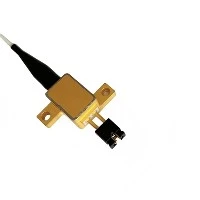
For beginners new to the laser industry, the 532nm picosecond green laser is a common and easy-to-understand laser type. Simply put, it is a laser with a wavelength of 532 nanometers (belonging to the green light band) and a pulse width at the picosecond level-one trillionth of a second. This "green + picosecond" combination gives it unique advantages that distinguish it from other common lasers.
Compared with 355nm ultraviolet lasers and 1064nm infrared lasers, the 532nm picosecond green laser is visible to the naked eye, making it easier to operate and debug. Its picosecond-level pulse width also means it causes little thermal damage, making it more suitable for fine processing. For beginners, its core advantages are easy to remember: low thermal damage, high precision, easy operation, strong stability, and a wide range of applications.
This article will follow the logic of "cognition-characteristics-applications-cases-development" to introduce the 532nm picosecond green laser in a simple way, helping beginners quickly grasp its core value without redundant professional knowledge.

2. Core Characteristics: What Beginners Must Know
The core characteristics of the 532nm picosecond green laser determine its application scope, and beginners only need to master these key points:
First, the picosecond pulse width. Its ultra-short pulse releases energy in an instant, so the heat generated during processing cannot spread to the surrounding material. This avoids material deformation, carbonization, or damage, which is very important for processing fragile and heat-sensitive materials.
Second, the 532nm green wavelength. Unlike invisible ultraviolet or infrared lasers, green light is visible to the naked eye, which makes operation and debugging more convenient-you can directly observe the laser spot and adjust the position accurately. At the same time, it has a moderate absorption rate for most materials, making it suitable for various processing scenarios.
Third, high precision. The laser beam can be focused into a very small spot, enabling fine operations that traditional mechanical processing cannot achieve, such as tiny engraving and drilling.
These characteristics correspond to different application scenarios: low thermal damage is suitable for processing heat-sensitive materials, high precision for fine marking and micro-processing, and the green wavelength for scenarios that require visual operation.
3. Main Application Fields: Focus on Daily and Industrial Scenarios
3.1 Industrial Precision Processing (Core Application)
Industrial precision processing is the core application field of 532nm picosecond green lasers. In electronic manufacturing, it is widely used for fine marking and micro-cutting of 3C product components, such as mobile phone middle frames and chip casings. It can ensure clear marks and smooth cutting edges without damaging the internal structure of the products.
In metal and non-metal processing, it is suitable for fine engraving of precious metals such as gold and silver, as well as micro-drilling of glass and plastic, and cutting of ceramics. It solves the problem of easy damage to materials caused by traditional processing methods.
In the new energy field, it is used for cutting lithium battery poles and precision processing of photovoltaic modules, providing technical support for the development of the new energy industry.
3.2 Laser Marking and Identification (Most Common Scenario)
Laser marking is the most common application of 532nm picosecond green lasers in daily life and industry. In daily scenarios, it is used for marking jewelry, printing traceability codes on cosmetics packaging, and labeling food packaging. In industrial scenarios, it is used for traceability of auto parts, marking of electronic components, and identification of medical devices.
Its advantages are obvious: the marks are clear and wear-resistant, no consumables are needed, and it can adapt to high-speed production lines, which is very suitable for mass production.
3.3 Scientific Research and Laboratory Fields (Basic Understanding for Beginners)
In laboratories, 532nm picosecond green lasers are often used for material research and spectral analysis. For example, they can be used for testing the characteristics of new materials and surface modification experiments. They are also used as excitation sources for fluorescence and basic optical experiments, which are simple and easy to operate, making them suitable for beginners to learn and use.
3.4 Biomedical and Other Fields
In biomedicine, this laser is widely used in skin beauty, such as spot removal and tattoo removal. It can accurately act on pigments without damaging the surrounding normal skin, with small trauma and fast recovery. It is also used in basic ophthalmic treatment.
In other scenarios, it is used for laser display, laser ranging, and scientific research teaching demonstrations, showing its wide application value.
4. Typical Application Cases: Easy to Understand
Simple cases can help beginners better understand the role of 532nm picosecond green lasers:
Case 1: Jewelry engraving. A 532nm picosecond green laser is used to engrave fine patterns on gold rings. The laser causes no damage to the gold surface, and the patterns are clear and non-fading, greatly improving the added value of the jewelry.
Case 2: 3C product marking. Mobile phone manufacturers use this laser to mark models on mobile phone middle frames. The marks are clear and wear-resistant, and the laser can adapt to mass production, improving production efficiency.
Case 3: Skin beauty. Hospitals use this laser for spot removal treatment. It accurately targets pigmented areas, avoids damaging surrounding skin, and shortens the recovery time by half compared with traditional methods.
5. Industry Status and Future Development (Basic Cognition for Beginners)
5.1 Current Application Status
At present, 532nm picosecond green lasers have been widely used in electronics, jewelry, medical care, new energy and other industries. The equipment is relatively easy to operate, and the cost is gradually decreasing, making it suitable for small and medium-sized enterprises to use, which promotes its popularization.
5.2 Future Development Trends (Simple Interpretation)
In the future, 532nm picosecond green lasers will develop in three directions: miniaturization, intelligence, and wider application. The equipment will become smaller, easier to install and move; the operation will be more convenient, adapting to automated production lines; and it will be more widely used in new energy and high-end manufacturing fields, creating greater value for related industries.
6. Summary for Beginners
For beginners, the 532nm picosecond green laser is an ideal entry point to understand laser technology. Its core memory points are simple: 532nm (green light) and picosecond level (low damage, high precision). Its applications are closely related to daily life and industry, making it easy to understand and master.
As a key laser type in modern precision technology, it will play a more important role in the future. For beginners, mastering its core advantages and main application fields is enough to quickly get started and understand its industry value.
Contact information:
If you have any ideas, feel free to talk to us. No matter where our customers are and what our requirements are, we will follow our goal to provide our customers with high quality, low prices, and the best service.
 Email:info@loshield.com; laser@loshield.com
 Tel:0086-18092277517; 0086-17392801246
 Fax: 86-29-81323155
 Wechat:0086-18092277517; 0086-17392801246


