



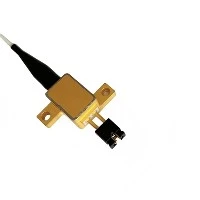
Multi-wavelength single-channel fiber-optic laser system is a device that can transmit multiple lasers of different wavelengths through a single optical fiber. Its core features are high integration, low loss and high efficiency, and it is suitable for a variety of application environments, such as communications, medical treatment and industrial processing.

The development of multi-wavelength single-channel fiber-optic transmission laser systems began in the 1990s. With the advancement of fiber optic and laser technologies, it has gradually realized the transition from laboratory research to practical applications. Key technologies include wavelength division multiplexing (WDM) and fiber amplifiers.
The system is widely used in modern communication networks to improve data transmission rate and capacity; in the biomedical field for precision surgery and treatment; in industrial manufacturing for high-precision cutting and welding, significantly improving production efficiency and product quality.
Working Principle
1. Basic Concepts
Single-channel fiber transmission refers to the simultaneous transmission of multiple wavelengths of laser signals through one optical fiber, while a multi-wavelength laser is a device that can generate and emit multiple different wavelengths of lasers. This system has significant advantages in improving communication capacity and efficiency.
2. Key Technologies
① Laser Cavity Design
Laser cavity design is one of the core technologies of multi-wavelength single-channel fiber transmission laser systems, which ensures the stability and intensity of lasers at each wavelength. The precisely designed laser cavity can accommodate laser oscillations of multiple wavelengths, thereby improving the overall performance of the system.
② Fiber Transmission Characteristics
As a medium for laser transmission, the low loss and high transmission efficiency of optical fiber enable multi-wavelength lasers to maintain efficient transmission over long distances. Dispersion management and nonlinear effect control of optical fiber are also key technical points to ensure stable and high-quality transmission of signals at each wavelength.
③ Wavelength Selection Mechanism
The wavelength selection mechanism can achieve precise control of the output wavelength by adjusting optical elements such as filters and reflectors in the laser cavity. This mechanism ensures that the system can output lasers of specific wavelengths as needed to meet the needs of different application scenarios.
System composition and configuration
1. Main components
The multi-wavelength single-channel fiber-optic transmission laser system is mainly composed of a light source, optical fiber, and optical couplers and splitters. The light source is responsible for generating multi-wavelength lasers, the optical fiber is used as the transmission medium, and the optical couplers and splitters are used to merge or separate optical signals of different wavelengths.
2. Light source
The light source is one of the core components of the multi-wavelength single-channel fiber-optic transmission laser system, usually using semiconductor lasers or fiber lasers. These lasers are able to generate lasers of multiple wavelengths and achieve precise control of wavelengths through specific technical means.
3. Fiber type and selection
The selection of optical fiber is critical to system performance. Commonly used fiber types include single-mode fiber and multi-mode fiber, and the specific choice depends on the application scenario and transmission distance. Single-mode fiber is suitable for long-distance, high-bandwidth transmission, while multi-mode fiber is suitable for short-distance, high-power transmission.
4. Optical couplers and splitters
Optical couplers and splitters are used to merge or separate optical signals of different wavelengths. Through precise optical design, they ensure that the signals of each wavelength do not interfere with each other during transmission, thereby improving the transmission efficiency and stability of the system.
5. System integration
System integration is the organic combination of various components to form a complete multi-wavelength single-channel fiber-optic transmission laser system. Modular design and customized solutions allow the system to be flexibly configured according to different application requirements, improving the adaptability and scalability of the system.
6. Modular design
Modular design is one of the important features of the multi-wavelength single-channel fiber-optic transmission laser system. By splitting the system into independent modules, rapid deployment and maintenance can be achieved, while facilitating functional expansion and technical upgrades according to requirements.
7. Customized solutions
For different application fields and customer needs, the multi-wavelength single-channel fiber-optic transmission laser system provides customized solutions. From light source wavelength selection to fiber type matching, to system integration solution design, all can be adjusted and optimized according to actual applications.
Performance indicators
1.Output power and stability
The output power range of the multi-wavelength single-channel fiber-optic transmission laser system depends on the design of each wavelength laser. Generally, the output power of each wavelength is between a few milliwatts and hundreds of milliwatts. Power stability is a key indicator. Through advanced control technology, power fluctuations of less than 3% can be achieved.
2.Spectral linewidth and signal-to-noise ratio
The spectral linewidth parameter determines the purity and quality of the laser signal. The typical value is less than 3nm, which helps to reduce signal distortion. The signal-to-noise ratio (SNR) is also an important indicator. By optimizing the fiber material and design, the signal-to-noise ratio of the system can be significantly improved.
3.Operating temperature and life
The operating temperature range of the system is usually -10℃ to 5℃, ensuring stable operation in different environments. The service life is expected to exceed 10,000 hours, thanks to high-quality components and advanced thermal management technology.
Application fields
1. Scientific research experiments
Spectral analysis: The multi-wavelength single-channel fiber-optic transmission laser system provides high-precision and high-resolution spectral data in spectral analysis and is widely used in chemical, physical and biomedical research. Its multi-wavelength characteristics allow scientists to detect multiple elements and compounds at the same time, improving the efficiency and accuracy of analysis.
Material science research: The system is used for microstructure and composition analysis of materials, helping researchers understand the physical and chemical properties of materials. By precisely controlling the laser wavelength, non-destructive testing of different materials can be performed, thereby promoting the development and application of new materials.
2. Medical field
Optogenetics research: The multi-wavelength single-channel fiber-optic transmission laser system is used in optogenetics research to activate or inhibit specific neurons, helping scientists study brain function and disease mechanisms. Its multi-wavelength characteristics allow precise control of light intensity and time, improving the accuracy and repeatability of experiments.
Laser therapy applications: In laser therapy, the system is used for skin beauty, ophthalmic surgery, and cancer treatment. Its high efficiency and low loss characteristics enable laser energy to be accurately delivered to the target area, reducing damage to surrounding tissues, improving treatment effects and patient safety.
3. Industrial Applications
Material Processing and Welding: The multi-wavelength single-channel fiber-optic transmission laser system provides efficient and precise processing capabilities in material processing and welding. Its multi-wavelength characteristics allow customized processing of different materials, improving production efficiency and product quality.
3D Printing and Gas Detection: In 3D printing, the system is used to precisely control the shape and intensity of the laser beam to achieve rapid manufacturing of complex structures. In gas detection, its high sensitivity and selectivity enable real-time monitoring of harmful gases in the environment to ensure production safety and environmental protection.
Technical advantages
1. High flexibility and adaptability
The multi-wavelength single-channel fiber-optic transmission laser system can output multiple lasers of different wavelengths at the same time to meet the needs of various application scenarios. Its flexible configuration and high adaptability make it widely used in scientific research, medical and industrial fields.
2. High efficiency and low loss
The system utilizes the characteristics of optical fiber transmission and has the advantages of low loss and high transmission efficiency. By optimizing optical fiber materials and design, long-distance and efficient transmission can be achieved, energy loss can be reduced, and system performance can be improved.
The multi-wavelength single-channel fiber-optic transmission laser system has an important position and wide application value in modern science and technology. Its high flexibility and adaptability enable it to output multiple lasers of different wavelengths at the same time to meet the needs of various application scenarios. In scientific research experiments, the system is used for spectral analysis and material science research, providing high-precision and high-resolution data to promote scientific discovery and new material development. In the medical field, it is widely used in optogenetics research and laser therapy to improve treatment effects and patient safety. In industrial applications, multi-wavelength single-channel fiber-optic transmission laser systems are used for material processing, welding, 3D printing and gas detection, significantly improving production efficiency and product quality. The system utilizes the characteristics of optical fiber transmission, has the advantages of low loss and high efficiency, and achieves long-distance and efficient transmission by optimizing design and materials, reducing energy loss. In short, the multi-wavelength single-channel fiber-optic transmission laser system has shown excellent performance and broad prospects in various fields, promoting scientific and technological progress and social development.
Contact information:
If you have any ideas, feel free to talk to us. No matter where our customers are and what our requirements are, we will follow our goal to provide our customers with high quality, low prices, and the best service.
 Email:info@loshield.com
 Tel:0086-18092277517
 Fax: 86-29-81323155
 Wechat:0086-18092277517


