



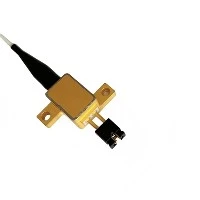
The key role of the Laser Module as a fluorescence excitation light source lies in its high brightness, monochromaticity and fast modulation ability. It can accurately match the absorption wavelength of the fluorescent probe and efficiently excite the fluorescent signal, thereby improving the sensitivity and resolution of the fluorescence diagnostic equipment. Its stable output characteristics ensure the reliability of the test results, while its miniaturization and low power consumption design make it easy to integrate into portable devices. It is widely used in medical imaging, biological research and environmental testing, and has promoted the rapid development of fluorescence diagnostic technology.

In fluorescence diagnostic equipment, the wavelengths used by laser modules and their characteristics are as follows:
1. Ultraviolet wavelength (~355-405nm)
Features: high energy, suitable for exciting short-wavelength fluorescent probes (such as DAPI).
Applications: cell nucleus staining, DNA detection.
2. Visible light wavelength (~405-650nm)
405nm: commonly used to excite fluorescent proteins (such as CFP) and dyes (such as Hoechst).
488nm: suitable for green fluorescent probes such as FITC and GFP, widely used in flow cytometers and confocal microscopes.
532nm: excites red fluorescent dyes (such as Rhodamine) for cell imaging and molecular labeling.
635nm: excites far-red dyes (such as Cy5) for deep tissue imaging.
3. Near-infrared wavelength (~785-1064nm)
Features: strong tissue penetration ability, reducing background fluorescence interference.
Applications: in vivo imaging, deep tissue detection (such as quantum dot labeling).

Specific applications of laser modules in fluorescence diagnostic equipment
1. Medical imaging and diagnosis
① Confocal microscope
Laser modules are used for high-resolution cell imaging:
Fluorescent markers are excited by a precisely focused laser beam to achieve three-dimensional imaging of the internal structure of cells.
Multi-wavelength laser modules support multi-color fluorescent labeling and simultaneous observation of multiple cell components.
② Endoscope system
Laser excitation fluorescent labeling of tumor tissue:
Integrate laser modules in endoscopes to excite fluorescent probes in real time and accurately locate tumor boundaries.
For example, near-infrared lasers excite ICG (indocyanine green) for tumor surgical navigation.
③ Flow cytometer
Multi-wavelength laser modules achieve multi-parameter detection:
Simultaneously excite multiple fluorescent markers to analyze cell surface markers, intracellular proteins, etc.
For example, 488nm laser excites FITC (green fluorescence) and 635nm laser excites APC (red fluorescence).
2. Biological research
① Fluorescence in situ hybridization (FISH)
Laser excitation fluorescent labeling of DNA sequences:
Locate gene or chromosome abnormalities by exciting fluorescent probes with lasers of specific wavelengths.
For example, 405nm laser excites DAPI (nucleus staining), and 635nm laser excites Cy5 (target gene marker).
② In vivo imaging
Near-infrared laser modules are used for deep tissue imaging:
Near-infrared lasers (such as 785nm) have strong tissue penetration ability and excite deep fluorescent probes.
For example, fluorescence imaging in live mouse tumor models monitors disease progression in real time.
3. Environmental and food safety testing
① Laser-induced fluorescence (LIF) technology
Rapid detection of microorganisms or pollutants:
The laser module excites fluorescent substances in the sample and identifies the target through spectral analysis.
For example, detecting algal toxins in water or pesticide residues in food.
High-sensitivity laser modules improve detection efficiency and are suitable for rapid on-site screening.

Summary of application advantages
High sensitivity and precision: Emphasizes the high sensitivity, strong optical selectivity and high precision of laser-induced fluorescence diagnostic technology, which can detect extremely low concentrations of fluorescent substances and provide accurate diagnostic results.
Non-contact measurement: Highlights that the laser module can achieve non-contact measurement during the diagnosis process, avoiding contamination and damage to the sample, and is suitable for a variety of biological samples and clinical scenarios.
Strong real-time performance: It means that the laser module can obtain fluorescence signals in real time and quickly generate diagnostic images or data, which helps to make timely diagnostic decisions.
As the core component of fluorescence diagnostic equipment, the laser module significantly improves the detection sensitivity and resolution with its high brightness, monochromaticity and fast modulation capability. Its wide application in medical imaging, biological research, environmental monitoring and other fields has promoted the rapid development of fluorescence diagnostic technology and provided a powerful tool for early diagnosis of diseases, dynamic observation of cells and detection of pollutants.
Future Outlook
1. More efficient
New laser technologies (such as ultrafast lasers and tunable lasers) will further improve the efficiency and accuracy of fluorescence excitation.
The optimization of multi-wavelength laser modules will support more complex multi-color fluorescence imaging to meet diversified detection needs.
2. More portable
The miniaturization and low power consumption design of laser modules will promote the popularization of portable fluorescence diagnostic equipment.
For example, handheld fluorescence detectors are used for rapid on-site screening of diseases or pollutants.
3. More intelligent
Combined with artificial intelligence algorithms, laser modules can achieve adaptive fluorescence excitation and data analysis to improve diagnostic accuracy.
Intelligent fluorescence imaging systems will support real-time monitoring and automatic diagnosis, and promote the development of precision medicine.
The technological progress of laser modules will continue to promote the innovation and application of fluorescence diagnostic equipment, and bring more breakthrough solutions to scientific research, medical health, environmental monitoring and other fields. In the future, with the coordinated development of laser technology and fluorescent probes, fluorescence diagnostic equipment will be more efficient, portable and intelligent, making greater contributions to human health and sustainable development.
Contact information:
If you have any ideas, feel free to talk to us. No matter where our customers are and what our requirements are, we will follow our goal to provide our customers with high quality, low prices, and the best service.
 Email:info@loshield.com
 Tel:0086-18092277517
 Fax: 86-29-81323155
 Wechat:0086-18092277517


