



How can we quickly, intuitively, and non-contactly confirm the machining path, origin position, and tool trajectory after a workpiece is mounted on a CNC machine? Line laser module-an economical, yet profoundly effective, visual aid that is transforming this foundational step in CNC operations.

2. Core Concept: What is a Line Laser Module?
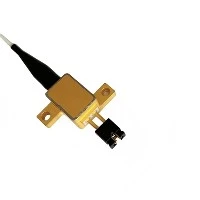
A line laser module is a compact, self-contained device integrating a laser diode and precision optical lenses. Its primary function is to project highly visible, stable laser patterns-most commonly a crisp crosshair (十字线), but also single lines, dots, or circles-onto a target surface. The key characteristics that make it indispensable for machining environments are its non-contact nature (eliminating part marking or damage risk) and exceptional visibility (with green lasers, ~532nm, being significantly more perceptible to the human eye than red in well-lit shops, albeit at a higher cost). Installation is deliberately simple, utilizing magnetic bases, flexible gooseneck arms, or custom brackets to mount securely to the machine's spindle housing, turret, door frame, or a fixed crossbeam, ensuring the projected pattern moves precisely with the machine's axes or remains in a fixed reference position.
3. Core Application Scenarios in CNC Machining
The laser module's true value is unlocked across several critical shop-floor scenarios:
Scenario 1: Rapid Workpiece Positioning and Zero Setting
Principle: The laser crosshair center is aligned with the CNC program's coordinate system origin (e.g., G54, G55).
Workflow: Instead of jogging a spinning tool or an edge finder, the operator simply moves the machine until the projected laser crosshair aligns perfectly with a workpiece corner (for center picking) or skirts its edges (for datum setting). This visual method can reduce setup time by over 50% for simple fixtures and is invaluable for delicate or pre-finished surfaces.
Scenario 2: Tool Path and Contour Pre-Verification ("Air Cutting" Visualization)
This is arguably its most powerful application. Before mounting a cutting tool, the operator can run the CNC program at rapid feed rates with the laser activated. The moving laser spot or line traces the exact tool center path directly on the workpiece blank.
Value: This "dry run" provides an immediate, intuitive visual check for programming errors (wrong coordinates, mirrored geometry), zero point misalignment, and potential fixture/tool collisions. It acts as a crucial safety net, preventing costly crashes and material waste on the first article.
Scenario 3: Multi-Step Operation and Secondary Setup Alignment
For parts requiring flip operations or multiple setups, the laser line serves as a persistent visual datum. When re-fixturing, the operator can quickly align the new orientation to the projected laser reference, dramatically improving the positional accuracy between machining steps and reducing cumulative error.
Scenario 4: Indirect Tool Breakage Check (Auxiliary Function)
By observing if the projected laser line is occluded by the expected tool silhouette (e.g., a drill point or end mill), an operator can perform a quick visual verification of tool integrity after a machining cycle, providing an additional layer of process assurance.
4. Tangible Benefits and Value Proposition
The integration of a line laser module delivers measurable returns:
Dramatic Efficiency Gains: Setup and verification times can be reduced by 60-70%, increasing machine spindle uptime and overall shop throughput.
Enhanced Accuracy & Quality: It eliminates parallax errors and estimation mistakes inherent in visual alignment, directly lowering first-part rejection rates and improving batch consistency.
Strengthened Safety: The non-contact methodology removes hands from the cutting area during setup. Pre-visualization of tool paths prevents catastrophic crashes, protecting both machine tools and personnel.
Improved Operational Ergonomics: It democratizes precision setup, reducing the dependency on an operator's "feel" or years of experience and accelerating the training curve for new machinists.
Outstanding Cost-Benefit Ratio: With a cost often equivalent to a single cutting tool or a fraction of a touch probe system, the laser module offers one of the highest returns on investment (ROI) for productivity enhancement in a machine shop.
5. Selection, Installation, and Best Practices
Selection Criteria:
Laser Type & Power: Green lasers offer superior visibility; red lasers provide a cost-effective option. Ensure compliance with laser safety classes (typically Class 2 or 3R).
Pattern: Crosshair is standard for centering; a single fine line may be preferred for edge alignment.
Accuracy & Stability: Look for a thin, sharp line width and minimal pattern divergence or "keystoning" over the working distance.
Power & Durability: Choose robust models with reliable power solutions (battery/DC) suited for industrial environments resistant to coolants and vibrations.
Installation and Calibration:
Critical Step: The module must be calibrated so its beam is parallel to the spindle Z-axis. Any angular deviation will cause alignment errors that magnify with distance.
Calibration Method: Use a dial test indicator fixed in the spindle against a target surface, then align the laser line to the indicator's path as the spindle travels.
Safety and Maintenance:
SAFETY FIRST: Never look directly into the beam. Provide training and consider laser safety signage.
Keep the output aperture clean from dust and oil mist. Use protective caps when not in operation.
6. Future Outlook and Advanced Integration
The line laser module is not an endpoint but a gateway to smarter workflows:
Synergy with Probing Systems: It acts as the perfect partner for spindle probes. The laser handles rapid, coarse alignment and visualization, while the probe executes the final, micron-level touch-off for tool and workpiece setting.
Towards Intelligent Integration: Future iterations may feature automated on/off control via M-code, communication with the CNC for offset adjustment, or even simple machine-vision feedback for semi-automatic alignment.
Role in Hybrid Manufacturing: In growing fields like additive-subtractive hybrid manufacturing (e.g., machining 3D-printed parts), the laser provides a fast, non-contact way to locate and align to the irregular as-printed features before precision CNC machining begins.
7. Conclusion
The line laser module exemplifies how a simple, focused technological intervention can solve a deep-rooted industrial challenge. By rendering the intangible digital toolpath visible on the physical workpiece, it transforms CNC setup from an act of measured guesswork into one of confident precision. This small, low-cost accessory is a powerful catalyst, driving traditional machine shops towards the ideals of lean manufacturing, error-proofing, and visual management. It is an essential tool for any modern machining operation committed to efficiency, safety, and relentless process improvement.
Contact information:
If you have any ideas, feel free to talk to us. No matter where our customers are and what our requirements are, we will follow our goal to provide our customers with high quality, low prices, and the best service.
 Email:info@loshield.com; laser@loshield.com
 Tel:0086-18092277517; 0086-17392801246
 Fax: 86-29-81323155
 Wechat:0086-18092277517; 0086-17392801246


