


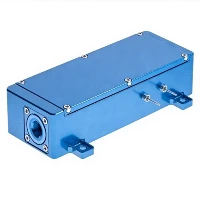

The 905nm Laser Ranging Module has established itself as the predominant wavelength choice for distance measurement and LiDAR systems across consumer, industrial, and automotive applications.

1. Introduction
Laser distance measurement technology has undergone remarkable evolution since its inception, transitioning from specialized military and scientific instruments to ubiquitous components embedded in everyday devices. At the heart of this transformation lies the 905nm laser ranging module-a compact, efficient, and cost-effective solution that has become the industry workhorse for applications ranging from smartphone-assisted focusing to autonomous vehicle navigation.
The selection of 905nm as a preferred wavelength is not arbitrary but represents an optimal convergence of physical principles, technological maturity, manufacturing economics, and regulatory considerations . This article aims to provide a systematic overview of 905nm laser ranging modules, examining their technical foundations, application diversity, implementation challenges, and future evolution within the broader context of photonic sensing technologies.
The structure of this article proceeds as follows: Section 2 establishes the technical fundamentals of 905nm laser ranging, including wavelength characteristics, measurement principles, and core component technologies. Section 3 presents a comprehensive survey of applications across major industry sectors. Section 4 addresses practical implementation considerations and engineering challenges. Section 5 explores emerging trends and future directions. Section 6 concludes with synthesis of key insights.
2. Technical Fundamentals of 905nm Laser Ranging
2.1 Wavelength Selection Rationale
The dominance of 905nm in laser ranging and LiDAR applications stems from a confluence of factors spanning physics, technology availability, and commercial viability .
2.1.1 Physical Characteristics
905nm lies within the near-infrared portion of the electromagnetic spectrum, positioned favorably with respect to atmospheric transmission windows. This wavelength experiences manageable scattering and absorption under clear atmospheric conditions, enabling reliable propagation over distances ranging from meters to kilometers depending on system power and optical configuration.
The atmospheric transmission characteristics at 905nm represent a pragmatic compromise: while longer wavelengths such as 1550nm exhibit superior performance in certain adverse weather conditions due to reduced scattering, 905nm provides adequate propagation for the vast majority of operational scenarios at significantly lower system cost .
2.1.2 Eye Safety Considerations
Eye safety constitutes a paramount consideration in laser system design, governed by international standards including IEC 60825 and ANSI Z136. Wavelengths below 1400nm, including 905nm, can penetrate the eye's transparent media and focus onto the retina, potentially concentrating energy density by approximately 100,000 times . This retinal hazard necessitates stringent limitation of emitted power to achieve Class 1 eye-safe classification-the standard permitting operation without protective measures under reasonably foreseeable conditions.
For 905nm systems, the maximum permissible exposure (MPE) limits constrain peak pulse power and energy, effectively establishing fundamental boundaries for achievable detection range. While this represents a limitation compared to longer wavelengths with higher eye-safe power thresholds, practical system designs achieve performance sufficient for the majority of commercial and industrial applications through optimized optical efficiency, sensitive detection, and advanced signal processing .
2.1.3 Comparative Analysis with Alternative Wavelengths
Understanding 905nm's position requires comparison with other prevalent wavelengths:
1064nm: Historically prominent in military and industrial applications due to Nd:YAG solid-state lasers delivering extremely high pulse energies. However, 1064nm shares similar retinal hazard characteristics to 905nm while requiring more complex and expensive laser sources, limiting its appeal for cost-sensitive commercial applications .
1550nm: Offers superior eye safety through complete absorption in the eye's cornea and lens, permitting significantly higher emitted power under Class 1 classification. This enables longer-range detection under identical eye safety constraints. However, 1550nm requires indium gallium arsenide (InGaAs) detectors-substantially more expensive than the silicon avalanche photodiodes (APDs) usable at 905nm-and faces challenges including lower detector sensitivity, higher dark noise, and reduced diffraction-limited optical resolution for given aperture size .
905nm's Balanced Position: As summarized in Table 1, 905nm occupies the "sweet spot" where silicon detector economics, mature laser diode manufacturing, and adequate performance converge. This balance explains its dominance in cost-sensitive volume applications including automotive LiDAR, robotics, and consumer devices .
Table 1: Comparative Analysis of Common Laser Ranging Wavelengths
| Parameter | 905nm | 1064nm | 1550nm |
|---|---|---|---|
| Eye Safety | Moderate (retinal hazard) | Moderate | Excellent (corneal absorption) |
| Detector Technology | Silicon APD (low cost) | Silicon/Specialty APD | InGaAs (high cost) |
| Laser Source | GaAs/AlGaAs diode (mature, low cost) | Nd:YAG solid-state (high power) | Erbium-doped fiber/glass (telecom heritage) |
| Atmospheric Penetration | Moderate | Moderate | Good (reduced scattering) |
| Relative System Cost | Low | Moderate | High |
| Typical Applications | Automotive LiDAR, robotics, consumer | Military LRF, industrial | Premium automotive, defense, airborne mapping |
Sources:
2.2 Operating Principles
2.2.1 Time-of-Flight Measurement
The predominant operating principle for 905nm laser ranging modules is pulsed time-of-flight (TOF) measurement. The fundamental relationship is elegantly simple:
Distance=c×Δt2Distance=2c×Δt
Where *c* represents the speed of light and Δt denotes the time interval between laser pulse emission and detection of the reflected signal.
In practice, implementing this principle requires sophisticated electronics capable of resolving nanosecond-scale time intervals with picosecond precision to achieve centimeter-level accuracy. A typical 905nm TOF system operates as follows :
A drive circuit applies a short-duration, high-current pulse to the laser diode, generating an optical pulse typically lasting 5-50 nanoseconds
A small fraction of the emitted pulse is directed to a reference photodetector, establishing time-zero reference
The main beam propagates to the target and reflects back to the receiver optics
An avalanche photodiode (APD) or SPAD array detects the return pulse, generating an electrical signal
A time-to-digital converter (TDC) or high-speed analog-to-digital converter measures the time interval
Digital processing computes distance and may perform multiple measurements for averaging or multi-echo detection
2.2.2 Key Performance Parameters
Critical performance specifications for 905nm ranging modules include :
Measurement Range: Typically specified under standardized conditions (white diffuse target, specific reflectivity, clear atmosphere). Actual range varies significantly with target reflectivity, ambient illumination, and atmospheric visibility. Commercial modules range from tens of meters for robotics applications to 1000-4000 meters for specialized industrial and military applications.
Accuracy and Precision: Accuracy denotes systematic error relative to true distance, while precision (or repeatability) characterizes measurement consistency. High-performance modules achieve ±1 meter accuracy or better for long-range measurements, with millimeter-level precision possible in optimized short-range configurations .
Beam Divergence: Typically 4-5 mrad for general-purpose modules, determining spot size at distance and thus angular resolution .
Measurement Rate: Ranging from a few hertz for long-range single-point measurements to kilohertz rates for scanning applications .
Blind Zone: The minimum measurable distance, typically 0.2-1 meter, limited by receiver recovery time after the intense near-field backscatter .
2.3 Core Component Technologies
2.3.1 Laser Sources: EEL and VCSEL
905nm laser sources have evolved substantially, with two primary technologies dominating:
Edge-Emitting Lasers (EELs) represent the traditional approach, where laser emission emerges from the cleaved edge of the semiconductor chip. EELs offer high power density, excellent polarization control, and superior high-temperature performance-characteristics particularly valuable for long-range detection requiring high peak power . Modern multi-junction EEL designs achieve peak powers exceeding 100W from compact chips, with low temperature drift ensuring stable operation across environmental extremes. These attributes make EELs the preferred choice for automotive long-range LiDAR and precision industrial measurement.
Vertical-Cavity Surface-Emitting Lasers (VCSELs) emit perpendicular to the chip surface, enabling wafer-level testing, two-dimensional array integration, and circular beam profiles simplifying optical design. VCSEL technology has advanced dramatically, with multi-junction designs now achieving power densities competitive with EELs while offering superior reliability and temperature stability . The ability to create dense VCSEL arrays enables flash LiDAR architectures where entire scenes are illuminated simultaneously, eliminating mechanical scanning. This approach proves particularly attractive for robotics and automotive short-to-medium range sensing where reliability and cost outweigh ultimate range requirements.
2.3.2 Detector Technologies
Silicon Avalanche Photodiodes (APDs) provide the workhorse detection technology for 905nm systems, offering internal gain that amplifies weak return signals before electronic amplification. Silicon's near-ideal spectral response at 905nm, combined with mature manufacturing processes, delivers high sensitivity at costs compatible with volume applications .
Single-Photon Avalanche Diodes (SPADs) and Silicon Photomultipliers (SiPMs) represent the evolving frontier, pushing sensitivity to the single-photon level. SPAD arrays integrated in CMOS processes enable compact, highly parallel detection systems supporting flash LiDAR and advanced solid-state architectures. Products incorporating SPAD technology achieve ranges of 30-60 meters with 905nm VCSEL illumination in compact form factors suitable for robotics and automotive integration .
2.3.3 Optical Filtering
Effective optical filtering proves essential for reliable operation in ambient light. 905nm systems employ narrow bandpass filters (typically 10-30nm bandwidth) centered at the laser wavelength, aggressively blocking out-of-band solar radiation. Filter design must account for angle of incidence effects, as the center wavelength shifts with incident angle-a critical consideration for wide field-of-view systems . Temperature stability of filter characteristics also demands attention for outdoor applications spanning -40°C to +85°C operating ranges.
3. Applications of 905nm Laser Ranging Modules
3.1 Automotive and Autonomous Driving
The automotive sector represents perhaps the most dynamic growth area for 905nm laser ranging technology. The convergence of advanced driver assistance systems (ADAS) and autonomous vehicle development has created massive demand for reliable, cost-effective distance sensing .
3.1.1 LiDAR for Autonomous Vehicles
Automotive LiDAR systems employing 905nm lasers fulfill multiple functions :
Long-range forward detection (150-250 meters) enables adaptive cruise control and automatic emergency braking at highway speeds. Multi-beam or scanning configurations provide the angular resolution necessary to distinguish vehicles, pedestrians, and obstacles.
Blind zone monitoring utilizes shorter-range, wide field-of-view sensors to detect obstacles in close proximity during parking and low-speed maneuvering.
360-degree perception for autonomous vehicles integrates multiple LiDAR sensors or single scanning units to build comprehensive environmental models.
The cost advantages of 905nm technology prove decisive for automotive adoption. While 1550nm systems offer superior range performance, their substantially higher cost limits deployment to premium vehicles and robotaxi applications. 905nm-based systems achieving 150-200 meter range at costs below $1500 enable integration into mass-market vehicles, accelerating ADAS penetration across vehicle classes .
3.1.2 Product Implementations
Commercial automotive-grade 905nm LiDAR products demonstrate the technology's maturity. Solid-state implementations using VCSEL illumination and SPAD detection achieve 50-meter range with 120° × 50° field of view in compact, rugged packages suitable for vehicle integration . These systems provide 540,000 points per second point cloud data at 10Hz frame rates, enabling real-time obstacle detection and navigation.
3.2 Robotics and Autonomous Systems
The robotics sector has embraced 905nm laser ranging for applications spanning industrial automation to consumer devices.
3.2.1 Mobile Robot Navigation
Autonomous mobile robots (AMRs) and automated guided vehicles (AGVs) rely on laser ranging for simultaneous localization and mapping (SLAM), obstacle detection, and path planning. Flash LiDAR implementations using 905nm VCSEL arrays offer particular advantages :
No moving parts ensures reliability in vibration-prone environments
Instantaneous illumination captures entire scenes without scanning latency
Compact form factors facilitate integration into space-constrained robot designs
Ranges of 30-60 meters accommodate both indoor and outdoor operation
3.2.2 Service and Consumer Robotics
Floor cleaning robots, lawn mowers, and delivery robots increasingly incorporate 905nm ranging for navigation and cliff detection. The technology's ability to operate reliably on diverse surface types and under varying ambient lighting conditions proves essential for robust consumer products.
3.3 Industrial Measurement and Surveying
Industrial applications leverage 905nm laser ranging for precision measurement tasks where accuracy, reliability, and cost-effectiveness converge .
3.3.1 Distance Measurement Modules
Compact 905nm ranging modules designed for industrial integration achieve measurement ranges of 1000-1200 meters with ±1 meter accuracy, packaged in volumes as small as 24×24×46mm and weights under 20 grams . These specifications enable integration into:
Unmanned aerial vehicles (UAVs) for terrain following, altimetry, and surveying
Industrial automation for position sensing, material handling, and quality control
Surveying equipment for construction, mining, and topographic mapping
Optical sights for hunting, shooting sports, and tactical applications
3.3.2 Environmental Monitoring
Infrastructure monitoring applications benefit from 905nm ranging's ability to measure distances to natural and man-made targets :
Power line sag monitoring detects clearance changes threatening safety
Water level measurement in rivers and reservoirs supports flood warning systems
Landslide and structural deformation monitoring provides early warning of hazardous movement
Forest inventory measures tree heights and stand density for resource management
3.4 Consumer Electronics and Outdoor Recreation
The consumer market for 905nm ranging devices continues expanding as technology costs decline and performance improves.
3.4.1 Handheld Rangefinders
Golf, hunting, and outdoor recreation enthusiasts represent substantial markets for handheld laser rangefinders. Modern devices achieve 1000-4000 meter ranging capability in ergonomic packages, incorporating features including :
Angle compensation for slope-adjusted distances
Scan modes for continuous measurement
Bluetooth connectivity for data logging and smartphone integration
Rugged, weather-resistant construction for field use
3.4.2 Drone Integration
Consumer and commercial drones increasingly incorporate 905nm ranging for:
Precision altitude hold during landing and hovering
Obstacle avoidance during autonomous flight
Terrain following for consistent ground clearance
Photogrammetry support for accurate image scaling
3.5 Infrastructure and Security Applications
Critical infrastructure protection and security monitoring represent growing application domains for 905nm ranging technology.
3.5.1 Perimeter Security
Laser ranging enables intrusion detection along perimeters, railways, and sensitive facilities. Unlike passive infrared sensors, laser systems maintain effectiveness across temperature variations and can precisely locate intrusion events along extended boundaries.
3.5.2 Transportation Infrastructure
Railway and road monitoring applications include :
Clearance measurement for oversize vehicle detection
Track alignment monitoring for rail safety
Tunnel deformation surveillance
Bridge clearance verification
4. Implementation Considerations and Engineering Challenges
4.1 Application-Specific Selection Criteria
Selecting appropriate 905nm ranging modules requires systematic evaluation of application requirements against device capabilities. Table 2 summarizes key considerations across major application categories.
Table 2: Application-Driven Selection Matrix for 905nm Ranging Modules
| Application Domain | Typical Range Required | Critical Parameters | Cost Sensitivity | Representative Approach |
|---|---|---|---|---|
| Automotive Long-range | 150-250m | Angular resolution, frame rate, reliability | Medium | Scanning/multi-beam EEL + APD |
| Automotive Short-range | 30-80m | Field of view, size, cost | High | Flash VCSEL + SPAD array |
| Robotics | 40-60m | Power consumption, size, reliability | High | Solid-state VCSEL + SPAD |
| Industrial Measurement | 100-1000m | Accuracy, repeatability, target versatility | Medium | Pulsed EEL + APD |
| Consumer Handheld | 100-1000m | Size, battery life, cost | High | Pulsed laser diode + APD |
| Drone Integration | 50-300m | Weight, power, update rate | Medium | Miniature TOF module |
Sources: Author synthesis based on
4.2 Environmental Challenges
4.2.1 Atmospheric Effects
Weather conditions significantly impact 905nm ranging performance. Fog, rain, and snow introduce scattering that attenuates the laser beam and creates false returns from precipitation . In heavy fog, effective range may diminish to 30 meters or less regardless of nominal clear-air capability. System designers address these limitations through:
Multi-echo detection distinguishing target returns from precipitation
Adaptive thresholding adjusting detection sensitivity based on conditions
Sensor fusion combining laser data with radar, camera, and ultrasonic inputs
4.2.2 Ambient Light Interference
Solar background radiation presents particular challenges for 905nm systems operating outdoors. The solar spectrum contains substantial power at near-infrared wavelengths, potentially saturating detectors or creating false triggers . Mitigation strategies include:
Narrowband optical filtering (typically 10-30nm bandwidth)
Temporal gating synchronizing detection windows with laser pulses
Spatial filtering restricting field of view to the illuminated region
Modulation techniques distinguishing laser returns from background
4.2.3 High-Reflectivity Target Risks
Strong reflections from nearby high-reflectivity targets (white walls, glass, retroreflectors) can saturate or damage avalanche photodiodes . Practical implementations incorporate:
Automatic gain control reducing sensitivity for close-range returns
Blanking circuits temporarily disabling detection during high-flux periods
Optical design minimizing back reflections into the receiver
4.3 Optical System Design
Effective optical design proves critical to 905nm ranging performance. Key considerations include:
Beam shaping and collimation determines divergence and thus angular resolution. Typical modules achieve 4-5 mrad divergence, balancing spot size at range against alignment tolerance .
Receiver aperture directly affects signal collection. Larger apertures increase sensitivity but impose size, weight, and cost penalties. Industrial modules employ 18-25mm apertures as pragmatic compromises .
Transmitter-receiver alignment requires precise optical axis coincidence. Misalignment reduces effective range and creates measurement blind spots. Factory alignment procedures and thermally stable mechanical design prove essential.
Filter angle of incidence effects demand attention in wide field-of-view systems, as filter center wavelength shifts with incident angle . Compensation may involve filter specification for angle-shifted performance or optical design limiting ray angles at the filter.
4.4 Mechanical and Environmental Design
Outdoor and industrial applications impose stringent environmental requirements :
Temperature range: Automotive and industrial modules typically specify -40°C to +85°C operation, requiring careful material selection for coefficient of thermal expansion matching and compensation circuits for temperature-dependent laser and detector characteristics.
Vibration and shock: Applications involving vehicles, drones, or industrial machinery demand rugged construction. Vibration testing per relevant standards (e.g., 10-55Hz, 1.5mm amplitude) validates mechanical integrity .
Ingress protection: Outdoor installation requires sealing against moisture and particulate ingress. IP67 or higher ratings prove essential for unprotected installations.
4.5 Electrical Integration
Practical system integration must address interface requirements:
Power supply: Modules typically operate from 3.3V or 5V supplies, with peak currents during laser pulsing substantially exceeding average consumption. Supply decoupling and layout require attention to maintain pulse fidelity .
Communication interfaces: UART-TTL at various baud rates (9600-230400 bps) provides common control and data interfaces, with custom protocols for specific applications .
EMI considerations: Fast current pulses generate electromagnetic emissions requiring shielding and filtering for compliance with regulatory standards and to prevent interference with nearby sensitive electronics.
5. Future Trends and Emerging Developments
5.1 Technology Evolution
5.1.1 Advanced Laser Sources
905nm laser technology continues rapid advancement. Multi-junction VCSEL designs now achieve power densities competitive with EELs while offering superior reliability and beam quality . Ongoing development targets peak powers exceeding 100W from VCSEL arrays, with power density exceeding 50kW/mm² identified as strategic objectives in national research programs .
EEL technology simultaneously progresses through improved junction designs, reduced temperature sensitivity, and enhanced reliability. The coexistence of both technologies, each optimized for different application requirements, seems likely to persist.
5.1.2 Detector Innovation
SPAD arrays integrated in standard CMOS processes represent perhaps the most transformative detector evolution. Large-format arrays (hundreds by hundreds of pixels) enable flash LiDAR systems capturing entire scenes without mechanical scanning. On-chip time-to-digital conversion and histogram processing reduce system complexity while improving performance .
Silicon photomultipliers (SiPMs) combining SPAD arrays with analog summing outputs offer intermediate complexity, providing sensitivity approaching single-photon levels while maintaining simpler readout electronics.
5.1.3 System Integration
The trajectory toward higher integration continues, with complete ranging systems shrinking to chip-scale dimensions. Photonic integrated circuits incorporating lasers, detectors, and passive optical components on single substrates promise dramatic size, weight, power, and cost reductions-potentially opening new application domains previously inaccessible to laser ranging technology.
5.2 Cost Reduction Trajectories
The consumer electronics industry's massive scale drives continuing cost reduction for 905nm components. As manufacturing volumes increase for automotive LiDAR and consumer applications, per-unit costs follow experience curve effects, expanding addressable markets and enabling new applications .
Market forecasts project the eye-safe laser rangefinder market-dominated by 905nm and 1550nm technologies-growing from $1.65 billion in 2025 to $3.01 billion by 2030, representing 12.8% compound annual growth . This growth trajectory reflects both volume expansion in existing applications and emergence of new use cases enabled by declining costs.
5.3 Emerging Application Frontiers
5.3.1 Embodied Artificial Intelligence
Humanoid robots and advanced service robots require comprehensive environmental perception combining object recognition, navigation, and human interaction. 905nm LiDAR provides essential range data complementing camera-based vision, particularly for reliable operation under varying lighting conditions.
5.3.2 Low-Altitude Economy
Unmanned aircraft systems for package delivery, air taxi services, and urban air mobility demand robust obstacle detection and terrain following. 905nm ranging modules offering the optimal balance of range, weight, power consumption, and cost prove well-suited to these emerging applications.
5.3.3 Digital Twin Creation
High-precision 3D mapping for digital twin creation-virtual representations of physical assets and environments-increasingly employs laser scanning. While longer-range applications may favor 1550nm, the majority of building, infrastructure, and urban mapping requirements fall within 905nm capabilities at substantially lower system costs.
5.4 The 905nm vs. 1550nm Dynamic
The coexistence of 905nm and 1550nm technologies reflects fundamental application segmentation rather than direct competition. As one industry observer notes, "No single wavelength is universally superior-system design must balance safety, range, cost, and optical performance for your application" .
905nm maintains advantages in cost-sensitive, volume applications where range requirements align with eye-safe power limits. Its compatibility with silicon detectors and mature manufacturing infrastructure ensures continued dominance across consumer, robotics, and mass-market automotive segments.
1550nm addresses applications demanding maximum eye-safe range, including premium automotive, defense, and airborne mapping. As InGaAs detector costs decline, 1550nm may penetrate additional segments, but fundamental cost differentials will likely persist given silicon's manufacturing maturity and economies of scale.
This complementary coexistence seems likely to continue, with each wavelength serving application domains aligned with its fundamental characteristics.
6. Conclusion
The 905nm laser ranging module represents a remarkable convergence of physical principles, technological maturity, and commercial viability. Its position at the intersection of silicon detector economics, mature laser diode manufacturing, adequate atmospheric transmission, and acceptable eye safety characteristics has established it as the dominant wavelength for the vast majority of commercial and industrial ranging applications.
From automotive LiDAR systems enabling advanced driver assistance to compact modules integrating into drones, robots, and consumer devices, 905nm technology demonstrates remarkable versatility across application domains. The fundamental time-of-flight principle, implemented through increasingly sophisticated laser sources and detectors, provides the accurate, reliable distance measurement essential to modern autonomous systems.
Engineering challenges including environmental interference, high-reflectivity target management, and optical design complexity demand systematic attention during system development. However, mature design practices and component ecosystems render these challenges manageable for competent engineering teams.
Looking forward, 905nm technology continues advancing through improved laser sources (both EEL and VCSEL), sensitive detector arrays (SPADs and SiPMs), and higher levels of system integration. These developments, combined with continuing cost reduction driven by manufacturing scale, will expand application frontiers into embodied AI, low-altitude aviation, and digital twin creation.
The 905nm laser ranging module exemplifies how pragmatic engineering-optimizing across multiple competing constraints rather than maximizing any single parameter-creates technology with enduring commercial significance. Its continued evolution promises to extend its relevance well into the future, serving as a foundational sensing technology for the autonomous systems that increasingly shape our world.
Contact information:
If you have any ideas, feel free to talk to us. No matter where our customers are and what our requirements are, we will follow our goal to provide our customers with high quality, low prices, and the best service.
 Email:info@loshield.com; laser@loshield.com
 Tel:0086-18092277517; 0086-17392801246
 Fax: 86-29-81323155
 Wechat:0086-18092277517; 0086-17392801246


