



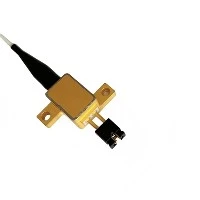
Blue Green Laser usually refers to lasers with wavelengths in the range of 450-550 nanometers, which have shorter wavelengths and higher frequencies. They are typically generated through nonlinear optical processes such as frequency doubling or optical parametric oscillation.
These lasers are particularly important in industrial manufacturing due to their high brightness, small beam divergence angle, and excellent focusing ability. They are commonly used in precision cutting, welding, 3D printing, and fine measurement applications, and their high precision and efficiency can significantly improve the quality and productivity of the manufacturing industry.
Application of blue-green laser in industrial manufacturing
Precision measurement and calibration
The high collimation and excellent directional stability of blue-green lasers make them an ideal choice for precise distance and angle measurements. In manufacturing processes that require extremely high precision, such as microelectronics manufacturing, aerospace component manufacturing, and precision tool calibration, the application of blue-green lasers greatly improves the accuracy and repeatability of measurements.
Material processing
Blue green lasers provide higher power density and smaller focal points, making them excellent in precision cutting, welding, and engraving of metal materials. A shorter wavelength also means better absorption, especially when dealing with certain highly reflective metals such as copper and aluminum, which can significantly improve processing efficiency and quality.
Quality inspection
In terms of product quality control and defect detection, blue-green lasers are widely used for detecting small defects, inconsistencies, or contamination on material surfaces due to their high resolution and high contrast imaging capabilities. This technology is particularly suitable for semiconductor wafer inspection, quality testing of LCD and LED display screens.
Optical communication
Blue green lasers can provide higher data transmission rates in the field of optical communication. Due to its high frequency and small spot size, blue-green lasers can be used to produce higher density optical data storage devices and faster communication systems, especially in submarine optical cables and high-speed Internet infrastructure.
Display technique
In high-end display technology and projection systems, blue-green lasers are widely used due to their ability to produce saturated colors and high brightness beams. This makes them important applications in laser television, digital cinema projection, as well as high-end industrial and scientific projection equipment.
In summary, the application of blue-green lasers in industrial manufacturing demonstrates its unique technological advantages, not only improving production efficiency and product quality, but also promoting the development of manufacturing towards higher precision and higher quality standards. With the continuous advancement and innovation of technology, it is expected that blue-green lasers will have a wider range of applications and developments in the future.
Development of blue-green laser technology
Technological innovation
The latest blue-green laser technology research focuses on improving beam quality and power output. For example, researchers are developing novel nonlinear optical crystals and frequency conversion techniques to more efficiently generate blue-green light wavelengths. Meanwhile, the application of topological insulators and quantum dot technology is also being explored to achieve better thermal management and laser lifetime.
Performance improvement
Improving the efficiency and power of blue-green lasers mainly depends on improving the pumping efficiency and cooling system of the laser medium. Researchers are using efficient pump sources and optimized resonant cavity designs to improve laser gain. In addition, by using new heat dissipation materials and heat dissipation structure design, the heat generated by the laser under high-power operation can be effectively managed, thereby stabilizing the laser performance and extending its service life.
Cost reduction
Research on cost reduction focuses on optimizing production processes and improving material availability. Researchers are seeking more cost-effective semiconductor materials and manufacturing technologies, such as using organic metal chemical vapor deposition (MOCVD) technology to produce laser diodes. Meanwhile, through integrated design and large-scale production, the manufacturing and maintenance costs of blue-green laser systems can be further reduced.
In summary, the development of blue-green laser technology is rapidly advancing towards improving performance and reducing costs. These innovations will not only make blue-green lasers more efficient and cost-effective in existing applications, but may also open up new application areas such as deep space communication and high-precision Earth observation. With the continuous advancement of technology, it is expected that blue-green lasers will have a wider range of applications in industry and scientific research in the coming years.
Example analysis
High precision microelectronics manufacturing: In the field of microelectronics manufacturing, blue-green lasers are used to manufacture high-precision circuit boards and semiconductor devices. For example, a leading semiconductor manufacturing company has adopted blue-green laser technology for precise cutting and engraving of chips, significantly improving production efficiency and product yield.
Aerospace material processing: In the aerospace industry, blue-green lasers are used to process high-strength alloy materials, which are typically used to manufacture aircraft engine components. By using blue-green lasers, engineers are able to cut and weld with higher precision and speed, while reducing material thermal deformation and micro cracks.
Precision measurement in automobile manufacturing: The automobile manufacturing industry uses blue-green lasers for precise measurement and quality control of body components, ensuring that the dimensions and shapes of each component meet strict quality standards. This not only improves product quality, but also accelerates the production process.
Blue green lasers, due to their high collimation and excellent focusing ability, greatly improve operational accuracy, which is particularly important for the precision manufacturing industry. Blue green laser processing speed is fast, which can reduce production cycle, improve production efficiency, and bring higher economic benefits to enterprises.
In summary, the application of blue-green laser technology not only optimizes traditional processes, but also promotes the development of industrial automation and precision machining technology. These successful cases demonstrate the potential of blue-green lasers in solving practical industrial problems and encourage more industries to explore the use of blue-green laser technology to enhance competitiveness. With the continuous development and improvement of technology, it is expected that blue-green lasers will play a more important role in future industrial production.
Blue green lasers have shown significant advantages in industrial manufacturing, especially in fields such as precision measurement, material processing, quality inspection, optical communication, and display technology. Its high collimation and excellent focusing ability not only improve operational accuracy, but also accelerate production speed and reduce long-term operating costs. With the continuous advancement of technological innovation, the application of blue-green lasers will become more widespread, which has important potential for improving production efficiency and promoting industrial automation.
Contact information:
If you have any ideas, feel free to talk to us. No matter where our customers are and what our requirements are, we will follow our goal to provide our customers with high quality, low prices, and the best service.
 Email:info@loshield.com
 Tel:0086-18092277517
 Fax: 86-29-81323155
 Wechat:0086-18092277517


