




1. Introduction
Laser-based monitoring technologies represent a paradigm shift in glucose measurement, offering the potential for truly non-invasive, continuous monitoring through advanced photonic principles.

2. Classification of Blood Glucose Monitoring Technologies
2.1 Conventional Invasive Methods
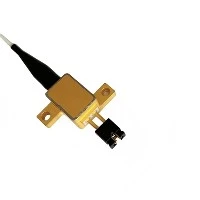
Finger-prick glucose meters have been the standard for decades, requiring blood samples and disposable test strips. Despite their established accuracy, these methods cause patient discomfort and cannot provide continuous data.
2.2 Continuous Glucose Monitoring Systems (CGM)
Current CGMs utilize subcutaneous sensors that measure glucose in interstitial fluid. While representing a significant advancement, these systems still require needle insertion and regular sensor replacement.
2.3 Non-Invasive Monitoring Technologies
Emerging non-invasive approaches include:
Optical methods (spectroscopy)
Reverse iontophoresis
Thermal spectroscopy
Impedance spectroscopy
Among these, laser-based optical techniques show particular promise due to their specificity and sensitivity.
3. Fundamental Principles of Laser-Based Glucose Monitoring
3.1 Spectroscopic Foundations
Laser glucose monitoring relies on the interaction between specific light wavelengths and glucose molecules in tissue.
Two primary spectroscopic methods are employed:
Near-Infrared (NIR) Spectroscopy
Utilizes wavelengths between 700-2500 nm
Measures absorption characteristics related to glucose concentration
Benefits from relatively deep tissue penetration
Challenges include weak glucose-specific signals and strong water absorption
Raman Spectroscopy
Detects inelastic scattering of photons
Provides molecular "fingerprints" with high specificity
Suffers from inherently weak signals requiring sophisticated detection systems
3.2 Light-Tissue Interaction Mechanisms
The successful implementation of laser monitoring depends on understanding how light propagates through biological tissues:
Absorption Characteristics
Glucose exhibits characteristic absorption peaks in the NIR region, particularly around 1600 nm and 2100 nm, corresponding to C-H and O-H bond vibrations.
Scattering Properties
Tissue scattering dominates light propagation, creating challenges for signal extraction but also opportunities for spatial resolution techniques.
4. Technical Specifications of Laser Modules in Glucose Monitoring
4.1 Predominant Laser Types
Vertical-Cavity Surface-Emitting Lasers (VCSELs)
Compact size and low power consumption
Excellent beam quality and wavelength stability
Suitable for wearable applications
Typically operate in 1300-2000 nm range
Distributed Feedback (DFB) Lasers
Narrow spectral linewidth (<1 MHz)
Precise wavelength control
Higher power capability
Ideal for high-precision spectroscopic applications

4.2 Critical Performance Parameters
Wavelength Range
The physiological "optical window" for glucose monitoring spans 1000-2500 nm, with specific regions optimized for glucose detection while minimizing water absorption and scattering effects.
Output Power
Typically ranges from 1-10 mW, balancing signal strength with safety requirements and power consumption constraints.
Spectral Accuracy
Wavelength stability of ±0.1 nm or better is essential for reliable glucose concentration measurements.
Thermal Stability
Active temperature control maintains wavelength stability across varying environmental conditions.
4.3 Safety and Regulatory Considerations
Laser modules must comply with international safety standards (IEC 60825-1) and medical device regulations (FDA, CE Marking).
Specific considerations include:
Maximum Permissible Exposure limits
Skin and eye protection requirements
Electromagnetic compatibility
Biocompatibility of device materials
5. Technical Challenges and Innovative Solutions
5.1 Signal Interference Factors
Skin Variability
Individual differences in skin composition, thickness, and hydration significantly affect measurement accuracy. Multivariate calibration and adaptive algorithms help mitigate these variations.
Environmental Interferences
Motion artifacts, temperature fluctuations, and ambient light introduce measurement noise. Advanced signal processing and reference channel implementation address these challenges.
5.2 Calibration Algorithm Development
Successful systems employ sophisticated computational approaches:
Partial Least Squares regression
Principal Component Analysis
Artificial Neural Networks
Hybrid algorithms combining multiple techniques
5.3 Signal-to-Noise Ratio Optimization
Strategies include:
Lock-in amplification techniques
Wavelength modulation spectroscopy
Spatial resolution methods
Time-resolved detection
6. Current Market Landscape and Future Directions
6.1 Key Industry Players and Technologies
Several companies are advancing laser-based glucose monitoring:
Know Labs (USA): Developing multi-wavelength RF and optical technology
CNOGA Medical (Israel): Combining optical sensors with AI algorithms
Integrity Applications (Israel): GlucoTrack system using multiple sensing modalities
6.2 Clinical Validation Progress
Recent clinical studies demonstrate promising results:
MARD values of 10-15% in controlled settings
Improved performance with personalized calibration
Ongoing challenges in achieving consistent accuracy across diverse populations
6.3 Emerging Technological Trends
Multi-Wavelength Laser Systems
Simultaneous measurement at multiple wavelengths enhances accuracy and compensates for interfering compounds.
Artificial Intelligence Integration
Machine learning algorithms improve signal processing, calibration stability, and personalized accuracy.
Miniaturization and Wearability
Advances in photonic integrated circuits and MEMS technology enable truly wearable continuous monitors.
7. Conclusion
Laser-based glucose monitoring represents a transformative approach to diabetes management, potentially eliminating the discomfort and inconvenience of current methods. While significant technical challenges remain, ongoing advances in laser technology, photonic integration, and data analytics are steadily overcoming these barriers. The successful commercialization of these systems will require continued innovation in laser design, sophisticated algorithm development, and comprehensive clinical validation. As these technologies mature, they promise to revolutionize diabetes care through truly non-invasive, continuous glucose monitoring solutions that improve patient compliance and clinical outcomes.
Contact information:
If you have any ideas, feel free to talk to us. No matter where our customers are and what our requirements are, we will follow our goal to provide our customers with high quality, low prices, and the best service.
 Email:info@loshield.com; laser@loshield.com
 Tel:0086-18092277517; 0086-17392801246
 Fax: 86-29-81323155
 Wechat:0086-18092277517; 0086-17392801246


