



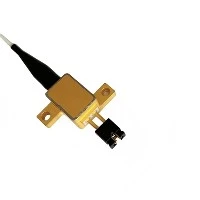
The application of laser modules in machine tool positioning involves high-precision measurement, dynamic monitoring, and automated control. Its core principle is to use the linearity and high directionality of lasers to achieve micron-level or even nanometer-level positioning.
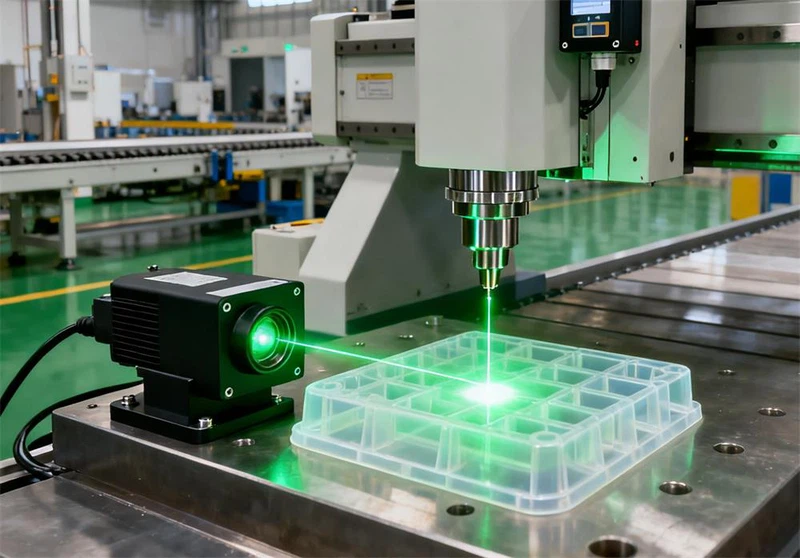
1. Introduction: The Eternal Pursuit of Positioning Accuracy
For decades, the backbone of machine tool positioning has been mechanical systems like ball screws and rotary encoders. While effective, these systems are inherently limited by physical phenomena: thermal expansion, backlash, wear, and friction. As tolerances shrink from micrometers to sub-microns in industries like aerospace, medical, and optics, these limitations become significant sources of error and cost.
Enter the laser: a coherent, monochromatic, and highly collimated light source. Its fundamental properties make it an ideal ruler for non-contact, high-precision measurement. Laser modules are no longer exotic laboratory instruments; they are rapidly becoming critical enabling technologies that empower machine tools to achieve new levels of performance, ushering in an era of intelligent, data-driven machining.
2. Core Technologies: How Laser Positioning Works
Two primary laser measurement techniques dominate machine tool applications, each suited to different precision and operational needs.
2.1 Laser Interferometry
Principle: This method relies on the wave nature of light. A laser beam is split into a measurement beam and a reference beam. The measurement beam reflects off a moving target (e.g., a machine axis), recombines with the reference beam, and creates an interference pattern. By counting the oscillations in this pattern (fringes), the system calculates displacement with extreme accuracy.
System Components: A stable frequency laser head, beam splitters, retroreflectors (corner cubes), and a photodetector.
Advantage: Unparalleled accuracy, capable of resolutions down to the nanometer level. It is the gold standard for calibrating and verifying the geometric accuracy of ultra-precision machine tools.
2.2 Laser Triangulation
Principle: This method uses simple trigonometry. A laser diode projects a spot or line onto a target surface. The reflected light is focused onto a position-sensitive detector (e.g., a CCD or CMOS sensor). As the target's distance changes, the position of the laser spot on the detector shifts. This shift is calculated to determine the exact distance or profile.
System Components: Laser diode, focusing lens, and a CMOS/CCD sensor.
Advantage: Robust, relatively low-cost, and excellent for measuring a variety of surfaces. It is ideal for non-contact tasks like tool setting, workpiece scanning, and surface contour inspection.
3. Key Application Scenarios in Machine Tools
Laser modules have moved from the metrology lab directly onto the shop floor, enabling a wide range of applications.
3.1 Closed-Loop Position Feedback and Compensation
Role: Acting as an external, high-fidelity measurement system that works in parallel with or even replaces traditional glass scales. It provides direct, real-time feedback to the CNC controller about the actual position of the tool or axis.
Value: This allows for real-time compensation of errors induced by thermal growth of the ball screw, mechanical wear, and backlash, significantly improving the machine's volumetric accuracy.
3.2 Machine Tool Calibration and Geometric Error Diagnosis
Application: Portable laser interferometer systems are used for periodic performance verification.
Measured Parameters:
Linear Positioning Accuracy and Repeatability
Straightness, Pitch, and Yaw
Squareness between axes
Value: Quantifies machine tool degradation over time, provides data for predictive maintenance, and ensures long-term consistency in part quality, which is crucial for certification and quality control.
3.3 Intelligent Tool Setting and Breakage Detection
Application: Integrated laser tool setters are now a common feature on CNC machining centers.
Workflow: The machine automatically moves each tool through the laser beam, precisely measuring its length and diameter. The same system can detect a missing or broken tool by the absence of an expected signal.
Value: Enables full automation of tool management, drastically reducing setup time and preventing catastrophic batch scrap caused by undetected tool failure.
3.4 Workpiece Positioning and In-Process Measurement
Application: Laser displacement sensors mounted inside the machine workspace.
Workflow: The sensor scans a raw part to identify its exact position and orientation ("part finding"). It can also measure critical features of a part mid-process, creating a closed-loop between measurement and machining.
Value: Eliminates errors from part re-fixturing and enables "first-part-correct" manufacturing. This is a foundational technology for "Measure-Cut-Measure" adaptive machining cells in smart factories.

4. The Core Advantages: A Leap in Performance
The integration of laser modules delivers transformative benefits:
Unprecedented Precision: Pushes the boundaries of achievable accuracy from the micrometer range to the sub-micron and even nanometer level.
Dramatic Efficiency Gains: Automating measurement, setup, and calibration tasks slashes non-cutting time and increases overall equipment effectiveness (OEE).
Process Intelligence and Datafication: Provides a stream of real-time data, enabling process monitoring, traceability, and optimization. This is the bedrock for Digital Twin and adaptive control strategies.
Enhanced Reliability: Non-contact measurement eliminates mechanical wear. Continuous monitoring allows for predictive maintenance, preventing unplanned downtime.
Long-Term Cost Optimization: While the initial investment is significant, it is offset by drastic reductions in scrap, improved asset utilization, and lower costs associated with quality control and rework.
5. Implementation Challenges and Considerations
Adopting laser technology is not without its hurdles:
Technical Expertise: Requires skilled personnel for proper system integration, installation, alignment, and data interpretation.
Environmental Sensitivity: Laser interferometry, in particular, is sensitive to ambient conditions-temperature, air pressure, humidity, and vibration must be controlled or compensated for using environmental sensors.
Initial Investment: High-performance laser systems represent a substantial capital expenditure, necessitating a clear business case and ROI analysis.
Ongoing Maintenance: The laser source itself requires periodic calibration to maintain its specified accuracy over time.
6. Future Trends: The Path to Smarter Manufacturing
The evolution of laser technology in machining is accelerating:
Deep Integration and Modularity: Laser measurement functions will become seamlessly embedded into CNC systems and machine frames, offering "plug-and-play" precision.
Multi-Sensor Data Fusion: Laser data will be combined with information from vision systems, thermocouples, and accelerometers to create a comprehensive digital health model of the entire machining process.
AI-Driven Predictive Compensation: Artificial intelligence algorithms will analyze historical and real-time laser data to predict thermal drift and geometric errors before they occur, enabling proactive compensation.
Fully Closed-Loop In-Process Control: The line between measurement and machining will blur entirely, with laser scanners continuously verifying part geometry and the CNC adaptively adjusting the toolpath in real-time for true "right-first-time" manufacturing.
7. Conclusion
Laser modules have decisively transitioned from an advanced option to a core component of high-performance, intelligent machine tools. They provide the "eyes" for precision and the "wings" for efficiency, directly addressing the fundamental limitations of mechanical systems. As Industry 4.0 matures, the deep integration of laser measurement technology will be a cornerstone for building the transparent, precise, and autonomous factories of the future, relentlessly driving manufacturing to new heights of capability and quality.
Contact information:
If you have any ideas, feel free to talk to us. No matter where our customers are and what our requirements are, we will follow our goal to provide our customers with high quality, low prices, and the best service.
 Email:info@loshield.com; laser@loshield.com
 Tel:0086-18092277517; 0086-17392801246
 Fax: 86-29-81323155
 Wechat:0086-18092277517; 0086-17392801246


