



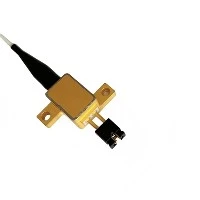
Laser line lights are a device that uses laser technology to generate linear light. Its working principle is based on the high-brightness, monochromatic light emitted by laser diodes. When these beams pass through a specific optical lens, they are precisely focused and form a clear and uniform linear light source. This light source has extremely high directionality and stability, and can maintain its linear shape and position unchanged in various working environments.

In terms of improving production efficiency, laser line lights help operators quickly perform positioning and alignment work by providing intuitive and accurate reference lines. This reduces the need for traditional measuring tools and avoids errors caused by human factors, thereby speeding up production. At the same time, the high precision of the laser line light also makes the production process more controllable, which helps to achieve product standardization and consistency.
In terms of improving precision, the laser line light can provide extremely fine and stable light, allowing operators to perform more delicate work. Whether in cutting, welding, assembly or other processes that require precise alignment, the laser line light can ensure the accuracy and repeatability of each operation. In addition, since the laser line light is not affected by ambient light, it can maintain stable performance under various lighting conditions, further improving the accuracy of production.
When choosing a laser line light, it is important to consider the following key factors:
Power and wavelength:
The power determines the brightness and visible range of the laser line light. Higher power means that the laser line can be clearly seen at a longer distance or in a darker environment. However, too high power may cause eye fatigue or damage, so it needs to be carefully selected according to the actual application scenario.
The wavelength affects the color of the laser and the absorption rate of different materials. For example, green lasers (wavelength of about 532 nm) are generally more detectable to the human eye than red (about 650 nm) or blue (about 445 nm) lasers. In addition, some materials may be more reflective or absorbent of lasers of certain wavelengths, which needs to be considered when selecting a laser line light for a specific application.
Beam quality:
Beam quality refers to the focusing ability and monochromaticity of the laser beam. A high-quality beam produces thinner, more uniform lines, which is critical for improving precision on the production line. For example, during the precision welding of electronic components, a fine laser line can help operators align components more accurately and reduce errors.
Durability and stability:
The durability and stability of a laser line light directly affect its long-term reliability and maintenance costs. Durable equipment can withstand harsh industrial environments such as vibration, temperature fluctuations, and dust, while stability ensures that the accuracy of the laser line does not change over a long period of time.
Safety standards:
Laser line lights that meet safety standards are critical to protecting the safety of operators and equipment. Laser classes specify the degree of harm that lasers of different powers and wavelengths may cause to the human body. Choosing the right laser class can ensure safe use. In addition, some laser products are equipped with safety features such as key switches, remote control shutdown, etc. to prevent accidental startup.
In summary, when choosing a laser line light, you should consider factors such as power and wavelength, beam quality, durability and stability, and safety standards to ensure that you purchase equipment that is both efficient and safe.
The following are the recommendations for selecting laser line lights for different application scenarios:
Metal processing industry:
In the metal processing industry, red or blue laser line lights with longer wavelengths are recommended because metal surfaces usually have higher reflectivity. Lasers with these wavelengths can better form visible lines on metal surfaces, making it easier for operators to accurately position and cut. At the same time, because high temperatures and sparks may be generated during metal processing, it is necessary to select laser line lights with high durability and stability to ensure that they can still work properly in harsh environments.
Electronic assembly industry:
The electronic assembly industry has extremely high requirements for precision, so it is necessary to select laser line lights with excellent beam quality. Green lasers (wavelength of about 532 nm) are generally considered to be the most suitable for electronic assembly applications because they are easily detected by the human eye and not too glaring. In addition, in order to ensure accurate positioning in a small space, laser line lights with thinner beams and adjustable focal lengths can be selected.
Plastic molding industry:
During the plastic molding process, due to the characteristics of plastic materials, finer laser lines may be required to guide the operation. In this case, a laser line light with moderate power and high beam quality can be selected. At the same time, since plastic materials have a high absorption rate for certain wavelengths of lasers, it may be necessary to select the appropriate wavelength according to the specific type of plastic. For example, for ABS plastic, green laser may be a good choice; while for PET plastic, lasers of other wavelengths may need to be selected.
In summary, when choosing a laser line light in different application scenarios, it is necessary to fully consider factors such as industry characteristics, precision requirements, material properties, and working environment to ensure that the most suitable equipment is purchased.
Installation and maintenance of laser line lights:
Installation steps and precautions:
- When installing the laser line light, you need to ensure that the device is placed on a stable and flat surface to avoid laser line deviation caused by vibration or tilt. Choosing a suitable location is essential to ensure that the laser line can be accurately projected into the work area. During installation, follow the instructions provided by the manufacturer, connect the power supply and bracket correctly, and ensure that all parts are firmly fixed. In addition, avoid exposing the laser line light directly to sunlight or high temperature environments to prevent the device from overheating or performance degradation.
- Common problems include unclear laser lines, overheating of the device, or failure to start. These problems may be caused by improper installation, power problems, or device failure. To avoid these problems, it is recommended to read the product manual carefully before installation to understand the technical parameters and operating requirements of the device. At the same time, regularly check whether the power cord and connector of the device are intact and whether the device is in good working condition.
Daily maintenance and troubleshooting:
- Daily maintenance is essential to maintain the performance and extend the service life of the laser line light. It is recommended to clean the optical lens regularly to remove dust and other contaminants and maintain the clarity of the laser line. At the same time, check whether the fasteners and brackets of the equipment are loose, and tighten or replace them if necessary. The power cord and plug should also be checked regularly for signs of wear or damage, and ensure that the equipment is operating within the specified temperature range.
- When encountering equipment failure, the first thing to do is to check whether the power supply is normal and whether all connections are safe and correct. If the equipment still does not work properly, it may require inspection and repair by professional technicians. Before dealing with any faults, always disconnect the power supply to avoid the risk of electric shock. For complex faults, it is recommended to contact the manufacturer or professional repair service to ensure that the equipment is repaired correctly and safely.
By following the correct installation steps and precautions, as well as performing routine maintenance and timely troubleshooting, you can ensure that the laser line light performs at its best in various industrial applications while ensuring the safety of operators.
Laser line lights play a vital role in modern industrial production. They greatly improve production efficiency and processing accuracy by providing high-precision linear light sources. Choosing the right laser line light can not only ensure accurate alignment and positioning on the production line, reduce errors and scrap rates, but also speed up production and improve overall operating efficiency. Therefore, choosing the right laser line light according to specific application scenarios and needs is a key step to achieve efficient and precise production.
Contact information:
If you have any ideas, feel free to talk to us. No matter where our customers are and what our requirements are, we will follow our goal to provide our customers with high quality, low prices, and the best service.
 Email:info@loshield.com
 Tel:0086-18092277517
 Fax: 86-29-81323155
 Wechat:0086-18092277517


