



Laser Diode (LD for short), the physical structure of a laser diode is arranged between the junctions of the light-emitting diode a layer of light-active semiconductor, its end face after polishing has a partial reflection function, thus forming a light resonator. LEDs, short for light-emitting diodes, are made of compounds containing gallium (Ga), arsenic (As), phosphorus (P), nitrogen (N), etc. When electrons are combined with holes, they emit visible light and can be used to make light-emitting diodes.
The Laser Diode is a kind of light source semiconductor laser, also called laser diode, invented in the 1960s. LASER is an abbreviation of Light Amplification by Stimulated Emission of Radiation, usually referred to as LD for short. Because it can produce exactly the same wavelength and phase properties of light, so high coherence is its biggest characteristic. Early because it can only emit low-luminosity red light, HP bought the patent as an indicator to use.
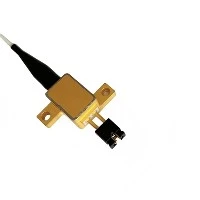
The following is the current market's most common laser diode physical picture and internal connection diagram:

In the case of forward bias, the LED parent emits light and interacts with the optical resonator, thereby further stimulating the emission of single-wavelength light from the junction, the physical properties of which are material dependent.
1. The Difference in the principle of luminescence
LD is the English abbreviation of the laser diode. The physical architecture of the laser diode is to arrange a layer of photoactive semiconductor between the junctions of the light-emitting diode, and its end face has a partial reflection function after polishing, thus forming an optical resonator.
In the case of forward bias, the LED parent emits light and interacts with the optical resonator, thereby further stimulating the emission of single-wavelength light from the junction, the physical properties of which are material dependent.
Semiconductor laser diodes work in the same way as gas lasers in theory. Laser diodes are widely used in low-power photoelectric devices such as CD drives in computers and printing in laser printers.
LED uses carrier spontaneous radiation compound luminescence injected into the active region, laser diode LD is stimulated radiation compound luminescence. The direction and phase of the photon emitted by the LED are random, while the photon emitted by the laser diode is in the same direction and phase.
In the PN junction of some semiconductor materials, the few carriers injected will release the excess energy in the form of light when combined with the majority carriers, thus converting electrical energy directly into light energy. PN junction with reverse voltage, a few carriers are difficult to inject, so no light. This kind of diode made of injection electroluminescence principle is called a light-emitting diode, commonly known as LED.
2. Differences in working principle, structure, and efficiency
① Working principle: LED uses spontaneous carrier radiation compound luminescence injected into the active region, while LD is stimulated radiation compound luminescence.
② Architecture: LD has an optical resonator, which makes the generated photon oscillate and amplify in the cavity, while LED has no resonator.
③ Performance: There is no critical super-requisition for LED, and the spectral density is several orders of magnitude higher than that of LD. The LED output power is small and the divergence Angle is large.
Notes on the use of Laser Diodes:
① Anti-static: When taking pipes or welding pins, wear a grounding wrist strap (the wrist strap is connected to 1MΩ resistance grounding, as shown in Figure 3, to prevent the pipe from being damaged by static electric shock.
② Welding: welding, the shell of the electric iron should be connected to the ground, it is best to pull the power plug from the socket. The welding time should be short (maximum welding temperature 260℃, welding time less than 5s), and once the welding is not strong after a certain interval can be welded again.
③ Working current: do not make it exceed the maximum value when adjusting, also can not have overshoot current. Prevent the broken line in the adjustment, otherwise, it will burn out the pipe. Both AC and DC work is acceptable, but the peak value shall not exceed the maximum value. If you do not need to monitor the output, you can also use VD2.
④ Prevent the laser beam from hurting eyes: when the laser is working, do not watch the light source directly or through reflection, otherwise it will hurt the eyes. According to international practice, warning labels should be attached to lasers.

Contact information:
If you have any ideas, feel free to talk to us. No matter where our customers are and what our requirements are, we will follow our goal to provide our customers with high quality, low prices, and the best service.
 Email:info@loshield.com
 Tel:0086-18092277517
 Fax: 86-29-81323155
 Wechat:0086-18092277517


