



How Lasers Work
Except for free electron lasers, the basic working principle of all kinds of lasers is the same. The essential conditions for laser generation are particle number inversion and gain greater than loss, so the essential components in the device include excitation (or pumping) source and working medium with metastable energy level. Excitation is the excitation of the working medium to an excited state after absorbing external energy, creating conditions for the realization and maintenance of particle population inversion. The excitation methods include optical excitation, electrical excitation, chemical excitation and nuclear energy excitation.

The metastable energy level of the working medium makes the stimulated radiation dominant, thereby realizing light amplification. The common component in the laser is the resonator, but the resonator (see optical resonator) is not an essential part. The resonator can make the photons in the cavity have a consistent frequency, phase and running direction, so that the laser has Good directionality and coherence. Moreover, it can shorten the length of the working substance very well, and can also adjust the mode of the generated laser light by changing the length of the resonant cavity (that is, mode selection), so generally lasers have a resonant cavity.
A Lasers Generally Consists of Three Parts:
1. Working Substance: the core of the laser, only the substance that can achieve energy level transition can be used as the working substance of the laser.
2. Encouraging Energy: Its function is to give energy to the working substance, and to excite atoms from a low energy level to a high energy level external energy. Usually there can be light energy, thermal energy, electrical energy, chemical energy and so on.
3. Optical Resonant Cavity: The first function is to make the stimulated radiation of the working substance continue; the second is to continuously accelerate the photons; the third is to limit the direction of laser output. The simplest optical resonator consists of two parallel mirrors placed at both ends of a HeNe laser. When some neon atoms transition between the two energy levels that have achieved particle number inversion, and radiate photons parallel to the direction of the laser, these photons will be reflected back and forth between the two mirrors, thus continuously causing stimulated radiation, Very quickly a fairly powerful laser is produced.

The pure and spectrally stable light emitted by the Lasers can be used in many ways
Ruby Laser: The original laser was a ruby that was excited by a bright flashing light bulb, and the laser produced was a "pulsed laser" rather than a continuous steady beam. The quality of the speed of light produced by this laser is fundamentally different from the laser produced by the laser diodes we use today. This intense light emission, which lasts only a few nanoseconds, is ideal for capturing easily moving objects, such as holographic portraits of people. The first laser portrait was born in 1967. Ruby lasers require expensive rubies and produce only brief pulses of light.
He-Ne Laser: In 1960 scientists Ali Javan, William R.Brennet Jr. and Donald Herriot designed the He-Ne laser. It was the first gas laser, a type of equipment commonly used by holographic photographers. Two advantages: 1. Continuous laser output is generated; 2. No flash bulb is needed for light excitation, and gas is excited by electricity.
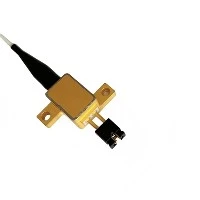
Laser Diode: Laser diode is one of the most commonly used lasers at present. The phenomenon of spontaneous recombination of electrons and holes on both sides of the PN junction of the diode to emit light is called spontaneous emission. When the photons generated by spontaneous emission pass through the semiconductor, once they pass near the emitted electron-hole pairs, they can be stimulated to recombine to generate new photons, which induce the recombination of excited carriers to emit new photons The phenomenon is called stimulated emission.

If the injected current is large enough, the carrier distribution opposite to the thermal equilibrium state will be formed, that is, the population of the particles is reversed. When a large number of carriers in the active layer are reversed, a small amount of photons generated by spontaneous radiation will generate induced radiation due to the reciprocal reflection at both ends of the resonator, resulting in positive feedback of frequency-selective resonance, or a gain for a certain frequency. When the gain is greater than the absorption loss, coherent light with good spectral lines can be emitted from the PN junction—laser. The invention of laser diodes has made laser applications rapidly popular, and various applications such as information scanning, optical fiber communication, laser ranging, laser radar, laser discs, laser pointers, supermarket payment collection, etc., are constantly being developed and popularized.
Contact Information:
If you have any ideas, feel free to talk to us. No matter where our customers are and what our requirements are, we will follow our goal to provide our customers with high quality, low prices, and the best service.
 Email:info@loshield.com
 Tel:0086-18092277517
 Fax: 86-29-81323155
 Wechat:0086-18092277517


